
5G Network Security Challenges and Solutions: Navigating the Future of Connectivity
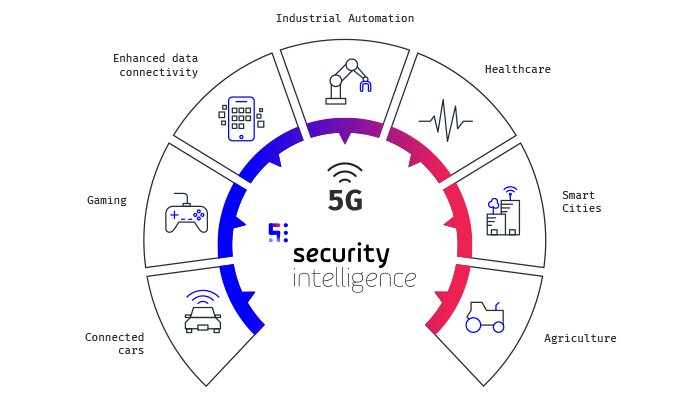
The advent of 5G technology promises a revolutionary leap in connectivity, offering unprecedented speeds, ultra-low latency, and massive device density. From smart cities and autonomous vehicles to advanced IoT applications and remote surgery, 5G is set to transform industries and daily life. However, this transformative power also introduces a complex array of 5G network security challenges that demand sophisticated, proactive solutions. Understanding these evolving threats and implementing robust defense mechanisms is paramount to realizing the full potential of 5G while safeguarding critical infrastructure and sensitive data. This comprehensive guide delves into the intricate cybersecurity landscape of 5G, outlining the primary vulnerabilities and presenting actionable strategies to build a resilient and secure next-generation network.
The Evolving Landscape of 5G Network Security Challenges
Unlike its predecessors, 5G is not merely an incremental upgrade; it represents a fundamental architectural shift that inherently broadens the attack surface and introduces novel vulnerabilities. The very features that make 5G powerful – its distributed nature, reliance on software, and support for a vast ecosystem of devices – also create significant security hurdles.
Expanded Attack Surface Due to IoT and Edge Computing
- Massive IoT Connectivity: 5G is designed to connect billions of IoT devices, from simple sensors to complex industrial machinery. Many of these devices have limited processing power, memory, and update capabilities, making them inherently difficult to secure. A compromised IoT device can serve as an entry point for attackers to infiltrate the broader network, launch DDoS attacks, or exfiltrate data. The sheer volume makes monitoring and managing security for each device a monumental task.
- Edge Computing Vulnerabilities: To achieve ultra-low latency, 5G pushes data processing closer to the network edge. While beneficial for performance, this decentralization means data is processed and stored in more locations outside traditional, centralized data centers. These edge nodes, often less physically secure and managed by diverse entities, become new targets for cybercriminals. Securing these distributed computing environments, often involving multi-access edge computing (MEC), requires a paradigm shift from traditional perimeter-based security.
Network Slicing Security Risks
One of 5G's most innovative features is network slicing, which allows operators to create multiple virtual, isolated networks on a common physical infrastructure. Each slice can be customized to meet specific service requirements (e.g., a slice for autonomous vehicles, another for healthcare IoT). While offering flexibility, network slicing introduces several security concerns:
- Inter-Slice Isolation Breaches: A critical challenge is ensuring robust isolation between slices. A security breach in one slice, perhaps a less secure IoT application, must not compromise the integrity or availability of another, more critical slice (e.g., for emergency services). Weak isolation could lead to lateral movement of threats across virtual boundaries.
- Resource Exhaustion Attacks: Malicious actors could attempt to over-consume resources within one slice, potentially impacting the performance or availability of other slices sharing the same physical resources, even if isolation is maintained.
- Slice Management and Orchestration Vulnerabilities: The software-defined nature of network slicing relies heavily on orchestration and management layers. Vulnerabilities in these control planes could allow attackers to manipulate slice configurations, inject malicious code, or gain unauthorized access.
Software-Defined Networking (SDN) and Network Function Virtualization (NFV) Risks
5G networks extensively leverage SDN and NFV, virtualizing network functions that were traditionally hardware-based. This brings agility but also new security vectors:
- Software Vulnerabilities: Virtualized network functions (VNFs) and the underlying software infrastructure are susceptible to common software bugs, misconfigurations, and zero-day exploits. The attack surface expands from hardware to code.
- Control Plane Compromise: In SDN, the control plane is separated from the data plane. A successful attack on the centralized SDN controller could give an adversary control over the entire network's routing and traffic management.
- Hypervisor and Virtualization Layer Attacks: The virtualization layer, including hypervisors, is a critical component. If compromised, an attacker could gain access to multiple virtualized network functions running on the same physical server.
Supply Chain Security Concerns
The global nature of 5G infrastructure deployment involves components and software from numerous vendors worldwide. This complex supply chain presents significant security challenges:
- Hardware and Software Backdoors: Malicious code or hardware implants could be introduced at any stage of the supply chain, from chip manufacturing to device assembly. These could act as backdoors for espionage or sabotage.
- Vulnerabilities in Third-Party Components: Reliance on open-source software, third-party libraries, and commercial off-the-shelf (COTS) components introduces potential vulnerabilities that might not be immediately apparent or easily patched.
- Lack of Transparency: Tracing the origin and verifying the integrity of every component in a vast 5G network is incredibly difficult, making it challenging to identify and mitigate risks proactively.
Increased Data Volume and Privacy Concerns
With billions of connected devices generating unprecedented volumes of data, 5G networks become massive repositories and conduits for sensitive information. This amplifies data privacy concerns and makes the network an attractive target for data breaches.
- Data Exfiltration: The sheer volume and variety of data (personal, operational, industrial) make it a prime target for theft.
- Privacy Regulations Compliance: Adhering to stringent data privacy regulations like GDPR, CCPA, and evolving national laws becomes more complex with decentralized data processing and storage across edge nodes and multiple stakeholders.
Comprehensive Solutions for 5G Network Security
Addressing the complex 5G cybersecurity risks requires a multi-layered, holistic approach that integrates security at every stage of the network lifecycle, from design to deployment and operation. Proactive measures, advanced technologies, and robust policy frameworks are essential.
Implementing a Zero Trust Architecture (ZTA)
A fundamental shift from perimeter-based security, Zero Trust assumes that no user, device, or application, whether inside or outside the network, should be implicitly trusted. Every access request must be authenticated, authorized, and continuously verified. For 5G, ZTA is critical:
- Granular Access Control: Enforce strict access policies based on identity, device posture, location, and context, rather than network location. This is vital for distributed edge environments and diverse IoT devices.
- Micro-segmentation: Divide the network into small, isolated segments, limiting lateral movement of threats even if one segment is compromised. This aligns well with 5G's network slicing capabilities, ensuring robust isolation.
- Continuous Verification: Regularly re-authenticate and re-authorize users and devices, adapting to changing risk profiles. This helps detect and mitigate threats in real-time.
Leveraging AI and Machine Learning for Threat Detection and Response
The scale and complexity of 5G networks make manual threat detection impossible. Artificial Intelligence (AI) and Machine Learning (ML) are indispensable tools:
- Anomaly Detection: AI/ML algorithms can analyze vast amounts of network traffic, device behavior, and system logs to identify unusual patterns indicative of cyberattacks, such as unauthorized access attempts, data exfiltration, or DDoS attacks.
- Automated Threat Response: AI-powered security orchestration, automation, and response (SOAR) platforms can automate incident response workflows, allowing for rapid containment and remediation of threats without human intervention, which is crucial for high-speed 5G networks.
- Predictive Analytics: ML can predict potential vulnerabilities and emerging threats by analyzing historical data and global threat intelligence feeds, enabling proactive security posture adjustments.
Enhancing Authentication and Encryption Mechanisms
Strong cryptographic controls are the bedrock of secure communication in 5G:
- Mutual Authentication: Implement robust mutual authentication protocols between devices, users, and network functions to ensure both parties are legitimate. This is particularly important for IoT devices where identity spoofing is a significant risk.
- End-to-End Encryption: Mandate end-to-end encryption for all sensitive data in transit and at rest, from IoT sensors to core network functions. This includes leveraging advanced encryption standards and protocols like TLS 1.3 and IPsec.
- Quantum-Resistant Cryptography: As quantum computing advances, current encryption methods may become vulnerable. Organizations must begin exploring and integrating quantum-resistant cryptography (QRC) or post-quantum cryptography (PQC) solutions to future-proof 5G network security.
Implementing Robust Supply Chain Security Measures
Mitigating supply chain risks requires a multi-faceted approach:
- Vendor Vetting and Auditing: Implement rigorous vetting processes for all hardware and software vendors, including regular security audits and assessments of their development practices.
- Software Bill of Materials (SBOM): Require vendors to provide a comprehensive SBOM for all software components, allowing operators to track dependencies and identify potential vulnerabilities.
- Hardware Tamper Detection: Employ physical security measures and digital integrity checks to detect any tampering with hardware components during manufacturing, transit, and deployment.
- Secure Development Lifecycle (SDL): Encourage and verify that all software components are developed following secure coding practices and undergo thorough security testing throughout their lifecycle.
Proactive Threat Intelligence and Incident Response
Effective 5G security relies on staying ahead of adversaries and having a rapid response capability:
- Real-time Threat Intelligence Sharing: Participate in industry-wide threat intelligence sharing platforms to receive timely alerts about new vulnerabilities, attack campaigns, and emerging threats.
- Automated Security Orchestration: Leverage SOAR platforms to integrate security tools and automate incident response workflows, reducing the time from detection to remediation.
- Regular Penetration Testing and Red Teaming: Continuously test the network's resilience by simulating real-world cyberattacks to identify weaknesses before adversaries exploit them.
- Comprehensive Incident Response Plans: Develop detailed and regularly practiced incident response plans that cover various types of cyberattacks, ensuring rapid and effective containment, eradication, and recovery.
Regulatory Compliance and International Collaboration
Given the global nature of 5G, regulatory frameworks and international cooperation are vital:
- Adherence to Standards and Regulations: Ensure compliance with global and national cybersecurity standards (e.g., NIST, 3GPP security specifications) and data privacy regulations (e.g., GDPR, CCPA).
- Cross-Border Information Sharing: Foster international collaboration among governments, industry players, and research institutions to share best practices, threat intelligence, and coordinate responses to global cyber threats.
- National Security Directives: Implement national security directives related to critical infrastructure protection and supply chain security to safeguard 5G networks from state-sponsored attacks.
Frequently Asked Questions
What makes 5G network security fundamentally different from 4G?
5G's security landscape differs significantly from 4G due to its new architectural paradigms. While 4G largely relied on hardware-centric, perimeter-based security, 5G's embrace of software-defined networking (SDN), network function virtualization (NFV), and edge computing introduces a larger, more distributed, and dynamic attack surface. Features like network slicing create new isolation challenges, and the massive scale of IoT connectivity vastly expands the number of potential entry points. Security in 5G must be integrated into the software layer and extend to the distributed edge, rather than just securing a centralized core.
How does network slicing impact 5G security?
Network slicing allows multiple virtual networks to run on shared physical infrastructure, each tailored for specific services. While efficient, it introduces critical security challenges, primarily ensuring robust isolation between slices. A breach in one slice, especially a less secure one, must not propagate to other, more critical slices. Managing the security of these distinct, virtual environments, preventing resource exhaustion attacks, and securing the orchestration layers that manage slices are paramount. Effective security measures like micro-segmentation and strict access controls are essential for safe slicing.
What is Zero Trust Architecture, and why is it crucial for 5G?
Zero Trust Architecture (ZTA) is a security model that operates on the principle of "never trust, always verify." Unlike traditional models that assume trust within a network perimeter, ZTA requires continuous authentication and authorization for every user, device, and application attempting to access network resources, regardless of their location. For 5G, ZTA is crucial because of its highly distributed nature, reliance on edge computing, and diverse device ecosystem. It provides granular access control, limits lateral movement of threats through micro-segmentation, and ensures continuous verification, making it an ideal framework for securing the complex and dynamic 5G environment.
Can AI and Machine Learning solve all 5G security problems?
While AI and Machine Learning (ML) are powerful tools and indispensable for 5G security, they are not a silver bullet. AI/ML excel at automating threat detection, identifying anomalies in vast datasets, and orchestrating rapid responses, which is crucial given the scale of 5G. However, they rely on accurate data, can be susceptible to adversarial attacks (e.g., data poisoning), and require human oversight for interpretation and strategic decision-making. AI/ML should be viewed as a critical component within a broader, multi-layered security strategy that includes robust policies, strong encryption, human expertise, and proactive threat intelligence.
What role do regulatory bodies and international collaboration play in securing 5G networks?
Regulatory bodies and international collaboration are absolutely vital in securing 5G networks due to their global reach and critical infrastructure status. Regulators set baseline security standards, mandate compliance, and enforce data privacy laws (like GDPR), ensuring a minimum level of security and accountability. International collaboration, through organizations like 3GPP and regional alliances, facilitates the development of global security standards, promotes information sharing on threats and vulnerabilities, and coordinates responses to cross-border cyberattacks. This collective effort is essential for building a globally resilient and trustworthy 5G ecosystem, addressing complex supply chain risks, and harmonizing security practices worldwide. You can learn more about 5G regulatory compliance challenges in our dedicated article.

0 Komentar