
The Future of Augmented Reality in 2025: Unlocking Transformative Applications Across Industries
Prepare to witness a profound shift in how we interact with the digital and physical worlds. The future of augmented reality in 2025 applications promises to be nothing short of revolutionary, moving beyond novelty to become an indispensable tool across virtually every sector. By 2025, AR will have matured significantly, offering truly immersive experiences that seamlessly blend digital information with our real-world environment. This isn't just about overlaying data; it's about creating a new dimension of interaction, enhancing productivity, entertainment, and daily life through advanced spatial computing and intelligent digital overlay. As a professional SEO expert, I'm here to unpack the specific, impactful applications that will define the augmented reality landscape in the coming years, guiding you through the transformative potential and practical implications of this rapidly evolving technology.
The Exponential Growth and Maturation of AR Technology by 2025
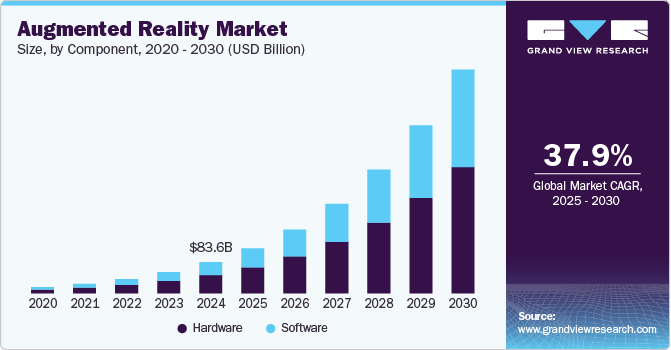
The trajectory of augmented reality technology points towards a future where sophisticated AR is not merely a niche gadget but a pervasive computing platform. By 2025, we anticipate substantial advancements in both hardware and software, making AR devices more accessible, powerful, and user-friendly. Hardware will evolve significantly, with devices becoming lighter, more aesthetically pleasing, and boasting extended battery life. Think sleek, comfortable smart glasses that can be worn for extended periods without fatigue, offering high-resolution displays and wider fields of view. These improvements are crucial for widespread adoption and for delivering the true potential of mixed reality experiences.
On the software front, AI integration will be paramount. AR applications in 2025 will be smarter, more contextually aware, and capable of understanding user intent with unprecedented accuracy. Persistent AR anchors will allow digital content to remain fixed in real-world locations, creating a shared, augmented reality layer over our cities and homes. Furthermore, the development of robust AR cloud platforms will enable seamless sharing and collaboration within augmented environments, pushing the boundaries of what's possible for multi-user and large-scale deployments. This combination of advanced hardware and intelligent software will underpin the diverse applications we expect to see flourish.
Redefining Enterprise with Augmented Reality in 2025
While consumer applications often grab headlines, the most significant immediate impact of AR by 2025 will be felt within the enterprise sector. Businesses are rapidly recognizing AR's potential for driving efficiency, reducing costs, and fostering innovation. The focus will be heavily on practical, value-driven enterprise solutions that integrate seamlessly into existing workflows.
Manufacturing & Industrial Operations
- Remote Assistance & Expert Guidance: Technicians in the field will use AR headsets to receive real-time visual instructions from remote experts, overlaying schematics, step-by-step guides, or even live annotations directly onto machinery. This dramatically reduces downtime, travel costs, and the need for on-site expert presence.
- Predictive Maintenance: AR will enable workers to visualize real-time sensor data and performance metrics overlaid onto industrial equipment, allowing for proactive identification of potential failures before they occur. This is a game-changer for critical infrastructure and complex machinery, optimizing uptime.
- Quality Control & Assembly: AR will guide assembly line workers through complex tasks, highlighting correct part placement, verifying steps, and flagging errors instantly. This reduces human error, improves product quality, and speeds up manufacturing processes, proving invaluable for complex industrial applications.
- Enhanced Training Simulations: New employees can undergo immersive, hands-on training using AR, simulating dangerous or complex procedures in a safe, controlled virtual environment. This accelerates skill acquisition and reduces the risks associated with traditional training methods. Actionable Tip: Implement AR pilot programs for maintenance and training departments to quickly identify high-impact use cases within your organization.
Healthcare & Medical Innovation
The medical field is ripe for AR disruption, and by 2025, AR will be integral to patient care, surgical precision, and medical education.
- Surgical Augmentation: Surgeons will utilize AR to overlay patient data – such as MRI or CT scans – directly onto the patient's body during operations, providing a "x-ray vision" capability that enhances precision and reduces invasiveness. This represents a monumental leap in healthcare innovation.
- Medical Training & Education: Students can dissect virtual organs, practice complex procedures on holographic models, and visualize anatomical structures in 3D, leading to a deeper understanding and improved practical skills.
- Patient Education & Engagement: Doctors can use AR to explain conditions and treatments to patients by showing 3D models of organs or illustrating drug mechanisms directly in front of them, fostering better understanding and adherence.
- Remote Diagnostics & Telemedicine: Paramedics or nurses can use AR to stream live visuals to a remote doctor, who can then annotate the scene or provide visual guidance during emergencies.
Retail & E-commerce Transformation
Augmented reality is set to revolutionize how consumers shop, blurring the lines between online and in-store experiences. The retail transformation driven by AR will be significant.
- Virtual Try-Ons: Customers will be able to virtually try on clothes, accessories, or even makeup using their smartphone cameras or smart mirrors, seeing how items look on them before making a purchase.
- Interactive Product Visualization: Imagine placing a virtual sofa in your living room to see how it fits, or inspecting a car's interior from your driveway. AR enables customers to visualize products in their own environment, reducing returns and increasing purchase confidence. Discover more about e-commerce AR strategies and their impact on online sales.
- Personalized In-Store Navigation: AR can guide shoppers through large stores, highlight promotions, or provide additional product information when they point their phone at an item. This enhances the physical shopping experience.
- Augmented Showrooms: Retailers can offer an infinite aisle experience, allowing customers to view products not physically in stock as high-fidelity 3D models, complete with customization options.
Consumer AR: Enhancing Everyday Life by 2025
While enterprise leads the charge, consumer AR will mature significantly by 2025, moving beyond smartphone apps to more integrated and persistent experiences, largely driven by advances in wearable tech.
Entertainment & Gaming
- Hyper-Realistic Gaming: AR games will seamlessly blend digital characters and environments into our physical world, offering unprecedented levels of immersion. Imagine battling mythical creatures in your living room or solving puzzles that incorporate real-world objects. This will redefine entertainment AR.
- Interactive Live Events: Concerts, sports events, and theatrical performances will be enhanced with AR overlays, providing real-time statistics, player information, special effects, or interactive elements visible through AR glasses.
- Cinematic AR Experiences: Storytelling will evolve, with AR allowing narratives to unfold around you, turning everyday locations into interactive scenes that respond to your presence.
Education & Learning
The classroom of 2025 will be significantly more interactive thanks to augmented reality, offering dynamic and engaging learning environments.
- Interactive Textbooks & Lessons: Static images in textbooks will come alive with 3D models, animations, and simulations, making complex concepts easier to grasp. Students can explore the human heart in 3D or walk through ancient Rome. This makes AR an essential part of new educational tools.
- Virtual Field Trips: Students can embark on immersive journeys to historical sites, distant planets, or deep into the human body, experiencing these places as if they were physically there, all from the classroom.
- Skill Development: From learning to play an instrument with AR overlays guiding finger placement to practicing complex machinery operation, AR offers hands-on, guided learning for a vast array of skills.
Navigation & Geospatial AR
Our understanding and navigation of the physical world will be augmented by intelligent digital layers.
- Enhanced GPS & Wayfinding: AR navigation will overlay directions directly onto the real-world view, making it impossible to get lost. Points of interest, building names, and public transport information will appear as you look around.
- Historical & Informational Overlays: Point your AR device at a landmark, and instantly see historical photos, architectural details, or relevant facts pop up, transforming urban exploration into an educational journey.
- Urban Planning & Smart Cities: City planners and residents can visualize proposed developments, traffic flows, or environmental data overlaid onto real urban landscapes, facilitating better decision-making and public engagement.
The Interplay of AI and Augmented Reality
The true power of augmented reality in 2025 applications lies in its symbiotic relationship with Artificial Intelligence. AI will be the invisible engine driving AR's intelligence and utility. AI-powered computer vision allows AR systems to understand the physical environment in real-time, identifying objects, surfaces, and even human emotions. This enables more precise content placement and interaction.
Furthermore, AI will personalize AR experiences, adapting content and information based on user preferences, context, and even emotional state. Imagine an AR assistant that anticipates your needs, providing relevant information before you even ask. Natural Language Processing (NLP) will allow for intuitive voice commands, making interaction with AR seamless and hands-free. Predictive analytics, fueled by AI, will enable AR systems to offer proactive suggestions, from guiding you to the best parking spot to flagging potential issues with machinery. This convergence means AR won't just be a display technology; it will be an intelligent companion, offering unprecedented levels of contextual awareness and utility. This is the core of AR's intelligent evolution.
Overcoming Challenges: The Path to Widespread AR Adoption
While the future of AR by 2025 is bright, several challenges remain. Hardware form factor, while improving, still needs to reach the point of being indistinguishable from regular eyewear for truly ubiquitous adoption. Battery life, processing power, and the ability to render complex digital content without latency are ongoing areas of research and development. Social acceptance and privacy concerns related to always-on cameras and data collection will also need careful consideration and robust ethical frameworks. Finally, the creation of compelling, high-quality AR content at scale remains a significant hurdle, requiring new tools and pipelines for developers and creators. Practical Advice: For businesses looking to adopt AR, prioritize solutions that offer clear ROI, focus on user comfort and intuitive interfaces, and start with pilot projects to iron out technical and user acceptance issues.
Preparing for the AR-Driven Future: Actionable Insights
The rapid evolution of augmented reality demands foresight and strategic planning from both businesses and individuals. Embracing AR isn't just about adopting new tech; it's about reimagining processes, services, and interactions.
For Businesses:
- Identify High-Impact Use Cases: Don't jump into AR blindly. Analyze your operations for areas where visual guidance, remote collaboration, or interactive visualization can deliver tangible benefits (e.g., reducing errors, speeding up training, enhancing customer experience).
- Invest in Talent Development: Start upskilling your workforce in AR development, 3D modeling, and spatial computing concepts. The demand for AR specialists will only grow.
- Explore Strategic Partnerships: Collaborate with AR technology providers, software developers, and research institutions to leverage their expertise and accelerate your AR journey.
- Pilot and Iterate: Begin with small-scale pilot projects. Learn from the implementation, gather user feedback, and iterate on your solutions. This agile approach minimizes risk and maximizes success. Call to Action: Explore how your business can leverage the transformative power of AR. Start your AR transformation journey today.
For Individuals:
- Stay Informed: Follow developments in AR hardware and software. Understand the capabilities and limitations of current and upcoming devices.
- Experiment with Current AR Apps: Get hands-on with existing smartphone AR apps to understand the basic concepts and user interactions.
- Consider Skill Acquisition: If you're looking to future-proof your career, explore courses in 3D design, Unity/Unreal Engine development, or AI for spatial computing.
- Understand the Ethical Implications: Be aware of the privacy, data security, and social impact considerations as AR becomes more integrated into daily life.
Frequently Asked Questions
What is the primary driver of augmented reality growth towards 2025?
The primary driver of augmented reality growth towards 2025 is a combination of significantly improved hardware (lighter, more powerful wearable tech like smart glasses), more sophisticated AI-powered software enabling greater contextual awareness and personalization, and the increasing recognition of AR's tangible return on investment within enterprise solutions. Businesses are seeing clear benefits in efficiency, training, and customer engagement, which fuels rapid adoption and development, especially in areas like industrial applications and healthcare innovation.
How will AR impact the average consumer's daily life by 2025?
By 2025, AR will impact the average consumer's daily life by providing seamless digital overlays for navigation, enhanced shopping experiences with virtual try-ons and product visualization (retail transformation), and more immersive entertainment and gaming (entertainment AR). It will also transform learning through interactive educational tools and enable new forms of social interaction, moving beyond smartphone screens to more natural, integrated experiences through advanced spatial computing devices.
What are the key industries set to benefit most from AR applications in the near future?
The key industries set to benefit most from augmented reality applications in the near future include manufacturing, healthcare, retail, education, and defense. Manufacturing and industrial sectors will leverage AR for remote assistance, training, and maintenance. Healthcare will see significant advancements in surgical precision and medical education. Retail will be transformed by virtual try-ons and interactive product experiences. Education will benefit from immersive learning tools, and defense will utilize AR for training simulations and battlefield awareness.
What are the biggest technological hurdles for AR adoption by 2025?
The biggest technological hurdles for widespread AR adoption by 2025 primarily revolve around hardware form factor (making devices truly lightweight and stylish), battery life to support all-day use, and the development of robust, scalable content creation tools and platforms. While significant progress is being made, achieving a balance between power, aesthetics, and affordability for mass consumer markets remains a key challenge. Additionally, ensuring seamless integration with existing digital ecosystems and addressing data privacy concerns are ongoing considerations for the future of augmented reality.

0 Komentar