
Complete Guide
The digital landscape is hurtling towards a future where data processing occurs not just in distant clouds, but right at the source of data generation – a paradigm shift known as edge computing. By 2025, this revolutionary approach will move beyond conceptual discussions to power an extraordinary array of applications, fundamentally reshaping industries from autonomous vehicles to smart cities, and industrial IoT. This comprehensive guide delves deep into the transformative potential of edge computing in 2025 applications, exploring its core drivers, groundbreaking uses, and the strategic imperatives for businesses looking to harness its immense power. Prepare to unlock a future defined by unprecedented speed, intelligence, and efficiency, all powered by distributed intelligence at the network's edge.
The Edge Computing Revolution: Laying the Groundwork for 2025
Edge computing represents a distributed computing framework that brings computation and data storage closer to the sources of data. Unlike traditional cloud computing, where all data travels to a central data center for processing, edge computing processes data locally, significantly reducing latency and bandwidth consumption. This localized processing is not merely an optimization; it's a fundamental enabler for real-time decision-making and mission-critical applications that simply cannot tolerate delays.
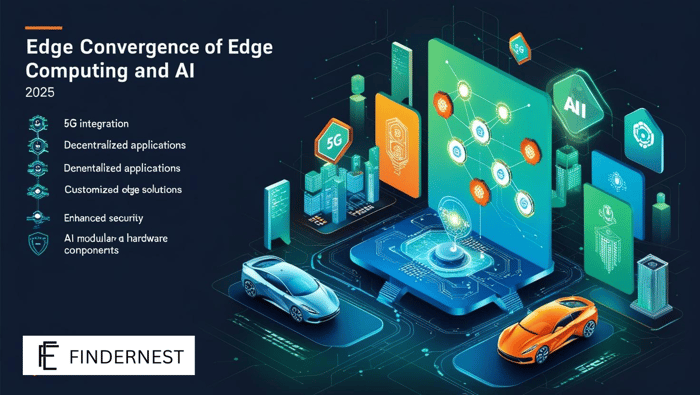
The synergy between edge computing, 5G networks, and artificial intelligence (AI) is the primary catalyst for its rapid acceleration towards 2025. While 5G provides the ultra-low latency and high bandwidth necessary for rapid data transfer, AI algorithms deployed at the edge enable instantaneous analysis and actionable insights without the need to send vast amounts of raw data to the cloud. This powerful trifecta is setting the stage for a new era of intelligent, responsive, and secure digital ecosystems.
Core Drivers of Edge Adoption by 2025
- 5G Proliferation: The widespread rollout of 5G networks provides the foundational connectivity layer, offering the speeds and low latency essential for effective edge deployments. This allows for near-instantaneous communication between devices and edge servers.
- AI at the Edge: The increasing capability to run sophisticated AI and machine learning models directly on edge devices or localized edge servers enables real-time analytics, predictive maintenance, and autonomous decision-making without cloud dependency.
- IoT Device Explosion: Billions of interconnected IoT devices are generating unprecedented volumes of data. Processing this data at the edge is crucial to manage bandwidth, reduce costs, and derive immediate value from sensor data.
- Data Privacy and Sovereignty Concerns: Keeping sensitive data localized at the edge helps organizations comply with stringent data privacy regulations (like GDPR) and addresses concerns about data residency and security by minimizing data transfer over public networks.
- Demand for Real-Time Insights: Industries like manufacturing, healthcare, and autonomous vehicles require instant data processing for critical operations, making traditional cloud latency unacceptable. Edge computing delivers the responsiveness needed for these applications.
Transformative Applications of Edge Computing in 2025
By 2025, edge computing will be the backbone for a myriad of advanced applications, moving from niche implementations to mainstream adoption across diverse sectors. Its ability to provide low-latency processing and enhanced data security will unlock functionalities previously considered impossible.
Automotive and Autonomous Vehicles
The automotive industry stands to be one of the biggest beneficiaries of edge computing in 2025. Autonomous vehicles require instantaneous decision-making based on vast amounts of sensor data (LIDAR, radar, cameras). Processing this data in real-time at the vehicle's edge or a roadside edge server is paramount for safety and navigation. Edge computing facilitates:
- Real-time Decision Making: Processing sensor data locally enables vehicles to detect obstacles, analyze road conditions, and make navigation decisions in milliseconds, critical for preventing accidents.
- Vehicle-to-Everything (V2X) Communication: Edge nodes facilitate ultra-low latency communication between vehicles (V2V), vehicles and infrastructure (V2I), and vehicles and pedestrians (V2P), enhancing traffic flow and safety.
- Predictive Maintenance: Onboard edge analytics can monitor vehicle component health, predicting failures before they occur and scheduling proactive maintenance, extending vehicle lifespan and reducing downtime.
For organizations looking to innovate in this space, it's crucial to explore advanced AI deployments for autonomous systems that leverage edge capabilities.
Smart Cities and Infrastructure
Edge computing will be instrumental in making urban environments smarter, safer, and more efficient by 2025. By deploying edge devices throughout a city, municipalities can achieve real-time insights and automated responses for a variety of services:
- Intelligent Traffic Management: Edge cameras and sensors can analyze traffic flow, detect incidents, and dynamically adjust traffic signals to reduce congestion and improve emergency response times.
- Public Safety and Surveillance: Edge AI can process video feeds from public cameras to detect unusual activity, identify potential threats, or locate missing persons, sending alerts to authorities instantly.
- Utility Optimization: Smart grids can use edge analytics to monitor energy consumption, detect anomalies, and optimize distribution, leading to more efficient energy use and reduced waste.
- Environmental Monitoring: Edge sensors can track air quality, noise levels, and waste management, providing real-time data for environmental sustainability initiatives.
Understanding the role of sensors is key; learn more about IoT integration in urban environments to maximize smart city potential.
Industrial IoT (IIoT) and Manufacturing
In manufacturing and industrial settings, edge computing is driving the next wave of automation and operational efficiency. The factory floor of 2025 will be brimming with edge devices performing critical tasks:
- Predictive Maintenance: Sensors on machinery collect data that edge analytics platforms process to predict equipment failure, allowing for proactive repairs and minimizing costly downtime.
- Quality Control: Edge-enabled computer vision systems can inspect products in real-time on the production line, identifying defects instantly and ensuring consistent quality.
- Robot Orchestration: Low-latency communication facilitated by edge computing allows for precise coordination and control of multiple robots in complex manufacturing processes.
- Operational Efficiency: Real-time monitoring of production lines and supply chains at the edge provides immediate insights into bottlenecks and inefficiencies, enabling rapid adjustments.
Actionable Tip: Businesses should focus on implementing edge analytics for anomaly detection in their operational technology (OT) environments to unlock significant efficiency gains and reduce unplanned outages.
Healthcare and Remote Patient Monitoring
Edge computing offers revolutionary possibilities for healthcare, particularly in remote monitoring and precision medicine. By 2025, its impact will be deeply felt in patient care:
- Wearable Devices and Real-time Diagnostics: Edge-enabled wearables can monitor vital signs, activity levels, and chronic conditions, processing data locally and alerting healthcare providers to anomalies instantly. This is crucial for proactive care and emergency response.
- Remote Surgery Assistance: For complex procedures, edge computing can facilitate ultra-low latency communication for robotic surgery systems, allowing specialists to assist or perform operations remotely with minimal delay.
- Data Security and Privacy: Processing sensitive patient data at the edge reduces the risk of data breaches during transit, enhancing compliance with strict healthcare regulations.
Retail and Smart Spaces
The retail experience in 2025 will be highly personalized and efficient, thanks to edge computing:
- Personalized Customer Experiences: Edge analytics on in-store cameras and sensors can analyze customer behavior in real-time, enabling personalized promotions, optimized product placement, and improved store layouts.
- Inventory Management and Loss Prevention: Edge-enabled RFID readers and computer vision can provide accurate, real-time inventory counts and detect theft, reducing shrinkage and improving stock management.
- Cashier-less Stores: Edge AI powers the seamless, automated checkout experiences seen in advanced retail concepts, identifying products and processing payments as customers shop.
Augmented Reality (AR) and Virtual Reality (VR)
For truly immersive and responsive AR/VR experiences, edge computing is indispensable. By 2025, it will enable:
- Low-Latency Rendering: Processing complex AR/VR graphics and interactions at the edge reduces the latency associated with cloud rendering, preventing motion sickness and providing a smoother, more realistic experience.
- Immersive Experiences: Edge AI can interpret user movements and environmental data in real-time, enabling highly responsive and interactive virtual environments for gaming, training, and collaboration.
- Collaborative Environments: Edge computing facilitates seamless, real-time interaction between multiple users in shared AR/VR spaces, critical for remote work and education.
Overcoming Challenges and Maximizing Edge Potential
While the promise of edge computing in 2025 applications is immense, organizations must strategically address inherent challenges to unlock its full potential. These primarily revolve around security, management, and interoperability.
Ensuring Robust Edge Security
Deploying compute capabilities at the edge inherently expands the attack surface. Securing these distributed environments is paramount. By 2025, robust edge security strategies will be non-negotiable:
- Data Encryption and Access Control: Implementing end-to-end encryption for data at rest and in transit, coupled with strict identity and access management (IAM) policies, is crucial.
- Threat Detection and Response: Edge security solutions must include capabilities for real-time threat detection, anomaly flagging, and automated response mechanisms to protect against evolving cyber threats.
- Physical Security of Edge Devices: Given that edge devices are often deployed in less controlled environments, physical tamper detection and secure boot mechanisms are vital.
Actionable Tip: Prioritize best practices for securing edge deployments, including zero-trust architectures and continuous security monitoring, to mitigate risks associated with distributed data processing.
Scalability and Management of Edge Deployments
As the number of edge devices and applications grows exponentially towards 2025, managing and orchestrating these distributed environments becomes complex. Effective strategies include:
- Centralized Management Platforms: Utilizing cloud-based or hybrid platforms that offer centralized visibility, monitoring, and management of distributed edge infrastructure and applications.
- Automated Provisioning and Deployment: Implementing automated tools for deploying, updating, and patching edge software and hardware to reduce manual effort and ensure consistency.
- Containerization and Orchestration: Leveraging technologies like Docker and Kubernetes to package applications and manage their deployment and scaling across various edge nodes efficiently.
- Network Optimization: Ensuring the underlying network infrastructure (especially 5G) is optimized to support the diverse connectivity needs of edge applications, from ultra-low latency to high bandwidth.
Actionable Strategies for Embracing the Edge in 2025
For enterprises aiming to capitalize on the transformative power of edge computing in 2025 applications, a strategic and phased approach is essential. The future belongs to those who proactively integrate edge capabilities into their digital transformation roadmaps.
- Start Small, Think Big: Begin with pilot projects that address specific, high-value use cases where edge computing offers clear benefits (e.g., real-time quality control in manufacturing or localized analytics in retail). This allows for learning and iteration before scaling.
- Partner Strategically: Collaborate with technology providers specializing in edge hardware, software, and services. Leveraging their expertise can accelerate deployment and mitigate risks.
- Focus on Data Governance and Lifecycle Management: Develop clear policies for what data is processed at the edge, what is sent to the cloud, and how it's stored and secured throughout its lifecycle.
- Prioritize Security by Design: Integrate security considerations from the very initial stages of planning edge deployments, rather than as an afterthought. This includes device security, network security, and application security.
- Invest in Talent and Training: Build internal expertise in edge computing architectures, IoT device management, AI/ML model deployment at the edge, and cybersecurity. The skills gap in this area is significant.
The journey towards a fully edge-enabled future is complex but incredibly rewarding. Businesses that embrace this shift will gain significant competitive advantages, unlocking new levels of efficiency, innovation, and responsiveness. Discover how your enterprise can leverage edge computing to redefine its operations and customer experiences in the coming years.
Frequently Asked Questions
What is the primary benefit of edge computing by 2025?
By 2025, the primary benefit of edge computing will be its ability to enable real-time decision-making and ultra-low latency operations. This is crucial for mission-critical applications like autonomous vehicles, industrial automation, and remote healthcare, where even milliseconds of delay can have significant consequences. It also drastically reduces the bandwidth required to send data to the cloud, making operations more efficient and cost-effective.
How does 5G impact edge computing's growth?
5G is a critical enabler for the widespread adoption of edge computing in 2025 applications. Its ultra-low latency and high bandwidth capabilities provide the necessary network infrastructure for edge devices to communicate efficiently with localized edge servers and the cloud. This synergy allows for rapid data transfer, supporting real-time processing and complex edge AI deployments that wouldn't be feasible with older network technologies.
Is edge computing secure for sensitive data?
While deploying compute closer to the data source introduces new security considerations, edge computing can be highly secure for sensitive data if proper measures are implemented. By processing data locally, it often reduces the need to transmit sensitive information over public networks, enhancing data privacy and compliance. Robust security strategies, including encryption, strict access controls, and threat detection at the edge, are essential to ensure the integrity and confidentiality of data.
What industries will be most impacted by edge computing in 2025?
By 2025, edge computing will profoundly impact several industries. The automotive sector, particularly with autonomous vehicles, will rely heavily on edge for real-time decision-making. Manufacturing and Industrial IoT (IIoT) will leverage edge for predictive maintenance and operational efficiency. Healthcare will see advancements in remote patient monitoring and diagnostics. Smart Cities will use edge for intelligent traffic management and public safety. Additionally, retail and immersive technologies like AR/VR will be significantly transformed by localized processing capabilities.
How can businesses prepare for widespread edge adoption?
Businesses can prepare for widespread edge computing adoption by focusing on several key areas. First, identify specific, high-impact use cases for pilot projects. Second, invest in strategic partnerships with edge technology providers. Third, develop robust data governance policies for data processed at the edge. Fourth, prioritize security by design in all edge deployments. Finally, invest in upskilling internal teams to manage and optimize distributed edge infrastructure and applications, ensuring they can harness the full potential of edge computing in 2025 applications.

0 Komentar