
Complete Guide
Are you looking to unlock the immense power of artificial intelligence to interpret and categorize visual information? Understanding how to use Convolutional Neural Networks (CNNs) for image classification is a pivotal skill in today's data-driven world. From medical imaging diagnostics to autonomous vehicle perception and sophisticated facial recognition systems, CNNs have revolutionized the field of computer vision, offering unparalleled accuracy and efficiency. This comprehensive guide will demystify the process, providing you with expert insights and actionable steps to build, train, and optimize your own robust image classification models using these incredibly powerful deep learning architectures.
Understanding the Power of CNNs for Image Classification
At its core, image classification involves assigning a label or category to an input image. While traditional machine learning methods struggled with the high dimensionality and complex hierarchical patterns present in visual data, Convolutional Neural Networks emerged as a game-changer. Unlike conventional neural networks that treat each pixel independently, CNNs are specifically designed to process pixel data in a grid-like topology, leveraging spatial relationships and hierarchical patterns within images.
The Core Components of a CNN Architecture
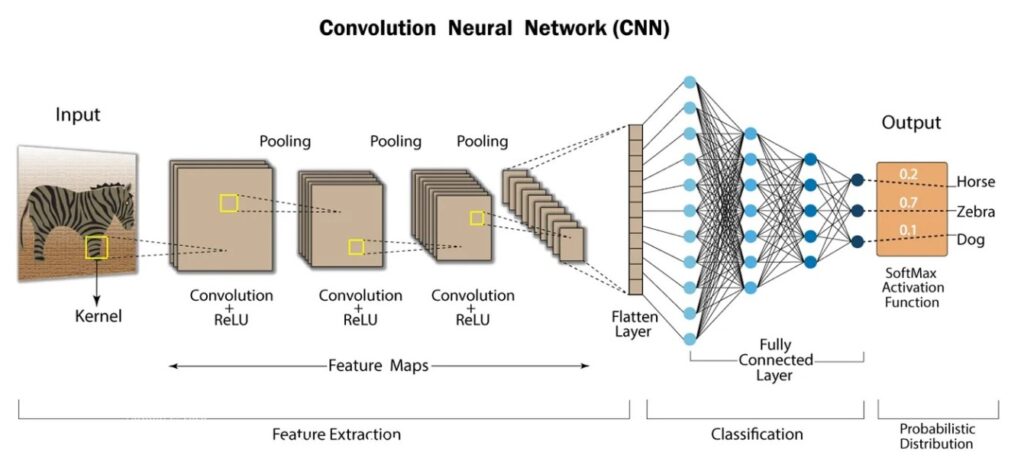
A typical CNN architecture is composed of several distinct layers, each performing a specific function to progressively extract higher-level features from the input image. Understanding these components is fundamental to grasping how to use Convolutional Neural Networks CNNs for image classification effectively.
- Convolutional Layer: This is the heart of a CNN. It applies a set of learnable filters (also known as kernels) to the input image, performing a convolution operation. Each filter slides over the image, detecting specific features like edges, textures, or patterns. The output of this layer is a feature map, highlighting where these features are present in the image. This process is crucial for feature extraction.
- Activation Functions (e.g., ReLU): After the convolution operation, an activation function (commonly the Rectified Linear Unit, ReLU) is applied element-wise to the feature map. ReLU introduces non-linearity into the model, allowing the network to learn more complex patterns and relationships that linear functions cannot capture.
- Pooling Layer (e.g., Max Pooling): Following the activation function, pooling layers are used to reduce the spatial dimensions (width and height) of the feature maps. This downsampling step helps to reduce the computational complexity, control overfitting, and make the detected features more robust to small shifts or distortions in the input image. Max pooling is a popular choice, selecting the maximum value within a given window.
- Fully Connected Layer: After several stacked convolutional and pooling layers, the high-level features extracted are flattened into a single vector and fed into one or more fully connected (dense) layers. These layers are similar to traditional neural network layers, where every neuron is connected to every neuron in the previous layer. The final fully connected layer typically has an output unit for each class, and a softmax activation function is used to produce probability scores for each class, indicating the likelihood that the input image belongs to a particular category.
Preparing Your Data for CNN Training
The success of any deep learning model, especially when learning how to use Convolutional Neural Networks CNNs for image classification, hinges significantly on the quality and preparation of your training data. A well-curated dataset ensures that your CNN can learn robust and generalizable features.
Data Collection and Preprocessing
Effective data preparation is a multi-step process crucial for optimal model accuracy and performance.
- Image Acquisition: Gather a diverse and representative dataset of images for each category you wish to classify. The quantity and quality of images directly impact the model's ability to learn.
- Resizing and Rescaling: All images must be resized to a uniform dimension (e.g., 224x224 pixels) to serve as consistent input for the CNN. Additionally, pixel values, typically ranging from 0-255, are often rescaled to a smaller range (e.g., 0-1) to aid numerical stability during training.
- Data Augmentation: This is a powerful technique to artificially increase the size and diversity of your training dataset by applying various transformations to the existing images. Common augmentation techniques include rotations, flips (horizontal/vertical), shifts, zooms, brightness adjustments, and shear transformations. Data augmentation significantly helps in preventing overfitting and improving the model's generalization capabilities, especially when dealing with limited datasets for image recognition tasks.
- Splitting Data: Divide your dataset into training, validation, and test sets. The training set is used to teach the model, the validation set helps tune hyperparameters and monitor performance during training, and the test set provides an unbiased evaluation of the final model's performance on unseen data.
Building and Training Your First CNN Model
Once your data is meticulously prepared, the next exciting step is to define your neural network architecture and commence the training process. This is where the theoretical understanding of how to use Convolutional Neural Networks CNNs for image classification translates into practical implementation.
Model Architecture Design
Designing an effective CNN architecture involves making strategic decisions about the number and type of layers, filter sizes, and connections. While starting from scratch is possible, leveraging established architectures (like VGG, ResNet, Inception) is often a more efficient approach, especially when utilizing transfer learning.
- Define Input Layer: Specify the shape of your input images (e.g., (height, width, channels)).
- Stack Convolutional and Pooling Layers: Begin with a few convolutional layers, each followed by an activation function (ReLU) and a pooling layer. The number of filters typically increases with depth (e.g., 32, 64, 128) to capture increasingly complex features.
- Add Dropout (Optional but Recommended): Insert dropout layers, particularly before fully connected layers, to randomly deactivate a fraction of neurons during training. This prevents complex co-adaptations on the training data and acts as a regularization technique, reducing overfitting.
- Flatten Layer: After the final pooling layer, flatten the 3D output into a 1D vector to prepare it for the fully connected layers.
- Fully Connected (Dense) Layers: Add one or more fully connected layers to interpret the extracted features. The number of neurons in these layers can vary, often decreasing towards the output.
- Output Layer: The final dense layer should have a number of neurons equal to the number of classes you are classifying. Use a 'softmax' activation function for multi-class classification problems, which outputs a probability distribution over the classes.
Compiling and Training the Model
With the architecture defined, the model needs to be compiled and then trained using your prepared dataset. This involves selecting key parameters that guide the learning process.
- Optimizer: The optimizer's role is to update the weights of the neural network during training to minimize the loss function. Popular choices include Adam, RMSprop, and SGD (Stochastic Gradient Descent). Adam is often a good starting point due to its adaptive learning rate capabilities.
- Loss Function: This function quantifies the discrepancy between the model's predicted output and the true labels. For multi-class classification, 'categorical_crossentropy' is commonly used if labels are one-hot encoded, or 'sparse_categorical_crossentropy' if labels are integer-encoded.
- Metrics: These are used to monitor the training and evaluation process. 'Accuracy' is the most common metric for classification tasks, indicating the proportion of correctly classified images.
- Epochs: An epoch represents one complete pass of the entire training dataset through the neural network. The number of epochs determines how many times the model will see the training data. More epochs can lead to better learning but also increase the risk of overfitting.
- Batch Size: During training, the dataset is divided into smaller batches. The batch size determines how many samples are processed before the model's weights are updated. Smaller batch sizes can introduce more noise but might lead to better generalization, while larger batches can speed up training but might converge to sharper minima.
- Training Process: The training involves feeding batches of images through the network, calculating the loss, and then using backpropagation to adjust the model's weights to minimize that loss. This iterative process refines the model's ability to classify images correctly.
For practical implementation, frameworks like TensorFlow or PyTorch are indispensable. They provide high-level APIs to define, compile, and train CNNs with relative ease. For instance, in TensorFlow/Keras, you would typically define your model using Sequential() or Model() APIs, then call model.compile() and finally model.fit().
Internal Link Suggestion: For a deeper dive into optimizing your model's performance, consider exploring resources on advanced deep learning techniques.
Evaluating and Improving CNN Performance
Training a CNN is only half the battle. To ensure your model is truly effective and ready for real-world deployment, thorough evaluation and continuous improvement are essential steps in mastering how to use Convolutional Neural Networks CNNs for image classification.
Performance Metrics
Beyond simple accuracy, several metrics provide a more nuanced understanding of your model's strengths and weaknesses:
- Accuracy: The proportion of correctly predicted instances out of the total instances. While a good overall indicator, it can be misleading in imbalanced datasets.
- Precision: The proportion of true positive predictions among all positive predictions. It answers: "Of all items predicted as positive, how many are actually positive?"
- Recall (Sensitivity): The proportion of true positive predictions among all actual positive instances. It answers: "Of all actual positive items, how many were correctly identified?"
- F1-Score: The harmonic mean of precision and recall. It provides a single score that balances both metrics, especially useful for imbalanced datasets.
- Confusion Matrix: A table that summarizes the performance of a classification model. It shows the number of true positives, true negatives, false positives, and false negatives, providing a detailed breakdown of correct and incorrect classifications for each class.
Advanced Techniques for Model Enhancement
Achieving high model accuracy often requires more than just a basic CNN architecture. Here are some advanced techniques:
- Transfer Learning: This is arguably one of the most powerful techniques in modern deep learning. Instead of training a CNN from scratch, you start with a pre-trained model (e.g., VGG16, ResNet50, InceptionV3) that has already learned to extract robust features from a massive dataset like ImageNet. You then fine-tune this pre-trained model on your specific dataset. This significantly reduces training time, requires less data, and often leads to superior performance, especially when your dataset is small.
- Fine-Tuning: A specific form of transfer learning where you unfreeze some of the later (closer to the output) layers of a pre-trained model and continue training them along with your newly added classification layers. This allows the model to adapt the generic features learned on the large dataset to the specific nuances of your target domain.
- Regularization Techniques:
- Dropout: As mentioned, randomly dropping out neurons during training prevents co-adaptation and reduces overfitting.
- L1/L2 Regularization: Adds a penalty to the loss function based on the magnitude of the model's weights. L1 (Lasso) encourages sparsity (some weights become zero), while L2 (Ridge) encourages smaller weights, both helping to prevent overfitting.
- Hyperparameter Tuning: Experimenting with different values for hyperparameters (e.g., learning rate, batch size, number of layers, filter sizes, optimizer choice) can significantly impact performance. Techniques like grid search, random search, or Bayesian optimization can automate this process.
- Ensemble Methods: Combining predictions from multiple CNN models (e.g., training several models with different architectures or initializations and averaging their predictions) can often yield higher accuracy than any single model.
Practical Applications and Best Practices
The ability to effectively use Convolutional Neural Networks CNNs for image classification opens doors to countless real-world applications, from automating quality control in manufacturing to enhancing security systems with advanced image recognition. Adhering to best practices ensures robust and deployable models.
Tips for Success
- Start Simple: Begin with a simpler CNN architecture and gradually increase complexity if needed. Over-engineering can lead to longer training times and potential overfitting.
- Leverage Pre-trained Models: For most image classification tasks, especially with limited data, transfer learning using pre-trained models is the recommended starting point. It's an incredibly powerful shortcut for achieving high performance.
- Monitor Training Progress: Keep a close eye on your model's loss and accuracy on both the training and validation sets during training. A widening gap between training and validation performance indicates overfitting.
- Understand Your Data: Spend time analyzing your dataset. Are there imbalances between classes? Are the images high quality? Are there enough samples? Data quality is paramount.
- Experiment with Hyperparameters: Don't be afraid to try different learning rates, batch sizes, and optimizer configurations. Small changes can sometimes yield significant improvements.
- Consider Hardware: Training large CNNs, particularly for complex computer vision tasks, is computationally intensive. Access to GPUs (Graphics Processing Units) can drastically reduce training times.
- Iterate and Refine: Model building is an iterative process. Train, evaluate, analyze errors, refine your data or architecture, and repeat.
- Document Your Experiments: Keep detailed records of the architectures, hyperparameters, and results of each experiment. This helps in understanding what works and what doesn't.
Call-to-Action: Ready to build your own image classification solution? Explore our comprehensive CNN framework tutorials for hands-on guidance.
Frequently Asked Questions
What is the primary advantage of CNNs over traditional neural networks for image classification?
The primary advantage of CNNs lies in their specialized architecture that inherently understands the spatial relationships within images. Unlike traditional neural networks which treat each pixel as an independent feature, CNNs use convolutional layers to automatically perform feature extraction, detecting local patterns like edges, textures, and shapes. This hierarchical learning, combined with pooling layers for dimensionality reduction and robustness to translation, makes them exceptionally effective at processing visual data and achieving high model accuracy in image recognition tasks.
How much data do I need to effectively train a CNN for image classification?
The amount of data required depends heavily on the complexity of your problem and whether you're training a CNN from scratch or using transfer learning. For training a deep CNN from scratch on a complex task, you might need tens of thousands, or even hundreds of thousands, of labeled images per class. However, if you leverage a pre-trained model and fine-tune it on your specific task, you can achieve excellent results with significantly less training data – often just hundreds or even dozens of images per class can suffice, especially when combined with effective data augmentation.
What are common challenges when using CNNs for image classification?
Common challenges include:
- Overfitting: The model performs well on training data but poorly on unseen data. This can be mitigated with more data, data augmentation, regularization techniques (dropout, L1/L2), and early stopping.
- Computational Resources: Training deep CNNs can be computationally expensive, requiring powerful GPUs.
- Data Scarcity: Acquiring large, high-quality, labeled datasets can be difficult and time-consuming. Transfer learning is a key solution here.
- Hyperparameter Tuning: Finding the optimal set of hyperparameters (e.g., learning rate, batch size, optimizer) can be challenging and requires experimentation.
- Interpretability: Understanding exactly why a CNN makes a particular classification can be difficult due to their "black box" nature, though techniques like saliency maps are emerging.
Can CNNs classify images with multiple objects or complex scenes?
Yes, CNNs are highly capable of classifying images with multiple objects or complex scenes. While basic image classification assigns a single label to an entire image, more advanced CNN architectures and techniques extend this capability. For instance, object detection models (like Faster R-CNN, YOLO, SSD) use CNNs to not only classify objects but also to localize them within an image by drawing bounding boxes. Semantic segmentation models further refine this by classifying each pixel in an image, allowing for precise understanding of complex scenes. These advanced applications build directly upon the fundamental principles of how to use Convolutional Neural Networks CNNs for image classification.

0 Komentar