
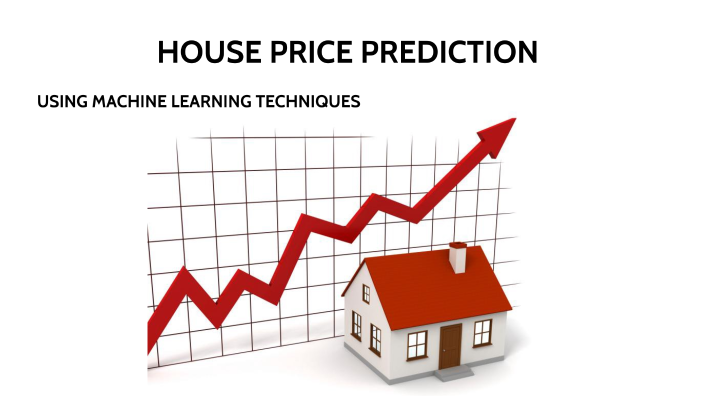
Machine Learning for Predicting Housing Prices and Real Estate Market Trends: An Expert's Guide
In today's volatile economic landscape, understanding and predicting the ebb and flow of the real estate market is paramount for investors, developers, agents, and homebuyers alike. Traditional methods often fall short in capturing the intricate dynamics of property valuation. This is where machine learning for predicting housing prices and real estate market trends emerges as a transformative force, offering unparalleled accuracy and foresight. Dive into how cutting-edge algorithms are revolutionizing our ability to forecast market shifts, identify lucrative opportunities, and make data-driven decisions that propel success in the competitive real estate domain.
Why Machine Learning is a Game-Changer in Real Estate
The real estate market is notoriously complex, influenced by a myriad of factors ranging from economic indicators and demographic shifts to local amenities and even weather patterns. Historically, predictions relied heavily on expert intuition, historical averages, and rudimentary statistical models. While these approaches offered some insight, they lacked the capacity to process vast, disparate datasets and identify subtle, non-linear relationships that truly drive property values.
Beyond Traditional Analysis
Machine learning algorithms excel precisely where traditional methods falter. They can ingest colossal amounts of data – structured and unstructured – learning from past patterns to predict future outcomes with remarkable precision. This shift from descriptive and diagnostic analytics to advanced predictive analytics empowers stakeholders to move beyond reactive strategies and embrace proactive, informed decision-making. For instance, anticipating a surge in demand in a specific neighborhood due to urban planning initiatives can give investors a significant edge, enabling them to acquire properties before prices inflate.
The Data Fueling Predictive Power
The efficacy of any machine learning model hinges entirely on the quality and breadth of the data it's fed. For accurate housing market forecasting, a comprehensive dataset is not just beneficial, it's essential. The more relevant features the model can analyze, the more robust and reliable its predictions will be.
Key Data Sources for Robust Models
- Property-Specific Data: This includes fundamental attributes like square footage, number of bedrooms/bathrooms, lot size, age of property, renovation history, and previous sale prices.
- Location-Based Data: Proximity to schools, public transport, parks, hospitals, shopping centers, and employment hubs significantly impacts value. Geospatial data, including zoning regulations and future development plans, is also crucial.
- Economic Indicators: Macroeconomic factors such as interest rates (especially mortgage rates), inflation, GDP growth, unemployment rates, and consumer confidence indices provide a broader market context.
- Demographic Information: Population growth, age distribution, household income levels, and migration patterns influence local demand and supply and demand dynamics.
- Market Trends Data: Historical sales volumes, average days on market, listing prices versus sale prices, and inventory levels offer insights into market liquidity and activity.
- Online Sentiment and Search Data: Analyzing social media trends, news articles, and search queries related to specific neighborhoods or property types can reveal emerging interest or concerns.
- Environmental Data: Factors like air quality, flood risk, and proximity to green spaces are increasingly influencing buyer decisions and can be integrated.
The integration of these diverse data streams allows machine learning models to paint a holistic picture, capturing the complex interplay of factors that determine property valuation.
Core Machine Learning Models for Housing Price Prediction
Various machine learning algorithms are employed for predicting housing prices, each with its strengths and optimal use cases. The choice of model often depends on the nature of the data, the desired level of interpretability, and the specific prediction task (e.g., predicting a precise price vs. predicting a price range).
Regression Models
Regression algorithms are fundamental for predicting continuous values, making them ideal for housing price prediction.
- Linear Regression: A foundational model, simple to interpret, but assumes a linear relationship between features and price. While often a starting point, it might not capture complex real estate dynamics.
- Ridge and Lasso Regression: Regularized versions of linear regression that help prevent overfitting, especially when dealing with many features. They are excellent for feature selection and improving model stability.
- Support Vector Regression (SVR): Effective for high-dimensional data and cases where the relationship is non-linear. SVR aims to find a function that deviates from the true output by no more than a certain margin.
Time Series Analysis
When the goal is to predict future real estate market trends or forecast prices over time, time series models are indispensable. These models account for temporal dependencies in the data.
- ARIMA (AutoRegressive Integrated Moving Average): A classic statistical model for time series forecasting, suitable for data with trends, seasonality, and cycles.
- Prophet (by Facebook): Designed for forecasting time series data with strong seasonal effects and multiple historical data points. It's robust to missing data and outliers.
- Recurrent Neural Networks (RNNs) / LSTMs (Long Short-Term Memory): Advanced deep learning models particularly adept at recognizing patterns in sequential data, making them powerful for complex time series forecasting where non-linear patterns and long-term dependencies exist.
Ensemble Methods
Ensemble methods combine multiple machine learning models to produce a more accurate and robust prediction than any single model alone. They are often the top performers in real-world predictive tasks.
- Random Forest: Builds multiple decision trees and merges their predictions. It's robust to overfitting and can handle a large number of features. It also provides feature importance, helping identify which factors most influence housing prices.
- Gradient Boosting Machines (GBM) / XGBoost / LightGBM: These algorithms build trees sequentially, with each new tree correcting errors made by the previous ones. They are highly efficient and incredibly powerful for complex predictive tasks, often winning data science competitions.
Practical Applications and Benefits
The adoption of machine learning in real estate extends beyond mere price prediction, offering a spectrum of benefits across various segments of the market.
For Investors and Developers
- Optimized Investment Strategies: ML models can identify undervalued properties, forecast areas with high appreciation potential, and predict optimal times for buying or selling, leading to superior real estate investment strategies.
- Risk Assessment: By analyzing market volatility and economic indicators, ML can help assess investment risks, guiding portfolio diversification.
- Development Planning: Developers can leverage ML to predict demand for specific property types in certain locations, optimizing land acquisition and construction projects for maximum profitability and reduced vacancy rates.
For Homebuyers and Sellers
- Fair Pricing: Homebuyers can use ML-powered tools to ensure they are not overpaying, while sellers can accurately price their homes for a quicker, more profitable sale.
- Personalized Recommendations: AI can match buyers with properties that truly fit their preferences and budget, even uncovering options they might not have considered.
- Market Timing: Both buyers and sellers can gain insights into the best time to enter or exit the market, crucial for maximizing returns or minimizing costs.
For Real Estate Agents and Brokers
- Lead Generation and Qualification: ML can identify potential clients most likely to buy or sell, optimizing agents' outreach efforts.
- Automated Valuation Models (AVMs): Agents can use AVMs for quick, data-driven property appraisals, saving time and increasing efficiency. Explore our AVM solutions.
- Market Analysis Reports: Generate sophisticated market trend analysis reports for clients, demonstrating expertise and providing actionable insights.
Challenges and Considerations
While the potential of machine learning for predicting housing prices is immense, it's not without its challenges. Addressing these ensures the reliability and ethical application of these powerful tools.
Data Quality and Availability
The "garbage in, garbage out" principle applies strongly here. Inaccurate, incomplete, or biased data will lead to flawed predictions. Real estate data can be fragmented, inconsistent, and often requires significant cleaning and preprocessing. Access to comprehensive, granular data is often a hurdle.
Model Interpretability and Bias
Complex models, especially deep learning networks, can be "black boxes," making it difficult to understand why a particular prediction was made. This lack of interpretability can be a concern in high-stakes decisions like property valuation. Furthermore, if historical data contains biases (e.g., related to redlining or discriminatory lending practices), the ML model might inadvertently perpetuate these biases, leading to unfair or inaccurate predictions for certain demographics or neighborhoods.
Building Your Own Predictive Model: Actionable Steps
For those looking to delve into building their own housing price prediction models, here's a simplified roadmap:
- Define Your Goal: Are you predicting a precise price, a price range, or future market direction? This informs your model choice.
- Data Collection: Gather as much relevant data as possible (property features, economic indicators, demographic data, etc.). Public datasets (e.g., Zillow, Kaggle, government census data) can be a starting point.
- Data Cleaning and Preprocessing: This is arguably the most time-consuming but critical step. Handle missing values, outliers, transform categorical data, and normalize/scale numerical features.
- Feature Engineering: Create new, more informative features from existing ones (e.g., 'age of property' from 'year built', 'price per square foot', 'distance to nearest school').
- Exploratory Data Analysis (EDA): Understand your data's distributions, correlations, and potential relationships. This helps in feature selection and model choice.
- Model Selection: Choose appropriate ML algorithms (e.g., Random Forest, XGBoost, SVR). Start with simpler models and progress to more complex ones.
- Model Training: Split your data into training and testing sets. Train your chosen model on the training data.
- Model Evaluation: Assess your model's performance using metrics like Mean Absolute Error (MAE), Root Mean Squared Error (RMSE), or R-squared. Test on unseen data to ensure generalization.
- Hyperparameter Tuning: Optimize model parameters to achieve the best performance.
- Deployment and Monitoring: Once satisfied, deploy the model. Continuously monitor its performance and retrain with new data to maintain accuracy as market conditions evolve.
For professional guidance on building robust data-driven real estate solutions, contact our expert team.
The Future of Real Estate with AI and ML
The integration of artificial intelligence and machine learning in real estate is only in its nascent stages. We can anticipate even more sophisticated applications, including:
- Hyper-Personalized Property Search: AI agents that understand individual preferences down to the minutiae, actively searching and recommending properties before they even hit the market.
- Predictive Maintenance: ML models analyzing property data to predict maintenance needs, reducing costs and extending asset lifespan.
- Smart City Integration: Real estate predictions becoming intrinsically linked with urban development patterns and smart city data, optimizing resource allocation and infrastructure planning.
- Dynamic Pricing Models: Real-time price adjustments based on instantaneous market shifts, similar to airline ticket pricing.
Frequently Asked Questions
How accurate is machine learning for housing price prediction?
The accuracy of machine learning for housing price prediction varies significantly based on data quality, model complexity, the number of relevant features, and market stability. Highly sophisticated models trained on comprehensive, clean datasets can achieve very high accuracy, often reducing prediction errors to within a few percentage points of the actual sale price. However, no model is 100% accurate, especially in highly volatile markets or when unforeseen events occur.
What data is used in ML real estate models?
ML real estate models typically integrate a wide array of data points including property-specific details (size, age, features), location data (proximity to amenities, school districts, zoning), economic indicators (interest rates, employment rates, GDP), demographic information (population growth, income levels), and historical market trends (sales volume, inventory). The more diverse and granular the data, the more robust the property valuation models become.
Can ML predict real estate market crashes?
While machine learning algorithms can identify patterns and anomalies that might precede a market downturn, predicting a precise "crash" is extremely challenging. ML excels at identifying correlations and trends, and it can flag unusual shifts in economic indicators or sudden changes in supply and demand dynamics that might signal instability. However, market crashes are often triggered by complex, sometimes unpredictable, macro-economic events or "black swan" incidents that are difficult for any model to foresee with certainty.
Who benefits most from ML in real estate?
Virtually all stakeholders in the real estate ecosystem benefit from machine learning for predicting housing prices and real estate market trends. Real estate investors gain an edge in identifying lucrative opportunities and managing risk. Developers can optimize project planning and site selection. Homebuyers and sellers can make more informed decisions about pricing and timing. Real estate agents and brokers can enhance their market analysis, lead generation, and client advisory services, transforming their approach to market trend analysis.

0 Komentar