
Revolutionizing Healthcare: Machine Learning for Predictive Modeling of Patient Outcomes
The landscape of modern medicine is undergoing a profound transformation, driven by the unprecedented volume of data generated daily. At the forefront of this revolution is machine learning for healthcare predictive modeling, a groundbreaking approach poised to redefine how we understand, prevent, and treat diseases. By harnessing the power of artificial intelligence, healthcare providers can move beyond reactive care, leveraging sophisticated algorithms to anticipate patient needs, predict disease progression, and ultimately, significantly improve patient outcomes. This comprehensive guide delves into how machine learning is not just a technological advancement, but a critical imperative for a more proactive, personalized, and efficient healthcare future.
The Imperative for Predictive Modeling in Healthcare
Traditional healthcare systems often operate reactively, responding to illnesses after they manifest. This approach, while effective in acute scenarios, struggles with the complexities of chronic diseases, population health management, and the escalating costs of care. The sheer volume of medical data – from electronic health records (EHRs) and genomic sequences to medical imaging and wearable device data – presents both a challenge and an unparalleled opportunity. Without advanced analytical tools, this data remains largely untapped, its potential to save lives and optimize care unrealized.
Addressing Healthcare Challenges with Data-Driven Insights
Healthcare faces multifaceted challenges: rising costs, an aging global population, increasing prevalence of chronic conditions, and the ever-present threat of new infectious diseases. Predictive analytics in healthcare offers a powerful antidote. By identifying patterns and correlations in vast datasets, machine learning models can forecast critical events such as patient deterioration, hospital readmissions, or the onset of severe complications. This foresight enables timely interventions, reducing the burden on healthcare systems and improving the quality of life for patients. The ability to predict, rather than merely react, is the cornerstone of a truly intelligent healthcare system.
The Shift from Reactive to Proactive Care
The transition from a reactive to a proactive healthcare model is perhaps the most significant promise of machine learning. Instead of waiting for symptoms to appear, predictive models can flag individuals at high risk for certain conditions, allowing for early disease detection and preventative measures. This paradigm shift supports personalized medicine, where treatment plans are tailored not just to a patient's current condition, but to their predicted response to various therapies and their individual risk profile. For instance, identifying patients prone to sepsis early through predictive algorithms can be life-saving, drastically reducing mortality rates and intensive care unit (ICU) stays. This proactive approach is fundamental to achieving sustainable improvements in patient outcomes.
Core Concepts: Machine Learning and Predictive Modeling Explained
To fully appreciate the impact of machine learning on healthcare, it's essential to understand its foundational concepts and how they translate into actionable insights for patient care.
What is Machine Learning?
Machine learning (ML) is a subset of artificial intelligence (AI) that empowers computer systems to learn from data, identify patterns, and make decisions or predictions with minimal human intervention. Unlike traditional programming, where rules are explicitly coded, ML algorithms learn from examples, continuously improving their performance as they are exposed to more data. In healthcare, this means training models on historical patient data to recognize indicators of disease, predict treatment efficacy, or forecast future health events. The goal is to extract meaningful, actionable intelligence from complex, often unstructured, medical information.
What is Predictive Modeling?
Predictive modeling, within the context of healthcare, involves using statistical techniques and machine learning algorithms to forecast future probabilities and trends related to patient health. These models analyze historical data to identify relationships between various input variables (e.g., demographics, medical history, lab results, lifestyle factors) and a target outcome (e.g., disease onset, readmission risk, treatment response, mortality). The output is typically a probability or a classification that helps clinicians make informed decisions, facilitating better clinical decision support and patient outcomes improvement. For example, a model might predict a patient's likelihood of developing type 2 diabetes within the next five years based on their current health metrics and genetic predispositions.
Key ML Algorithms for Healthcare
A variety of machine learning algorithms are deployed in healthcare predictive modeling, each suited for different types of problems and data structures:
- Supervised Learning: This category includes algorithms trained on labeled datasets, meaning the input data is paired with the correct output.
- Classification Algorithms: Used for predicting categorical outcomes (e.g., disease vs. no disease, high-risk vs. low-risk). Examples include Logistic Regression, Support Vector Machines (SVMs), Decision Trees, Random Forests, and Gradient Boosting. These are crucial for risk stratification.
- Regression Algorithms: Used for predicting continuous numerical outcomes (e.g., blood pressure levels, length of hospital stay). Examples include Linear Regression and Polynomial Regression.
- Unsupervised Learning: These algorithms work with unlabeled data to find hidden patterns or structures.
- Clustering Algorithms: Group similar data points together (e.g., identifying patient subgroups with similar disease progression or treatment responses). K-Means and Hierarchical Clustering are common.
- Dimensionality Reduction: Techniques like Principal Component Analysis (PCA) help simplify complex datasets, making them easier to analyze and visualize.
- Deep Learning: A subfield of ML involving neural networks with many layers, particularly effective for complex data like medical images, text (EHR notes), and genomic sequences. Convolutional Neural Networks (CNNs) are excellent for image analysis, while Recurrent Neural Networks (RNNs) and Transformers are used for sequential data.
Transforming Patient Outcomes: Key Applications of ML Predictive Models
The practical applications of machine learning for healthcare predictive modeling are vast and continue to expand, fundamentally reshaping patient care pathways.
Early Disease Detection and Diagnosis
One of the most impactful applications is the early detection of diseases, often before symptoms become apparent. ML algorithms can analyze medical images (X-rays, MRIs, CT scans) with remarkable accuracy, sometimes surpassing human radiologists in identifying subtle anomalies indicative of conditions like cancer or neurological disorders. For instance, deep learning models can detect early signs of diabetic retinopathy from retinal scans or identify malignant skin lesions from dermatoscopic images. Similarly, predictive models analyzing vital signs, lab results, and EHR data can anticipate the onset of sepsis, acute kidney injury, or cardiac arrest, enabling clinicians to intervene rapidly.
Risk Stratification and Patient Prioritization
Machine learning excels at identifying patients at high risk for adverse events, allowing healthcare providers to prioritize interventions and allocate resources effectively. Models can predict a patient's likelihood of hospital readmission within 30 days, enabling targeted post-discharge support. They can also assess the risk of chronic disease progression (e.g., heart failure, diabetes complications) or identify individuals who may benefit most from specific preventative programs. This capability for precise risk stratification is vital for proactive population health management and optimizing care pathways, ensuring that limited resources are directed where they can have the greatest impact.
Personalized Treatment Plans and Drug Discovery
The concept of personalized medicine is brought to life by machine learning. By integrating genomic data, patient history, lifestyle factors, and real-world evidence, ML models can predict how an individual patient will respond to different medications or treatment protocols. This allows clinicians to select the most effective therapy, minimizing adverse drug reactions and improving therapeutic outcomes. Furthermore, machine learning is accelerating drug discovery and development by identifying potential drug candidates, predicting their efficacy and toxicity, and optimizing clinical trial design, drastically cutting down the time and cost associated with bringing new treatments to market.
Optimizing Resource Allocation and Operational Efficiency
Beyond direct patient care, machine learning contributes significantly to the operational efficiency of healthcare systems. Predictive models can forecast patient flow, emergency room demand, and bed occupancy rates, allowing hospitals to optimize staffing levels, reduce wait times, and improve overall resource allocation. This leads to more efficient operations, reduced costs, and ultimately, better patient experiences. For example, predicting surgical cancellations or no-shows can help clinics manage their schedules more effectively, maximizing throughput.
Predicting Epidemic Outbreaks and Public Health Trends
Machine learning models can analyze vast amounts of data from diverse sources – including social media, news feeds, climate data, and travel patterns – to predict the spread of infectious diseases and identify potential epidemic outbreaks. This capability is crucial for public health agencies to implement timely interventions, allocate vaccines, and manage resources during health crises. The insights derived from such models support informed decision-making at a population level, enhancing global health security.
The Data Backbone: Fueling ML Models with Healthcare Information
The success of any machine learning model hinges on the quality and quantity of the data it's trained on. Healthcare generates an unprecedented volume and variety of data, making it a rich, albeit complex, domain for ML applications.
Leveraging Electronic Health Records (EHRs)
Electronic Health Records (EHRs) are a primary source of data for predictive modeling. They contain a wealth of information, including patient demographics, medical history, diagnoses, medications, lab results, vital signs, and clinical notes. While invaluable, EHR data often presents challenges due to its unstructured nature (e.g., free-text notes), missing values, and inconsistencies. Advanced natural language processing (NLP) techniques are often employed to extract meaningful information from textual data within EHRs, transforming raw clinical narratives into structured features suitable for machine learning algorithms.
Wearable Devices and IoT Data
The proliferation of wearable devices (smartwatches, fitness trackers) and Internet of Things (IoT) sensors provides a continuous stream of real-time physiological data, such as heart rate, sleep patterns, activity levels, and even blood glucose. This continuous monitoring offers an unprecedented opportunity for remote patient monitoring, early detection of health deviations, and chronic disease management. Integrating this passive, continuous data with traditional clinical data significantly enhances the predictive power of ML models, moving towards truly proactive and preventative care.
Medical Imaging and Genomic Data
High-resolution medical images (MRI, CT, X-ray, ultrasound) and complex genomic sequences represent massive datasets that require specialized machine learning techniques, particularly deep learning. Analyzing medical images can lead to more accurate and earlier diagnoses of cancers, neurological disorders, and cardiovascular diseases. Genomic data, meanwhile, holds the key to understanding individual predispositions to diseases, predicting drug responses based on genetic makeup, and advancing personalized medicine to an entirely new level. Combining these diverse data modalities creates a holistic view of patient health, enabling more precise and powerful predictions.
Data Preprocessing and Feature Engineering
Before any data can be fed into a machine learning model, it must undergo rigorous preprocessing. This involves cleaning (handling missing values, correcting errors), transforming (normalizing, standardizing), and structuring the data. Feature engineering is a critical step where domain expertise is used to create new, more informative variables from the raw data. For example, instead of using just individual lab values, a new feature might be created representing the trend of a lab value over time, which could be more predictive of patient outcomes. This meticulous preparation is vital for ensuring the accuracy and reliability of predictive models.
Overcoming Challenges and Ensuring Ethical Implementation
While the potential of machine learning for healthcare predictive modeling is immense, its implementation is not without significant challenges that demand careful consideration and robust solutions.
Data Privacy and Security
Healthcare data is highly sensitive, making data privacy and security paramount. Compliance with regulations like HIPAA (Health Insurance Portability and Accountability Act) in the US and GDPR (General Data Protection Regulation) in Europe is non-negotiable. Implementing strong encryption, anonymization, and de-identification techniques is crucial. Furthermore, robust cybersecurity measures are needed to protect against data breaches, ensuring patient trust and preventing misuse of sensitive health information. Ethical guidelines must always govern data handling.
Model Interpretability and Explainable AI (XAI)
Many advanced machine learning models, particularly deep learning neural networks, operate as "black boxes," making it difficult to understand how they arrive at their predictions. In healthcare, where decisions can have life-or-death consequences, clinicians need to trust and understand the rationale behind a model's output. This has led to the emergence of Explainable AI (XAI), which focuses on developing methods to make AI models more transparent and interpretable. Providing clear explanations for predictions (e.g., "The model predicts high sepsis risk due to elevated lactate, declining blood pressure, and recent fever spikes") is crucial for clinical adoption and accountability.
Bias and Fairness in Algorithms
Machine learning models are only as unbiased as the data they are trained on. If historical healthcare data reflects existing societal biases (e.g., disparities in care for certain demographic groups), the models can inadvertently perpetuate or even amplify these biases, leading to unfair or inequitable outcomes. For example, a model trained on data predominantly from one ethnic group might perform poorly or provide inaccurate predictions for another. Addressing algorithmic bias requires careful data curation, rigorous testing across diverse patient populations, and continuous monitoring to ensure fairness and equity in healthcare delivery.
Regulatory Compliance and Clinical Validation
Deploying AI and ML tools in clinical settings requires navigating complex regulatory landscapes. Healthcare devices and software, including predictive models, often fall under the purview of regulatory bodies like the FDA (Food and Drug Administration) in the US. Robust clinical validation studies are essential to demonstrate the safety, efficacy, and accuracy of these models in real-world scenarios. This involves rigorous testing, peer review, and often, multi-center trials to build a strong evidence base for their utility and reliability.
Integration with Existing Healthcare Workflows
Even the most accurate predictive model is useless if it cannot be seamlessly integrated into existing clinical workflows. Healthcare professionals are already burdened with heavy workloads; new technologies must simplify, not complicate, their tasks. This requires intuitive user interfaces, compatibility with existing EHR systems, and a design that supports, rather than replaces, human clinical judgment. Successful integration depends on close collaboration between data scientists, clinicians, and IT professionals to ensure practical applicability and user adoption.
Actionable Steps for Healthcare Providers and Innovators
For healthcare organizations and technology innovators looking to harness the power of machine learning for patient outcomes, strategic planning and execution are paramount.
Building a Robust Data Infrastructure
The foundation of effective predictive modeling is a strong data infrastructure. This involves:
- Data Governance: Establishing clear policies and procedures for data collection, storage, access, and usage, ensuring compliance with privacy regulations.
- Data Interoperability: Ensuring that different systems (EHRs, lab systems, imaging platforms) can seamlessly exchange and integrate data.
- Data Quality: Implementing processes for data cleaning, validation, and standardization to ensure accuracy and completeness.
- Secure Data Lakes/Warehouses: Creating centralized, secure repositories for large volumes of diverse healthcare data.
Investing in these foundational elements is crucial before embarking on advanced ML projects.
Fostering Cross-Disciplinary Collaboration
Successful implementation of machine learning for healthcare predictive modeling requires a collaborative ecosystem. Data scientists, machine learning engineers, clinicians (doctors, nurses, pharmacists), medical informaticians, ethicists, and legal experts must work together. Clinicians provide invaluable domain expertise, ensuring models address real-world problems and their outputs are clinically relevant. Data scientists bring the technical prowess, while ethicists and legal experts ensure responsible and compliant deployment. This interdisciplinary approach is vital for developing practical, ethical, and impactful solutions.
Prioritizing Pilot Projects and Scalability
Instead of attempting a large-scale overhaul, healthcare organizations should start with well-defined pilot projects. Focus on specific, high-impact problems where data is readily available and the potential for measurable improvement in patient outcomes is clear (e.g., predicting readmissions for a specific condition). Once a pilot demonstrates success, focus on developing a strategy for scalability, ensuring the solution can be expanded across departments or even to other facilities while maintaining performance and reliability.
Emphasizing Continuous Monitoring and Model Refinement
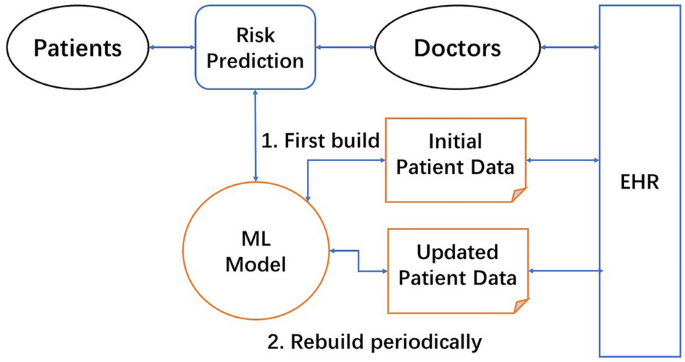
Machine learning models are not "set and forget" solutions. Healthcare data is dynamic; patient populations change, treatment protocols evolve, and new diseases emerge. Therefore, continuous monitoring of model performance is critical. This involves:
- Performance Drift Detection: Regularly checking if the model's accuracy or predictive power is declining over time.
- Retraining and Updating: Periodically retraining models with new data to keep them relevant and accurate.
- Feedback Loops: Establishing mechanisms for clinicians to provide feedback on model predictions, which can be used to further refine and improve the algorithms.
This iterative process ensures that the predictive models remain effective and provide ongoing value to patient care.
Frequently Asked Questions
How does machine learning improve patient outcomes?
Machine learning improves patient outcomes by enabling proactive, personalized, and efficient healthcare. It achieves this through early disease detection, allowing for timely intervention; precise risk stratification to prioritize care for high-risk patients; development of personalized treatment plans based on individual patient data; optimization of hospital resources to reduce wait times and improve access; and prediction of public health trends to manage epidemics. These capabilities lead to reduced mortality, fewer complications, shorter hospital stays, and overall better quality of life for patients.
What are the main types of data used for healthcare predictive modeling?
Healthcare predictive modeling primarily leverages diverse data types including: Electronic Health Records (EHRs) which contain patient demographics, medical history, lab results, and clinical notes; medical imaging data (e.g., X-rays, MRIs, CT scans); genomic data providing insights into genetic predispositions and drug responses; and real-time data from wearable devices and IoT sensors, which offer continuous physiological monitoring. Combining these data sources provides a comprehensive view for more accurate predictions.
What challenges exist in implementing ML for healthcare?
Key challenges in implementing machine learning in healthcare include ensuring data privacy and security (e.g., HIPAA compliance); addressing model interpretability and the "black box" nature of some algorithms; mitigating algorithmic bias and ensuring fairness across diverse patient populations; navigating complex regulatory compliance and conducting rigorous clinical validation; and seamlessly integrating ML tools into existing, often complex, healthcare workflows without disrupting clinical operations. Overcoming these requires a multi-faceted approach involving technology, policy, and collaboration.
Can ML replace human doctors in predictive diagnostics?
No, machine learning is designed to augment, not replace, human doctors in predictive diagnostics. ML models serve as powerful clinical decision support tools, providing clinicians with highly accurate predictions and insights that might be missed by the human eye or overwhelmed by data volume. They can flag high-risk patients or suggest potential diagnoses, but the final diagnostic decision, treatment plan, and compassionate patient care always remain within the purview of the qualified healthcare professional. The future of healthcare lies in the synergistic collaboration between human expertise and advanced AI capabilities.
What is the future outlook for AI in healthcare predictive modeling?
The future outlook for AI in healthcare predictive modeling is incredibly promising. We anticipate continued advancements in model accuracy and interpretability, deeper integration of multi-modal data (e.g., combining clinical, genomic, and social determinants of health data), and broader adoption across various healthcare settings. The focus will increasingly shift towards preventative and personalized care, with AI enabling real-time risk assessment, adaptive treatment protocols, and more efficient resource allocation. As regulatory frameworks evolve and trust in AI grows, machine learning will become an indispensable tool for achieving superior patient outcomes globally.

0 Komentar