
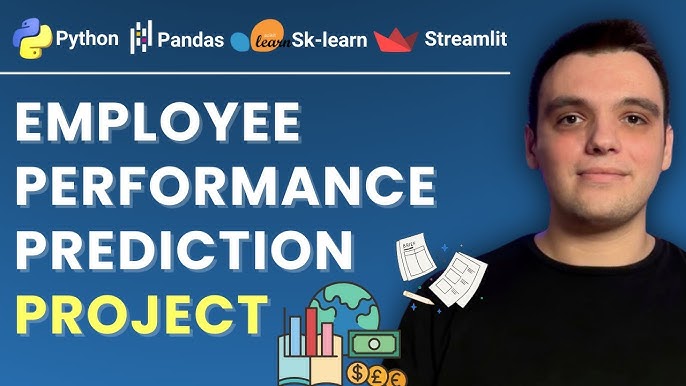
Revolutionizing HR: Leveraging Machine Learning for Predicting Employee Productivity
In today's hyper-competitive business landscape, understanding and optimizing human capital is paramount. Organizations are increasingly turning to advanced technologies to gain a decisive edge. One such transformative innovation is the application of machine learning for predicting employee productivity. This powerful confluence of data science and human resources is not just a theoretical concept; it's a practical, actionable strategy poised to redefine how businesses approach talent management, optimize workforce planning, and foster unparalleled organizational efficiency. Dive in to discover how predictive analytics, powered by sophisticated algorithms, can unlock unprecedented insights into your team's potential, drive strategic decision-making, and create a more engaged, high-performing workforce.
The Imperative of Predictive HR Analytics in Modern Business
The traditional methods of evaluating employee performance often rely on lagging indicators – looking back at what has already happened. While valuable, these historical insights offer limited foresight. Modern HR demands a proactive approach, one that can anticipate future trends, identify potential bottlenecks, and pinpoint opportunities for intervention before issues arise. This is precisely where predictive HR analytics, underpinned by machine learning, becomes indispensable. By analyzing vast datasets, machine learning models can identify subtle patterns and correlations that human analysts might miss, offering a forward-looking perspective on employee output and potential.
Imagine being able to foresee which employees are at risk of burnout, who might be considering leaving, or which training programs will yield the highest boost in team performance. This foresight allows HR departments to transition from reactive problem-solvers to strategic business partners, contributing directly to the bottom line through enhanced workforce optimization and more effective talent management strategies. The goal is not merely to measure productivity, but to understand its drivers and predict its trajectory, enabling proactive interventions that elevate individual and collective output.
Key Benefits of Deploying Machine Learning for Productivity Prediction
- Proactive Intervention & Retention: Identify early warning signs of declining employee performance or potential attrition, allowing managers to intervene with targeted support, training, or engagement initiatives before it's too late. This significantly impacts retention strategies.
- Optimized Resource Allocation: Accurately forecast staffing needs, skill gaps, and project requirements, ensuring the right talent is in the right place at the right time. This leads to substantial gains in organizational efficiency.
- Personalized Employee Development: Tailor training programs and career development paths based on predictive insights into individual strengths, weaknesses, and future potential. This fosters continuous skill development and boosts overall competency.
- Enhanced Hiring & Onboarding: Refine recruitment processes by identifying the characteristics of high-performing employees, leading to better hiring decisions and more effective onboarding experiences.
- Improved Employee Engagement: By addressing potential issues proactively and investing in personalized development, organizations can cultivate a more engaged and motivated workforce. High employee engagement is a known driver of productivity.
- Fairer Performance Evaluation: Supplement traditional performance reviews with objective, data-driven insights, reducing bias and ensuring a more equitable assessment of contributions.
The Data Fueling Predictive Models: What Information Powers Insights?
The efficacy of any machine learning model hinges on the quality and breadth of the data it consumes. For predicting employee productivity, a diverse range of data points can be leveraged, transforming raw information into actionable data-driven insights. It's crucial to aggregate this data responsibly and ethically, always prioritizing employee privacy and data security. Common data categories include:
- Historical Performance Metrics: Past appraisal scores, sales figures, project completion rates, quality of work, customer feedback, 360-degree reviews. These provide a baseline for individual output.
- HRIS Data: Tenure, role, department, salary, promotion history, absenteeism rates, leave patterns, training participation, and certification records.
- Employee Engagement Data: Results from surveys (e.g., eNPS, pulse surveys), feedback from internal communication platforms, participation in company events.
- Collaboration & Communication Patterns: Data from internal communication tools (e.g., Slack, Teams), email volume (anonymized), meeting attendance. This can indicate team cohesion and information flow.
- Workload & Project Management Data: Task completion rates, time spent on projects, project complexity, adherence to deadlines.
- Demographic Data (with extreme caution for bias): Age, gender, education level. While potentially useful, this data must be handled with the utmost care to prevent discriminatory outcomes and bias in models.
- Environmental Factors: Team size, manager-employee ratio, office location, remote work status.
The challenge lies not just in collecting data, but in cleaning, normalizing, and integrating disparate datasets into a unified format suitable for analysis. This data engineering phase is critical for the success of any AI in HR initiative.
Understanding Machine Learning Models for Productivity Forecasting
At the heart of machine learning for predicting employee productivity are various algorithms, each suited for different types of data and predictive tasks. The choice of model depends on the specific question being asked and the nature of the data available. Here are some commonly used approaches:
Regression Models
These models are used when the outcome variable (productivity) is continuous, such as sales volume, lines of code written, or customer satisfaction scores. Linear Regression, Ridge Regression, and Lasso Regression are fundamental, while more complex models like Random Forests or Gradient Boosting Machines (e.g., XGBoost, LightGBM) can capture non-linear relationships and interactions between features, offering more robust predictions of employee performance.
Classification Models
If productivity is categorized (e.g., "high," "medium," "low" performer, or "at risk of leaving"), classification models are appropriate. Logistic Regression, Support Vector Machines (SVMs), Decision Trees, and Naive Bayes are common. Ensemble methods like Random Forests or Gradient Boosting are also highly effective for classification tasks, identifying employees likely to fall into specific productivity buckets.
Time Series Models
For predicting future productivity based on historical trends over time, time series models like ARIMA (AutoRegressive Integrated Moving Average) or Prophet (developed by Facebook) can be employed. These are particularly useful for forecasting overall team or departmental productivity shifts over upcoming quarters.
Clustering Algorithms
While not directly predictive, clustering (e.g., K-Means, DBSCAN) can be used to identify distinct groups of employees based on their productivity patterns, behaviors, or skill sets. Understanding these clusters can inform targeted interventions or development programs, indirectly boosting overall human capital analytics.
Regardless of the model chosen, the process involves training the model on historical data, validating its accuracy, and then deploying it to make future predictions. Continuous monitoring and retraining are essential to ensure the model remains accurate and relevant as business conditions and employee behaviors evolve.
Implementing Machine Learning for Productivity Prediction: A Step-by-Step Guide
Embarking on a journey to leverage machine learning for predicting employee productivity requires a structured approach. It's not just about deploying technology; it's about organizational readiness, ethical considerations, and a clear understanding of business objectives. Here's a practical roadmap:
- Define Clear Objectives: What specific questions do you want to answer? Are you looking to reduce attrition, optimize team composition, identify future leaders, or improve overall output? Clear objectives guide data collection and model selection.
- Data Collection & Preparation:
- Identify Data Sources: HRIS, CRM, project management tools, communication platforms, performance review systems.
- Data Extraction: Consolidate data from disparate systems.
- Data Cleaning & Transformation: Address missing values, outliers, inconsistencies. Normalize and standardize data for model consumption.
- Feature Engineering: Create new, meaningful features from existing data (e.g., "tenure_in_months," "average_project_completion_time"). This is a critical step for improving model accuracy.
- Model Selection & Training:
- Choose Appropriate Models: Based on your objectives and data type (e.g., regression for continuous output, classification for categories).
- Split Data: Divide your dataset into training, validation, and test sets.
- Train the Model: Feed the training data to the algorithm.
- Model Evaluation: Assess performance using metrics like R-squared, MAE, RMSE (for regression), or accuracy, precision, recall, F1-score (for classification).
- Hyperparameter Tuning: Optimize model parameters for best performance.
- Ethical Considerations & Bias Mitigation:
- Address Data Bias: Actively look for and mitigate biases in the data that could lead to unfair or discriminatory predictions. This is paramount for responsible predictive models for workforce output.
- Ensure Transparency: Understand how your model makes predictions (interpretability).
- Prioritize Privacy: Implement robust data anonymization and security protocols. Comply with GDPR, CCPA, and other relevant regulations.
- Communicate with Employees: Explain the purpose and benefits of these tools, fostering trust rather than fear.
- Deployment & Integration:
- Integrate with HR Systems: Ensure the predictive insights can be easily accessed and utilized by HR professionals and managers.
- Develop Dashboards: Create intuitive visualizations that highlight key predictions and trends.
- Monitoring & Iteration:
- Continuous Monitoring: Track model performance over time to detect drift or degradation.
- Regular Retraining: Update models with new data periodically to maintain accuracy and relevance.
- Feedback Loop: Collect feedback from users (HR, managers) to refine the models and improve their practical utility.
This iterative process ensures that the data science in HR initiatives remain relevant, accurate, and truly beneficial to the organization.
Actionable Insights and Practical Advice for HR Leaders
For HR leaders looking to harness the power of machine learning for predicting employee productivity, actionable insights are key. It's not enough to generate predictions; you must translate them into tangible strategies that drive positive change.
- Start Small, Think Big: Don't try to solve all HR challenges at once. Begin with a specific, well-defined problem (e.g., predicting attrition in a specific department) and scale up as you gain experience and demonstrate value.
- Cross-Functional Collaboration is Crucial: Success requires close partnership between HR, IT, data science, and business unit leaders. HR provides context, IT provides infrastructure, data science builds models, and business leaders provide validation and adoption.
- Focus on Explainability, Not Just Accuracy: While accurate predictions are vital, understanding why a model makes a certain prediction is equally important. Explainable AI (XAI) tools can help uncover the drivers of productivity, allowing HR to implement targeted interventions. For instance, if the model predicts low productivity due to lack of specific training, HR can develop relevant programs for skill development.
- Prioritize Data Governance: Establish clear policies for data collection, storage, access, and usage. Robust data governance is the bedrock of ethical and effective predictive analytics.
- Develop Internal Capabilities: Invest in training your HR team in data literacy and basic analytics. This empowers them to interpret insights and ask better questions, fostering a truly data-driven culture. Consider upskilling existing HR professionals in HR analytics tools and concepts.
- Communicate Transparently with Employees: Openly discuss the purpose of using these technologies – emphasize that the goal is to support employee growth and well-being, not to surveil or punish. This builds trust and encourages buy-in.
- Measure ROI: Clearly define metrics to track the return on investment of your machine learning initiatives. This could include reduced turnover costs, increased sales per employee, faster project completion, or improved performance metrics.
By following these guidelines, organizations can move beyond mere data collection to truly transformative workforce optimization, ensuring that technology serves human potential.
Frequently Asked Questions
What specific types of employee data are most critical for machine learning productivity predictions?
While a wide array of data can be useful, the most critical types typically include historical performance metrics (e.g., past evaluations, project success rates, sales figures), engagement data (survey responses, feedback), tenure and promotion history, and training participation. Data related to collaboration patterns and absenteeism can also provide significant predictive power. It's essential to collect and use this data ethically, ensuring privacy and mitigating bias, to generate truly actionable data-driven insights that enhance employee performance prediction.
How can organizations ensure ethical use and data privacy when implementing AI for HR?
Ethical use and data privacy are paramount. Organizations must implement robust data anonymization and encryption techniques, adhere to regulations like GDPR and CCPA, and establish clear data governance policies. Crucially, transparent communication with employees about data usage and the purpose of AI in HR tools is vital to build trust. Regular audits of models for bias and fairness, along with a focus on explainable AI, also contribute significantly to responsible deployment of predictive models for workforce output.
What are the common challenges when adopting machine learning for employee productivity?
Common challenges include data quality issues (missing, inconsistent, or biased data), integrating data from disparate HR systems, the complexity of selecting and validating appropriate machine learning models, and ensuring ethical considerations such as bias mitigation and data privacy. Another significant hurdle is gaining employee trust and organizational buy-in, as well as developing the internal expertise in HR analytics and data science to effectively manage and interpret the insights generated by these systems. Overcoming these challenges requires a strategic, multi-disciplinary approach to achieve true workforce optimization.
Can machine learning predict individual employee productivity with 100% accuracy?
No, machine learning models cannot predict individual employee productivity with 100% accuracy. While they can provide highly probable forecasts and identify strong correlations, human behavior is inherently complex and influenced by numerous unforeseen variables. The goal is to provide statistically significant predictions and trends, enabling HR and managers to make more informed decisions and proactive interventions, rather than aiming for infallible foresight. These tools serve as powerful augmentations to human judgment, not replacements for it, contributing to better talent management.

0 Komentar