
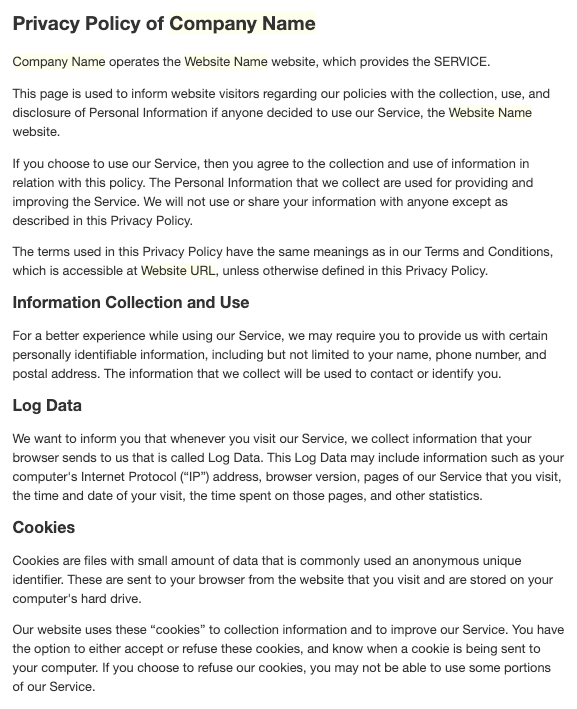
Safeguarding Your Digital Footprint: The Power of a Data Privacy Policy Generator Free Template
In today's interconnected digital landscape, where data is the new currency, understanding and implementing robust data privacy practices is not merely an option but a legal and ethical imperative. For every website owner, e-commerce store, mobile application, or digital service provider, a clear and comprehensive privacy policy is the cornerstone of trust and compliance. But what if you're a startup on a shoestring budget, a small business owner navigating complex legal jargon, or a blogger simply trying to do things right? This is where a data privacy policy generator free template emerges as an invaluable tool, offering a streamlined path to creating essential legal documents without incurring significant costs. This guide will delve deep into the world of free privacy policy generators, explaining their critical role, what to look for, and how to leverage them effectively to protect your users and your business from potential legal pitfalls.
The Unnegotiable Mandate: Why Every Digital Entity Needs a Privacy Policy
Before exploring the mechanics of a free privacy policy generator, it's crucial to grasp the fundamental reasons behind the necessity of a privacy policy. It’s far more than just a legal formality; it's a transparency document that builds trust, ensures compliance, and mitigates risk.
Legal Obligations and Global Regulations
- GDPR (General Data Protection Regulation): This landmark regulation from the European Union has set a global standard for personal data protection. Any entity processing the data of EU citizens, regardless of their location, must comply. Non-compliance can lead to astronomical fines.
- CCPA (California Consumer Privacy Act) & CPRA: For businesses operating in or targeting consumers in California, the CCPA and its successor, CPRA, mandate specific disclosures and consumer rights regarding their personal information.
- PIPEDA (Personal Information Protection and Electronic Documents Act): Canada's federal privacy law governing how private-sector organizations collect, use, and disclose personal information.
- LGPD (Lei Geral de Proteção de Dados): Brazil's comprehensive data protection law, mirroring many aspects of the GDPR.
- Other Regional and Sector-Specific Laws: Beyond these major acts, numerous other laws (e.g., HIPAA for healthcare in the US, COPPA for children's online privacy) dictate specific requirements for data collection practices and handling.
Failure to adhere to these online privacy laws can result in severe penalties, reputational damage, and loss of user trust. A well-crafted privacy policy explicitly outlines your data handling practices, demonstrating your commitment to legal standards.
Building User Trust and Transparency
In an era of increasing data breaches and privacy concerns, users are more aware than ever about how their information is collected, used, and shared. A transparent privacy policy fosters trust by clearly communicating:
- What data is collected: From names and email addresses to IP addresses and browsing behavior.
- How data is collected: Through forms, cookies, analytics tools, etc.
- Why data is collected: For service delivery, marketing, analytics, personalization, etc.
- Who has access to the data: Third-party service providers, advertisers, affiliates.
- User rights: How users can access, correct, or delete their data.
When users feel confident that their personal data is handled responsibly, they are more likely to engage with your services, make purchases, and become loyal customers.
Demystifying the "Data Privacy Policy Generator Free Template"
A data privacy policy generator free template is an online tool that helps individuals and businesses create a customized privacy policy document by answering a series of questions about their data collection practices. These generators typically provide a template that is populated with your specific answers, producing a document ready for publication.
How These Generators Work
- Questionnaire-Based Input: You'll be prompted to answer questions about your website or app, such as:
- What type of entity are you (website, app, e-commerce)?
- What types of personal data do you collect (names, emails, addresses, payment info, IP addresses, cookies)?
- How do you collect data (forms, analytics, social media logins)?
- What is the purpose of data collection (service delivery, marketing, analytics)?
- Do you share data with third parties (Google Analytics, advertising networks, payment processors)?
- Do you target children?
- What are your cookie policy practices?
- How can users contact you regarding their data?
- Automated Document Generation: Based on your responses, the generator automatically populates a pre-written template with the relevant clauses and information.
- Download and Publish: You can then download the generated policy (often in HTML, PDF, or plain text) and publish it on your website or app.
The Benefits of Using a Free Template
- Cost-Effectiveness: The most obvious benefit. Hiring a legal professional to draft a custom privacy policy can be expensive, especially for small businesses or startups. A free generator eliminates this initial cost.
- Speed and Efficiency: Generating a basic policy takes minutes, not days or weeks. This is ideal for quickly launching a website or app.
- Foundation for Compliance: Free templates often include standard clauses required by major regulations like GDPR and CCPA, providing a solid starting point for legal compliance.
- Ease of Use: Designed for non-legal professionals, these tools simplify the complex process of creating a legal document.
- Awareness of Requirements: The questionnaire itself can educate users about what aspects of data collection and privacy by design they need to consider.
Limitations to Be Aware Of
While incredibly useful, it's vital to understand that a free data privacy policy generator template has limitations:
- Generality: Free templates are generic. They may not cover highly specific or unique data processing activities of your business.
- Lack of Customization Depth: While you input answers, the wording and structure are largely fixed. Complex legal situations or unique business models might require more tailored language.
- Jurisdictional Nuances: While many generators try to cover major global laws, they might miss specific requirements of less common jurisdictions or highly specialized industries.
- No Legal Advice: These tools do not provide legal advice. They are automation tools. For absolute certainty or complex cases, consulting a legal professional is always recommended.
- Updates and Maintenance: Laws change. A generated policy is a snapshot in time. You are responsible for ensuring it remains up-to-date with evolving online privacy laws.
Key Components of a Robust Data Privacy Policy
Regardless of whether you use a generator or a lawyer, a comprehensive privacy policy should address several critical areas. Understanding these components will help you effectively use a data privacy policy generator free template and identify areas that might need further customization.
Essential Clauses to Look For
- Introduction and Scope: Clearly state what the policy covers (your website, app, services) and who it applies to.
- Types of Data Collected: Detail both personally identifiable information (PII) like names, emails, addresses, and non-PII like IP addresses, browser types, device information.
- Methods of Data Collection: Explain how data is gathered (e.g., direct input from users, automated collection via cookies, web beacons, third-party integrations).
- Purpose of Data Collection: Explicitly state why you collect the data (e.g., to provide services, process transactions, improve user experience, send marketing communications, conduct analytics).
- Data Sharing and Disclosure: Identify any third parties with whom data might be shared (e.g., analytics providers like Google Analytics, advertising partners, payment processors, cloud hosting services). Specify the purpose of sharing.
- User Rights and Choices: Crucially, outline the rights users have regarding their data (e.g., right to access, rectify, erase, restrict processing, object, data portability). Explain how they can exercise these rights. This often includes details on user consent mechanisms.
- Data Security Measures: Briefly describe the technical and organizational measures you take to protect user data from unauthorized access, alteration, disclosure, or destruction.
- Cookie Policy: If your website uses cookies, a dedicated section or a link to a separate cookie policy is essential, explaining what cookies are used for and how users can manage them.
- Children's Privacy: If your service is directed at children under 13 (or other legal ages), you must comply with laws like COPPA, requiring parental consent.
- Changes to the Policy: State that you may update the policy and how users will be notified of such changes.
- Contact Information: Provide clear contact details for users to ask questions or exercise their privacy rights.
Choosing and Customizing Your Free Template: Actionable Steps
The market for free privacy policy templates and generators is vast. Here’s how to navigate it and ensure you get the most out of your chosen tool.
Finding a Reputable Free Data Privacy Policy Generator
- Look for Legal Compliance Focus: Prioritize generators that explicitly mention compliance with major regulations like GDPR, CCPA, and others relevant to your target audience.
- Reputation and Reviews: Check reviews and testimonials. Tools from well-known legal tech companies or established privacy compliance platforms are often more reliable.
- Ease of Use: A good generator should have an intuitive interface and clear, simple questions.
- Output Format: Ensure the generator provides the policy in a usable format (HTML for direct embedding, PDF for download).
- Customization Options: Even free versions should allow for some degree of personalization beyond just inputting basic information.
Once you've selected a generator, carefully go through each question. Do not rush. Every answer contributes to the accuracy and legal soundness of your generated policy.
Crucial Areas for Manual Review and Customization
Even the best data privacy policy generator free template requires a human touch. After generating your policy, review it meticulously:
- Specific Data Types: Did you list every single piece of data you collect? Think beyond obvious inputs. Do you collect location data? Device identifiers? Usage patterns?
- Third-Party Services: Are all third-party services (e.g., analytics, advertising, CRM, email marketing platforms) that access or process user data explicitly mentioned? This is a common oversight.
- Purpose Justification: Is the "purpose of data collection" clear and legitimate for every piece of data? Avoid vague language.
- User Rights Mechanisms: Does the policy clearly explain how users can exercise their rights (e.g., an email address, a dedicated form, account settings)?
- Geographical Scope: If your business operates globally, ensure the policy covers all relevant online privacy laws for your target audience.
- Internal Linking Strategy: Ensure your privacy policy links to other relevant website legal documents such as your terms and conditions or disclaimers. This creates a cohesive legal framework.
- Industry-Specific Nuances: If you're in a regulated industry (e.g., healthcare, finance), ensure the policy addresses specific requirements relevant to that sector. Free templates rarely cover these.
Pro Tip: Read your generated policy from the perspective of a user. Is it easy to understand? Is it transparent? Does it answer all potential questions about their data?
Beyond the Template: Ensuring Ongoing Data Privacy Compliance
Generating a privacy policy, even with a robust data privacy policy generator free template, is just the first step. True data protection is an ongoing commitment that requires continuous vigilance and adaptation.
Actionable Tips for Long-Term Compliance
- Regular Reviews and Updates: Online privacy laws are constantly evolving. Set a recurring reminder (e.g., quarterly or annually) to review your privacy policy and update it as laws change, or as your business's data practices evolve.
- Prominent Placement: Ensure your privacy policy is easily accessible from every page of your website or within your app. Common locations include the footer, account settings, or during the signup process.
- Obtain Explicit Consent: For certain types of data collection or processing (especially under GDPR), explicit user consent is required. This often involves checkboxes or clear opt-in mechanisms, which should be referenced in your policy.
- Employee Training: Ensure all employees who handle personal data are aware of your privacy policy and internal data handling procedures.
- Implement "Privacy by Design": Integrate privacy considerations into the design and operation of your systems and services from the outset, rather than as an afterthought. This proactive approach minimizes data risks.
- Data Breach Response Plan: Have a clear plan in place for how to respond to a data breach, including notification procedures to affected users and relevant authorities.
While a free privacy policy creator provides an excellent starting point, remember that it's a tool, not a substitute for understanding your legal obligations. It empowers you to handle the basics, but for complex scenarios or absolute peace of mind, consider a legal consultation.
Frequently Asked Questions
What is the primary benefit of using a data privacy policy generator free template?
The primary benefit of using a data privacy policy generator free template is its ability to provide a cost-effective and time-efficient solution for creating a foundational privacy policy. It democratizes access to essential legal documents, helping small businesses, startups, and individuals comply with basic online privacy laws like GDPR and CCPA without incurring significant legal fees. These tools guide users through a series of questions, automating the generation of a standardized policy that covers common data collection and usage scenarios, thus saving valuable resources.
Is a free data privacy policy generator template legally binding and sufficient for my business?
A privacy policy generated from a free template can be legally binding, provided it accurately reflects your data processing activities and is properly implemented (e.g., clearly displayed, agreed upon by users). However, its sufficiency depends heavily on the complexity of your business and the jurisdictions you operate in. Free templates are designed for general use and may not cover highly specific or intricate data collection practices, unique business models, or obscure regional legal disclaimers. While an excellent starting point for basic compliance, businesses with complex data operations or those handling sensitive personal information should consider having the generated policy reviewed by a legal professional specializing in data protection to ensure comprehensive compliance.
How often should I update my privacy policy, even if generated by a free tool?
You should update your privacy policy regularly, ideally at least once a year, and immediately whenever there are significant changes to your data processing activities, the services you use (e.g., adding new third-party analytics tools), or when new online privacy laws come into effect. Even if you used a free privacy policy creator, the responsibility for maintaining an accurate and compliant policy rests with you. Keeping your policy current ensures it reflects your actual data handling practices and adheres to the latest legal requirements, maintaining user trust and avoiding potential penalties for non-compliance.
Do small blogs or personal websites need a data privacy policy?
Yes, absolutely. Even small blogs or personal websites typically collect some form of user data, such as IP addresses (via hosting providers or analytics tools like Google Analytics), email addresses (for newsletters or comments), or cookies for tracking. If you use any third-party services like social media widgets, embedded videos, or advertising, you are also likely facilitating data collection practices by those third parties. Therefore, to be transparent with your visitors and to comply with regulations like GDPR (if you have EU visitors) or CCPA (if you have California visitors), a data privacy policy is essential. A data privacy policy generator free template is perfectly suited for these smaller online entities.

0 Komentar