
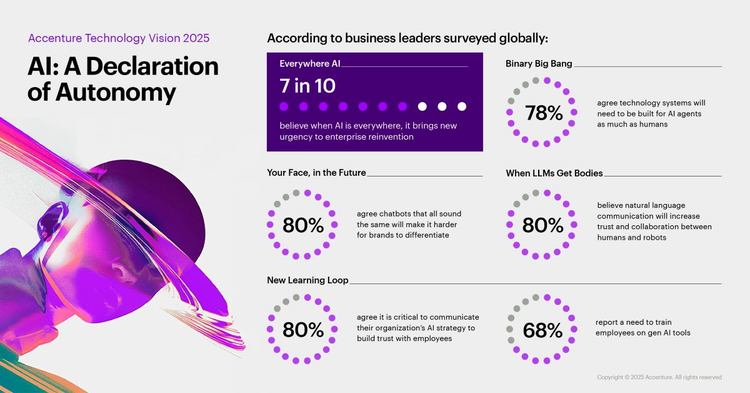
The Future of AI-Assisted Scientific Research and Technological Innovation 2025: A Transformative Outlook
The landscape of scientific discovery and technological advancement is undergoing an unprecedented transformation, largely driven by the pervasive integration of artificial intelligence. By 2025, AI will no longer be a nascent tool but an indispensable partner, fundamentally reshaping how researchers approach complex problems, accelerate breakthroughs, and foster innovation. This comprehensive guide explores the profound impact of AI-assisted scientific research and technological innovation, detailing the imminent shifts, practical applications, and the strategic imperatives for organizations and individuals navigating this exciting frontier. Prepare to delve into a future where human ingenuity is amplified by intelligent systems, propelling us towards discoveries once thought impossible.
The Dawn of Hyper-Accelerated Discovery: AI's Role in Research Workflows
The traditional scientific method, while robust, often involves laborious cycles of hypothesis generation, experimentation, data collection, and analysis. AI is poised to revolutionize each of these stages, leading to hyper-accelerated discovery. By 2025, machine learning algorithms and deep learning models will be seamlessly integrated into daily research workflows, dramatically reducing the time from concept to validated insight. This isn't just about automation; it's about augmenting human cognitive capabilities, allowing researchers to focus on higher-level strategic thinking and interpretation rather than repetitive tasks.
Automated Hypothesis Generation and Experimental Design
- Predictive Analytics: AI systems will leverage vast datasets from published literature, experimental results, and simulations to identify novel patterns and correlations. This will enable the automatic generation of testable hypotheses that human researchers might overlook due to cognitive biases or data overload.
- Optimized Experimental Parameters: Advanced algorithms will design experiments, suggesting optimal parameters, sample sizes, and control groups to maximize data quality and statistical power. This includes virtual experimentation using digital twin technology, where models simulate real-world conditions to test theories before physical execution.
- Robotics Integration: AI-powered robotic systems will automate laboratory procedures, from sample preparation and reagent mixing to data collection, ensuring precision, reproducibility, and high throughput, freeing up human scientists for more intellectual pursuits.
Transforming Data Analysis and Interpretation with AI
The sheer volume of data generated in modern scientific research – from genomics and proteomics to climate modeling and astronomical observations – far exceeds human capacity for manual analysis. Here, AI shines brightest. By 2025, sophisticated AI tools will not only process this data but also extract meaningful insights, identify anomalies, and even suggest causal relationships, transforming raw data into actionable knowledge.
Advanced Data Mining and Pattern Recognition
AI's ability to sift through petabytes of unstructured and structured data will be paramount. Systems will employ natural language processing (NLP) to analyze scientific literature, identifying trends, conflicting results, and emerging concepts. For instance, in drug discovery, AI can quickly analyze millions of compounds and their interactions with biological targets, significantly shortening the lead identification phase. In materials science, AI can predict the properties of new materials before they are synthesized, guiding experimental work and reducing costly trial-and-error.
Semantic keyword variations like "intelligent data analysis" and "AI-driven insights" will become commonplace as researchers rely on these systems to make sense of complex information. The focus will shift from merely collecting data to intelligently interrogating it, revealing hidden connections and accelerating scientific breakthroughs.
Sector-Specific Impact: AI's Catalytic Role in Key Innovation Areas
The transformative power of AI will manifest uniquely across various scientific and technological domains, driving unprecedented innovation by 2025. Each sector stands to gain immensely from AI's predictive capabilities, automation, and ability to process complex information at scale.
Life Sciences and Healthcare: Personalized Medicine and Accelerated Drug Discovery
- Precision Diagnostics: AI will enhance medical imaging analysis, enabling earlier and more accurate disease detection (e.g., identifying cancerous cells from scans with higher precision than human radiologists). This leads to timely interventions and improved patient outcomes.
- Personalized Medicine: Leveraging genomic data, patient medical histories, and real-time health monitoring, AI will tailor treatment plans to individual patients, optimizing drug dosages, predicting treatment efficacy, and minimizing adverse reactions. This moves healthcare from a "one-size-fits-all" approach to highly individualized care.
- Accelerated Drug Discovery: Beyond lead identification, AI will assist in drug design, predicting molecular interactions, simulating clinical trials, and even identifying new therapeutic uses for existing drugs (drug repurposing). This significantly cuts down the time and cost associated with bringing new medications to market.
Environmental Science and Climate Modeling: Predictive Power for a Sustainable Future
The challenges of climate change and environmental degradation demand sophisticated analytical tools. AI, particularly in climate modeling, offers unprecedented capabilities. By 2025, AI will refine climate projections, enhance disaster prediction, and optimize resource management.
- High-Resolution Climate Models: AI will process vast environmental datasets to create more accurate and granular climate models, improving predictions for extreme weather events, sea-level rise, and ecological shifts.
- Sustainable Resource Management: AI will optimize energy grids, predict agricultural yields, and monitor biodiversity, aiding in the efficient allocation of resources and conservation efforts. For instance, predictive analytics can forecast water scarcity or optimize irrigation schedules for farmlands.
- Pollution Monitoring and Mitigation: Autonomous systems equipped with AI will monitor air and water quality in real-time, identifying pollution sources and recommending mitigation strategies with greater speed and accuracy.
Advanced Materials and Manufacturing: Designing the Future from the Atom Up
The discovery and development of new materials are fundamental to technological progress. AI is set to revolutionize materials science and advanced manufacturing by 2025.
- Generative Design: AI algorithms will design novel materials with desired properties (e.g., strength, conductivity, biocompatibility) from scratch, exploring chemical compositions and atomic structures far beyond human intuition.
- Optimized Manufacturing Processes: In smart factories, AI will monitor production lines, predict equipment failures, optimize supply chains, and ensure quality control, leading to increased efficiency, reduced waste, and higher product reliability. This includes advanced robotics and autonomous systems working in tandem with human operators.
- Discovery of Superconductors and Catalysts: AI's ability to simulate and predict material behavior at atomic levels will accelerate the discovery of revolutionary materials like high-temperature superconductors or highly efficient catalysts, vital for energy and chemical industries.
Ethical Considerations and the Imperative of Human-AI Collaboration
As AI becomes more deeply integrated into scientific research and innovation, profound ethical considerations arise. By 2025, discussions around data privacy, algorithmic bias, accountability, and the responsible deployment of AI will be paramount. It's crucial that the drive for innovation is balanced with a strong commitment to ethical guidelines and societal well-being.
Navigating the Ethical Landscape of AI in Science
The potential for bias in AI models, especially those trained on historical or incomplete datasets, poses a significant challenge. For example, in personalized medicine, biased data could lead to less effective treatments for certain demographic groups. Addressing these issues requires transparent AI development, diverse datasets, and rigorous testing protocols.
The concept of ethical AI will move from theory to practical implementation, with frameworks and regulations evolving to govern AI's use in sensitive scientific domains. Researchers and innovators will need to be well-versed in these ethical considerations to ensure their work contributes positively to society.
The Synergy of Human-AI Collaboration
Crucially, the future of AI in science is not about replacing human researchers but about augmenting their capabilities. By 2025, human-AI collaboration will be the norm, where AI handles the computational heavy lifting, data processing, and pattern recognition, while humans provide the creativity, intuition, critical thinking, and ethical oversight. This symbiotic relationship will unlock unprecedented potential.
Researchers will evolve into "AI-enabled scientists," skilled not only in their domain but also in interpreting AI outputs, formulating AI-driven questions, and validating AI-generated hypotheses. Training programs and academic curricula will adapt to foster these new collaborative skills, ensuring the next generation of scientists can effectively harness the power of intelligent systems.
For organizations looking to leverage this synergy, fostering a culture of experimentation and continuous learning is key. Encourage cross-disciplinary teams where data scientists, AI engineers, and domain experts work hand-in-hand. Learn more about effective AI implementation strategies in research.
Actionable Steps for Researchers and Innovators in the AI Era
To thrive in the AI-assisted scientific landscape of 2025, proactive engagement and strategic adaptation are essential. Here are practical tips for individuals and institutions:
Practical Implementation for Future-Ready Research
- Invest in AI Literacy: For researchers, this means understanding the fundamentals of machine learning, data science, and how AI tools can be applied to their specific fields. For institutions, it involves providing training and resources.
- Foster Interdisciplinary Collaboration: Break down silos between traditional scientific disciplines and AI/data science departments. The most significant breakthroughs will likely emerge from these intersections.
- Prioritize Data Infrastructure: AI thrives on data. Invest in robust data collection, storage, and management systems, ensuring data quality, accessibility, and ethical handling.
- Embrace Open Science and Data Sharing: While respecting privacy and intellectual property, contributing to shared datasets and open-source AI models can accelerate collective progress.
- Pilot AI Projects: Start small with specific, well-defined problems where AI can offer immediate value. Learn from these pilot projects and scale successful implementations.
- Develop Ethical AI Frameworks: Proactively establish guidelines and best practices for the responsible development and deployment of AI in research, addressing issues like bias, transparency, and accountability.
- Stay Agile and Adaptable: The field of AI is rapidly evolving. Continuous learning and a willingness to adapt to new tools and methodologies are crucial for sustained innovation.
Frequently Asked Questions
What is the primary impact of AI on scientific research by 2025?
By 2025, the primary impact of AI on scientific research will be the hyper-acceleration of discovery cycles. AI will significantly streamline and enhance every stage of the research workflow, from automated hypothesis generation and experimental design to advanced data analysis and interpretation, leading to faster breakthroughs and more efficient resource utilization. It will fundamentally change how researchers interact with data and complex problems, moving towards more intelligent and predictive approaches.
How will AI contribute to technological innovation in the next few years?
AI will contribute to technological innovation by enabling the rapid design and optimization of new materials, products, and processes. This includes AI-driven generative design for novel components, predictive maintenance in manufacturing, the development of more efficient autonomous systems, and the creation of highly personalized solutions across various industries. Its ability to process vast amounts of data and identify optimal solutions will significantly shorten innovation cycles and reduce development costs.
What are the biggest challenges in integrating AI into scientific workflows?
The biggest challenges in integrating AI into scientific workflows include ensuring data quality and accessibility, managing algorithmic bias, addressing ethical considerations (such as data privacy and accountability), fostering AI literacy among researchers, and building the necessary computational infrastructure. Overcoming these challenges requires a multi-faceted approach involving technological advancements, education, and robust ethical frameworks.
Will AI replace human scientists by 2025?
No, AI will not replace human scientists by 2025. Instead, it will act as a powerful augmentative tool, transforming the role of scientists. Human-AI collaboration will become the norm, with AI handling data-intensive, repetitive, and pattern-recognition tasks, freeing up human researchers to focus on critical thinking, creativity, complex problem-solving, ethical oversight, and strategic interpretation of AI-generated insights. The future is about synergy, not substitution.

0 Komentar