
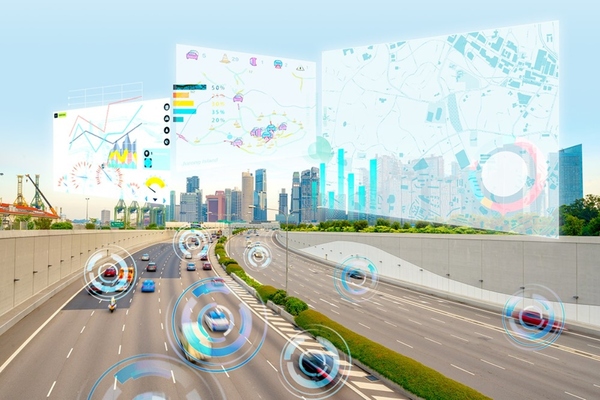
The Future of AI-Driven Autonomous Transportation Networks and Mobility Services 2025: A Deep Dive
The year 2025 stands as a pivotal horizon for the evolution of our urban landscapes, promising a significant leap forward in the realm of AI-driven autonomous transportation networks and mobility services. This isn't merely about self-driving cars; it's a profound paradigm shift towards integrated, intelligent ecosystems that redefine how people and goods move. Imagine a world where traffic congestion is dramatically reduced, road safety is unparalleled, and access to efficient, sustainable transportation is a given for everyone. This comprehensive exploration delves into the intricate technologies, transformative impacts, and critical considerations shaping this imminent future, providing an authoritative guide for businesses, policymakers, and urban planners navigating the next wave of innovation.
Revolutionizing Urban Mobility: The 2025 Vision
By 2025, we anticipate a tangible acceleration in the deployment and sophistication of autonomous vehicle technologies, moving beyond experimental phases to more widespread commercial applications. The vision encompasses not just individual robotaxis, but fully integrated smart mobility solutions that operate within interconnected networks. These networks, powered by advanced artificial intelligence, will orchestrate seamless movement, optimizing routes, managing traffic flows, and responding dynamically to real-time conditions. We will see increased adoption of shared autonomous vehicles (SAVs), revolutionizing ride-hailing and reducing the need for private car ownership, particularly in dense urban centers.
Key Technological Pillars Driving the Transformation
The foundation of this future lies in a sophisticated interplay of cutting-edge technologies:
- Advanced AI and Machine Learning: The brain of autonomous systems, enabling vehicles to perceive, predict, and make decisions in complex environments. This includes deep learning for object recognition, predictive analytics for traffic patterns, and reinforcement learning for optimal route planning.
- Sensor Fusion: Combining data from Lidar, Radar, cameras, and ultrasonic sensors to create a comprehensive 360-degree understanding of the surroundings, critical for safe navigation.
- Vehicle-to-Everything (V2X) Communication: This crucial technology allows vehicles to communicate with each other (V2V), with infrastructure (V2I), with pedestrians (V2P), and with the network (V2N). V2X is fundamental for coordinated movement, avoiding collisions, and optimizing traffic flow across an entire urban grid.
- 5G Connectivity and Edge Computing: Ultra-low latency and high bandwidth enabled by 5G networks are vital for real-time data exchange, supporting instantaneous decision-making in autonomous vehicles and facilitating the rapid processing of vast datasets at the network edge.
- Digital Twin Technology: Creating virtual replicas of physical transportation networks allows for sophisticated simulations, predictive maintenance, and optimized resource allocation before real-world deployment.
The Impact on Urban Planning and Infrastructure
The advent of AI-driven autonomous transportation necessitates a fundamental rethinking of urban planning and infrastructure development. Cities are already beginning to adapt, preparing for a future where traditional parking structures might be repurposed and road space optimized for efficiency.
Intelligent infrastructure will be paramount. This includes smart traffic lights that communicate with vehicles, dedicated autonomous vehicle lanes, dynamic pricing for road usage, and integrated charging stations for electric autonomous fleets. Urban planners are focusing on creating "mobility hubs" – multimodal centers where various forms of transport (autonomous shuttles, e-scooters, public transit) converge, facilitating seamless transitions for commuters. This shift will also significantly influence smart cities initiatives, with transportation data becoming a critical component of urban management systems.
Transforming Mobility Services and Business Models
The traditional model of individual car ownership is poised for disruption. By 2025, we will see an accelerated shift towards a service-oriented approach to mobility. This includes:
- Subscription-Based Mobility: Consumers subscribing to a fleet of autonomous vehicles for their transportation needs, rather than owning a car.
- On-Demand Robotaxis: Widespread availability of self-driving taxis, significantly reducing wait times and potentially costs compared to human-driven ride-hailing.
- Autonomous Last-Mile Delivery: Drones and autonomous ground vehicles handling package and food delivery, optimizing logistics and reducing urban traffic congestion caused by delivery vans.
- Integrated Public Transport: Autonomous shuttles and buses seamlessly extending existing public transport networks, providing efficient first- and last-mile connections.
- Personalized Mobility Experiences: AI learning user preferences to offer highly customized and efficient travel options, adapting to individual schedules and needs.
New business models will emerge around data monetization, fleet management, and the provision of specialized autonomous services. Companies that can effectively manage and leverage the vast amounts of data generated by these networks will hold a significant competitive advantage.
Addressing Critical Challenges and Ethical Considerations
While the promise of autonomous transportation is immense, several significant hurdles must be addressed for widespread adoption by 2025. These are not merely technological, but societal, legal, and ethical in nature.
Regulatory and Legal Frameworks
Perhaps the most pressing challenge is the development of robust and harmonized regulatory frameworks. Questions around liability in accidents involving autonomous vehicles, certification standards, and cross-border operations require clear legal definitions. Governments globally are grappling with how to legislate for a technology that is evolving rapidly, balancing innovation with public safety. Practical advice for policymakers includes adopting agile regulatory sandboxes and fostering international collaboration to prevent a patchwork of conflicting laws.
Public Perception and Trust
Overcoming public skepticism and building trust is paramount. High-profile accidents, even rare ones, can significantly erode confidence. Educating the public about the safety benefits, rigorous testing protocols, and the ethical considerations embedded in AI decision-making will be crucial. Transparency from developers and clear communication from authorities can help foster greater acceptance. Early positive experiences with autonomous shuttles in controlled environments can serve as powerful trust-building mechanisms.
Cybersecurity and Data Privacy
Autonomous networks will generate unprecedented volumes of data, from vehicle performance to passenger movements. Ensuring data security against cyber-attacks and protecting individual privacy are non-negotiable. Robust encryption, secure communication protocols, and strict data governance policies will be essential to prevent malicious interference or misuse of sensitive information. Companies must invest heavily in cybersecurity infrastructure to safeguard these critical systems.
Ethical AI and Decision-Making
The "trolley problem" is often cited when discussing autonomous vehicles: how should an AI be programmed to make decisions in unavoidable accident scenarios? Developing ethical guidelines for AI algorithms, ensuring fairness, and addressing potential biases in data sets are critical responsibilities for developers and regulators. Transparency in these ethical frameworks will be vital for public acceptance.
The Path Forward: Actionable Tips for Stakeholders
For cities, businesses, and technology developers, proactive engagement is key to shaping a successful future for AI-driven autonomous transportation networks.
- For Cities and Urban Planners: Begin investing in digital infrastructure upgrades (e.g., smart traffic lights, high-definition mapping). Develop flexible zoning laws that accommodate new mobility hubs and repurpose existing infrastructure. Engage with technology providers early to understand deployment needs and challenges. Consider pilot programs for autonomous shuttles in specific zones to gather data and build public familiarity.
- For Businesses and Innovators: Focus on interoperability and standardization to ensure seamless integration across different platforms and vehicle types. Prioritize cybersecurity from the design phase (security by design). Develop compelling business models that highlight the economic and environmental benefits of autonomous services. Invest in talent development, particularly in AI, robotics, and data science.
- For Policymakers and Regulators: Foster agile regulatory environments that can adapt to rapid technological advancements. Prioritize national and international harmonization of standards. Establish clear liability frameworks. Fund research into the societal impacts, including potential job displacement and the need for workforce retraining.
- For Consumers: Stay informed about developments. Participate in public discussions and provide feedback on pilot programs. Understand the potential benefits for safety, convenience, and environmental sustainability.
The integration of autonomous vehicles into daily life will also lead to significant improvements in sustainable mobility, particularly as fleets transition to electric power, drastically reducing urban emissions and noise pollution. The efficiency gains from optimized routes and reduced idling will further contribute to environmental benefits.
Frequently Asked Questions
What is the primary benefit of AI-driven autonomous transportation networks by 2025?
The primary benefit is a dramatic improvement in urban efficiency and safety. By 2025, AI-driven autonomous transportation networks are expected to significantly reduce traffic congestion, minimize human error-related accidents, and provide more equitable access to mobility for diverse populations. These systems will optimize routes in real-time, leading to faster travel times and lower operational costs for mobility services, ultimately contributing to a more sustainable and livable urban environment.
How will autonomous vehicles impact public transportation systems?
Autonomous vehicles are poised to revolutionize public transportation by enhancing its reach, efficiency, and flexibility. By 2025, we anticipate seeing autonomous shuttles and buses seamlessly integrating with existing public transit networks, providing efficient first- and last-mile connections. This will make public transport more accessible and convenient, potentially reducing reliance on private vehicles and improving overall urban mobility, especially in underserved areas. It also opens avenues for on-demand public transport services.
What role does V2X communication play in the future of AI-driven mobility?
Vehicle-to-Everything (V2X) communication is a foundational technology for the future of AI-driven mobility. It enables autonomous vehicles to communicate not only with each other (V2V) but also with traffic infrastructure (V2I), pedestrians (V2P), and the broader network (V2N). This constant, real-time data exchange is critical for coordinated movement, predictive safety measures, optimized traffic flow, and dynamic route adjustments, far beyond what individual sensors can achieve. V2X is essential for the creation of truly intelligent and interconnected transportation networks.
What are the biggest ethical challenges facing autonomous transportation by 2025?
By 2025, the biggest ethical challenges for autonomous transportation center around decision-making in unavoidable accident scenarios, algorithmic bias, and accountability. Ensuring that AI systems make fair and transparent decisions, especially in situations involving harm, is paramount. Addressing potential biases in training data that could lead to discriminatory outcomes is also crucial. Furthermore, establishing clear legal and ethical frameworks for liability and responsibility when an autonomous vehicle is involved in an incident remains a significant hurdle requiring global collaboration and public discourse.
How will data security be ensured in future autonomous transportation networks?
Ensuring data security in future autonomous transportation networks will require a multi-layered approach. This includes robust encryption for all data transmissions, secure hardware and software architectures, and rigorous authentication protocols to prevent unauthorized access. Implementing blockchain technology for secure data logging and ensuring strict compliance with data privacy regulations (like GDPR) will also be critical. Continuous monitoring, threat intelligence, and rapid incident response plans will be essential to protect these complex, interconnected systems from cyber threats and maintain public trust.

0 Komentar