
The Future of AI-Enhanced Accessibility Tools: Revolutionizing Disability Inclusion by 2025 and Beyond
The landscape of disability inclusion is on the cusp of a profound transformation, driven by the relentless pace of artificial intelligence innovation. By 2025, we anticipate a surge in AI-enhanced accessibility tools and assistive technology innovation that will redefine independence, communication, and participation for millions globally. This comprehensive exploration delves into how cutting-edge AI is not merely improving existing solutions but creating entirely new paradigms for universal access, offering a glimpse into a future where technology truly levels the playing field. From sophisticated predictive text for augmentative communication to AI-powered navigation for individuals with visual impairments, the potential for inclusive design powered by intelligent systems is immense, promising a more equitable and accessible world for all.
The Transformative Power of AI in Accessibility
Artificial intelligence, with its unparalleled ability to process vast datasets, learn patterns, and make predictions, is rapidly becoming the backbone of next-generation accessibility solutions. Historically, assistive technologies have often been reactive, designed to mitigate existing barriers. However, the integration of AI is fostering a shift towards proactive and personalized support, adapting dynamically to individual needs and environments. This evolution marks a pivotal moment for digital accessibility and the broader movement for disability inclusion.
Shifting Paradigms: From Remediation to Proactive Inclusion
The traditional approach to accessibility often involved retrofitting or providing specialized tools after a product or environment was designed. AI changes this by enabling a shift towards anticipatory and integrated solutions. This means designing from the ground up with AI capabilities that inherently support diverse needs, aligning perfectly with the principles of universal design.
- Personalization at Scale: AI can learn individual preferences, communication styles, and cognitive patterns to deliver highly customized support, moving beyond one-size-fits-all solutions.
- Predictive Assistance: Instead of merely reacting, AI can anticipate needs, such as suggesting words for a non-verbal communicator or alerting a visually impaired person to an approaching obstacle.
- Contextual Awareness: AI-powered tools can understand the user's immediate environment, adapting their functionality based on location, time of day, or surrounding sounds.
- Seamless Integration: Future AI accessibility tools will be less about standalone devices and more about integrated features within everyday technologies, from smartphones to smart homes and public infrastructure.
Next-Generation AI-Powered Assistive Technologies
By 2025, we will witness the widespread adoption of several groundbreaking AI-powered assistive technologies, each designed to address specific challenges faced by individuals with disabilities. These innovations will span various domains, from communication and mobility to education and employment, all contributing to enhanced independence and quality of life.
Enhancing Communication and Cognition
For individuals with speech, language, or cognitive impairments, AI offers revolutionary possibilities. Natural Language Processing (NLP) and machine learning are at the forefront of these advancements, making communication more fluid and accessible.
- Advanced Augmentative and Alternative Communication (AAC) Devices: AI will power more intuitive and predictive AAC systems. Think of devices that learn a user's vocabulary and sentence structures, offering highly relevant suggestions in real-time, or even generating synthetic voices that more closely match the user's desired persona.
- Real-time Transcription and Captioning: AI-driven speech-to-text technologies will achieve near-perfect accuracy, providing instant, reliable captions for conversations, lectures, and media, benefiting individuals who are deaf or hard of hearing.
- Cognitive Accessibility Tools: AI applications will assist individuals with cognitive disabilities (e.g., ADHD, autism, dementia) by providing personalized prompts, scheduling assistance, memory aids, and task breakdown support, adapting to their unique processing styles.
- Emotion Recognition and Social Cues: AI could help individuals with social communication challenges interpret facial expressions, tone of voice, and body language, fostering more effective social interactions.
Revolutionizing Mobility and Navigation
Mobility solutions will see significant advancements through the integration of AI, offering unprecedented levels of independence and safety for individuals with physical or visual impairments. The concept of smart environments will become increasingly prevalent.
- AI-Powered Wheelchairs and Exoskeletons: Intelligent wheelchairs will navigate complex environments autonomously, avoiding obstacles and learning preferred routes. Exoskeletons, enhanced with AI, will provide more natural and responsive assistance for walking and movement.
- Smart Canes and Wearables: AI-enabled smart canes will use computer vision and haptic feedback to detect obstacles, identify landmarks, and provide real-time navigation instructions for individuals with visual impairments. Wearable devices will offer similar guidance, integrated seamlessly into daily life.
- Autonomous Vehicle Integration: As autonomous vehicles become more common, AI will ensure they are fully accessible, not just for travel but for the entire user experience, including boarding, in-cabin controls, and personalized routing.
- Indoor Navigation Systems: AI-driven indoor positioning systems will provide precise, turn-by-turn directions within large buildings, shopping centers, and public transport hubs, accessible via smartphones or specialized devices.
Advancing Sensory Accessibility
AI's ability to interpret and translate sensory information will open new avenues for individuals with sensory impairments, particularly those with visual or auditory challenges. These adaptive technology solutions will bridge gaps in perception.
- AI for Visual Description: AI-powered apps and smart glasses will provide real-time, nuanced descriptions of surroundings, objects, and people for individuals who are blind or have low vision. This includes reading text aloud, identifying colors, and even describing complex scenes.
- Sound Recognition and Environmental Alerts: For individuals who are deaf or hard of hearing, AI will identify critical sounds (e.g., doorbells, fire alarms, sirens) and translate them into visual alerts, haptic feedback, or text notifications.
- Haptic Feedback and Tactile Interfaces: AI will drive the development of more sophisticated haptic interfaces that can convey complex information through touch, offering an alternative sensory channel for data interpretation.
- Personalized Audio Enhancement: AI algorithms in hearing aids will intelligently filter out background noise, amplify specific voices, and adapt sound profiles to different acoustic environments, significantly improving speech clarity.
Personalized Learning and Employment Solutions
AI is set to revolutionize education and employment for individuals with disabilities, fostering environments that cater to diverse learning styles and skill sets, especially benefiting those with neurodiversity.
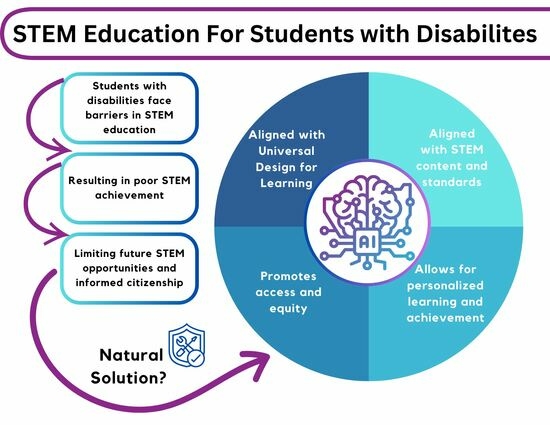
- Adaptive Learning Platforms: AI will create truly personalized educational experiences, adjusting content difficulty, presentation format, and pace based on a student's learning style, cognitive abilities, and progress. This will be invaluable for students with learning disabilities.
- AI-Powered Job Matching and Training: AI algorithms will analyze skill sets, preferences, and accessibility needs to match individuals with suitable job opportunities, and even provide tailored training modules to bridge skill gaps.
- Virtual Accessibility Coaches: AI could act as a virtual assistant, providing real-time support and coaching for tasks, social interactions, or learning new skills in both educational and professional settings.
- Inclusive Digital Content Creation: AI tools will assist content creators in automatically generating accessible content, such as image alt text, video captions, and structured documents, ensuring that all digital materials are born accessible.
The Road Ahead: Challenges and Ethical Considerations
While the promise of AI-enhanced accessibility is immense, realizing its full potential requires addressing significant challenges and navigating complex ethical considerations. Ensuring that these advancements truly foster disability inclusion requires thoughtful planning and collaboration.
Ensuring Equity and Affordability
A primary concern is the potential for a "digital divide" to widen if advanced AI accessibility tools are prohibitively expensive or inaccessible to marginalized communities. Efforts must be made to ensure these technologies are affordable and widely available, perhaps through government subsidies, open-source initiatives, or innovative business models.
Data Privacy and Algorithmic Bias
AI systems rely heavily on data, and the use of personal data, especially sensitive information related to disabilities, raises significant privacy concerns. Furthermore, AI algorithms can inherit and amplify existing societal biases present in their training data, potentially leading to discriminatory outcomes. Developing AI with an explicit focus on ethical AI development and bias mitigation is paramount.
Fostering Human-AI Collaboration
The goal of AI in accessibility is to empower, not to replace human interaction or decision-making. Future solutions must focus on augmenting human capabilities and facilitating connections, rather than creating isolation. The emphasis should always be on human-AI collaboration, ensuring that the technology serves the individual's autonomy and dignity.
Actionable Strategies for Driving Disability Inclusion with AI
To truly unlock the transformative potential of AI for disability inclusion, various stakeholders—from tech developers and policymakers to disability advocates and end-users—must collaborate on concrete strategies.
- Prioritize Inclusive Design from Inception:
Developers and designers must embed universal design principles into the very fabric of AI systems and products. This means involving individuals with disabilities throughout the design and testing phases, ensuring that solutions are not just compliant but genuinely useful and intuitive. Focus on inclusive web design and application development.
- Invest in Responsible Research and Development:
Governments, academic institutions, and private companies should significantly increase investment in R&D specifically focused on AI for accessibility. This investment must prioritize ethical considerations, bias detection, and the development of robust, reliable assistive devices.
- Foster Cross-Sector Partnerships:
Collaboration between AI researchers, disability organizations, healthcare providers, educators, and policymakers is crucial. These partnerships can ensure that AI solutions are aligned with real-world needs, are user-centered, and can be effectively deployed and supported.
- Advocate for Progressive Policy and Standards:
Policymakers need to develop forward-thinking regulations and standards that encourage the development and adoption of accessible AI, while also addressing privacy, security, and ethical concerns. This includes updating existing accessibility laws to account for AI's unique capabilities.
- Educate and Empower Users:
Promoting digital literacy and providing training on how to effectively use AI-enhanced accessibility tools is vital. Empowering individuals with disabilities to be active participants in the technology development process, sharing their insights and needs, will drive more relevant and impactful innovations.
Frequently Asked Questions
What are the primary benefits of AI in accessibility tools?
The primary benefits of AI in accessibility tools include enhanced personalization, predictive assistance, real-time adaptation to diverse environments, and the ability to automate complex tasks that were previously difficult or impossible for individuals with disabilities. AI fosters greater independence, improves communication, and opens new avenues for education and employment, significantly boosting digital inclusion.
How will AI-enhanced assistive technology evolve by 2025?
By 2025, AI-enhanced assistive technology is expected to become more integrated into everyday devices, offer highly personalized and context-aware support, and leverage advanced capabilities like sophisticated natural language processing for communication, computer vision for navigation, and machine learning for adaptive learning. We will see more seamless human-AI collaboration, making technology less of a specialized tool and more of an intuitive extension of human capabilities.
What role does inclusive design play in the future of AI accessibility?
Inclusive design is foundational to the future of AI accessibility. It advocates for designing products and services with diverse users in mind from the very beginning, rather than as an afterthought. For AI, this means ensuring algorithms are trained on diverse datasets, interfaces are universally usable, and solutions are inherently adaptable to various needs, preventing the creation of new barriers while solving existing ones. This approach ensures that universal design principles are upheld.
Are there ethical concerns with AI-powered accessibility solutions?
Yes, significant ethical concerns exist. These include ensuring data privacy for sensitive personal information, mitigating algorithmic bias that could lead to discriminatory outcomes, ensuring equitable access and affordability to prevent a digital divide, and maintaining human autonomy rather than fostering over-reliance on technology. Responsible and ethical AI development is crucial to address these challenges.
How can individuals and organizations contribute to this future?
Individuals can contribute by advocating for accessible technology, participating in user testing and feedback, and promoting digital literacy. Organizations can invest in ethical AI research, adopt inclusive design principles, foster partnerships with disability communities, and advocate for policies that support widespread access to AI-enhanced accessibility tools. Collaboration and a commitment to inclusive practices are key.

0 Komentar