
The Power Players: Unveiling the Top 5G Equipment Manufacturers and Suppliers
The global race to deploy 5G networks is accelerating, transforming industries and unlocking unprecedented capabilities in connectivity. At the heart of this revolution are the specialized 5G equipment manufacturers and suppliers, companies that design, build, and deliver the intricate hardware and software infrastructure powering this next generation of mobile communication. Understanding these pivotal players is crucial for anyone involved in the telecom infrastructure landscape, from mobile operators and enterprises planning private networks to investors and policymakers. This comprehensive guide delves deep into the ecosystem of 5G network equipment providers, exploring the key companies, their technological contributions, and the strategic dynamics shaping this vital industry.
Decoding the 5G Infrastructure Ecosystem
Building a robust 5G network is a monumental undertaking, requiring a complex interplay of various components. Each piece of the puzzle, from the core network to the radio access points, is supplied by a specialized set of 5G hardware suppliers. These elements work in concert to deliver the high bandwidth, low latency, and massive connectivity that define 5G capabilities.
The Core Network: Brains of the Operation
The core network is the central nervous system of any cellular network, managing data traffic, subscriber authentication, and service delivery. For 5G, the core is evolving rapidly, embracing virtualization, cloud-native architectures, and network slicing to offer unprecedented flexibility and efficiency. Key functionalities include:
- User Plane Function (UPF): Handles data forwarding.
- Access and Mobility Management Function (AMF): Manages connections and mobility.
- Session Management Function (SMF): Establishes and manages user sessions.
Leading 5G core network providers are at the forefront of this architectural shift, enabling operators to deploy highly agile and scalable networks capable of supporting diverse applications, from enhanced mobile broadband (eMBB) to ultra-reliable low-latency communications (URLLC) for industrial IoT.
Radio Access Network (RAN): Connecting Devices
The Radio Access Network (RAN) is perhaps the most visible part of the 5G infrastructure, comprising the base stations, antennas, and associated hardware that connect user devices to the core network. 5G RAN introduces significant advancements over previous generations, including:
- Massive MIMO: Utilizing hundreds of antennas to dramatically increase capacity and spectral efficiency.
- Beamforming: Directing wireless signals precisely towards users for improved performance.
- Millimeter Wave (mmWave) technology: Employing higher frequency bands for ultra-fast speeds, albeit with shorter range.
- Sub-6 GHz: The foundational frequency for broader coverage.
The development of Open RAN architectures is also fundamentally changing this segment, allowing for greater vendor interoperability and potentially lowering deployment costs. This open approach is fostering innovation and enabling a broader range of cellular infrastructure companies to contribute.
Backhaul and Fiber Optics: The Data Superhighways
While RAN handles the wireless connection, the backhaul network is responsible for transporting data from the base stations to the core network and ultimately to the internet. 5G's immense data demands necessitate robust, high-capacity backhaul, making fiber optics the preferred medium. Companies specializing in optical transport equipment, fiber optic cables, and microwave solutions are critical 5G infrastructure development partners. Without a strong backhaul foundation, even the most advanced RAN equipment cannot deliver on 5G's promises of speed and reliability.
The Global Titans: Leading 5G Equipment Manufacturers
The telecom equipment market is dominated by a handful of global giants, each with a long history in the telecommunications industry. These companies invest billions in research and development to stay at the cutting edge of next-generation mobile technology vendors.
Huawei: A Dominant Yet Contentious Force
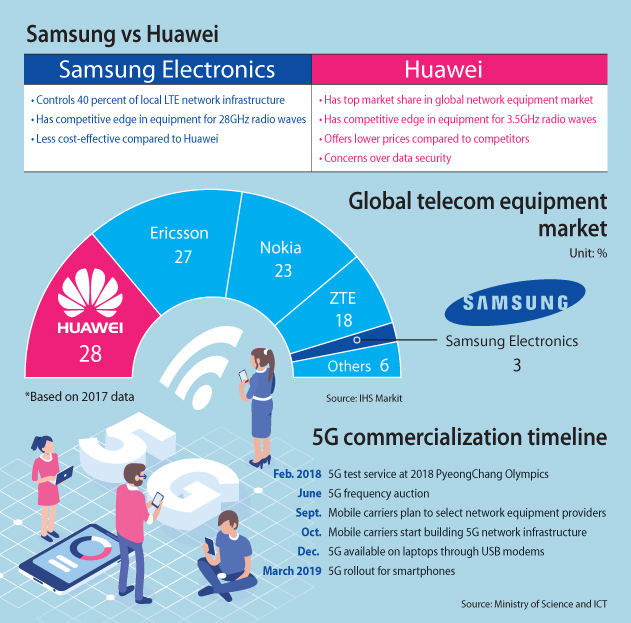
Based in China, Huawei has emerged as one of the world's largest providers of telecommunications equipment, including comprehensive 5G solutions. They offer end-to-end 5G products covering RAN, core network, and transport. Huawei's massive MIMO technology and extensive patent portfolio have positioned them as a leader in 5G deployment globally. Despite their technological prowess and competitive pricing, geopolitical tensions, particularly concerns from the United States and some European nations regarding national security and data privacy, have led to restrictions on their equipment in certain markets. Nevertheless, Huawei remains a significant 5G network equipment supplier in many parts of the world, particularly in Asia, Africa, and parts of Europe, where their equipment is actively contributing to 5G network rollout.
Ericsson: European Innovation and Global Reach
As a Swedish multinational, Ericsson is a long-standing veteran in the telecom industry and a formidable competitor in the 5G space. They offer a complete portfolio of 5G products and services, including RAN, core network solutions, and managed services. Ericsson has been instrumental in numerous 5G deployments worldwide, emphasizing performance, energy efficiency, and security. Their focus on modular, flexible 5G platforms appeals to operators seeking to evolve their networks seamlessly. Ericsson is a key partner for many major mobile operators in North America, Europe, and Australia, consistently driving innovation in areas like network slicing and enterprise 5G.
Nokia: Resurgence and Open RAN Leadership
Finland's Nokia, another historical giant in telecommunications, has made a significant resurgence in the 5G era. After facing challenges in earlier mobile generations, Nokia has refocused its efforts on network infrastructure, becoming a leading provider of 5G RAN, core, and optical networks. Nokia is a strong proponent of Open RAN and has been actively involved in developing open interfaces and fostering a more diverse vendor ecosystem. They are committed to providing future-proof solutions, leveraging their extensive patent portfolio and R&D capabilities. Nokia's strong presence in Europe and its growing footprint in North America position it as a critical wireless network equipment company for 5G deployments.
Samsung: From Handsets to Network Hardware
While widely known for its consumer electronics, South Korea's Samsung has also established itself as a significant player in the 5G network equipment market. Leveraging its expertise in semiconductor manufacturing and mobile technology, Samsung provides a range of 5G solutions, including RAN and core network products. They have a strong presence in their home market and are increasingly expanding their global reach, particularly in the United States and Asia. Samsung's approach often involves leveraging its own chip design capabilities to optimize performance and efficiency, making them a unique telecommunications hardware provider with end-to-end capabilities from device to network.
ZTE: China's Other Major Player
Another Chinese telecommunications company, ZTE, is also a prominent 5G equipment manufacturer. Similar to Huawei, ZTE offers a comprehensive suite of 5G products, including RAN, core network, and transport solutions. Despite facing some of the same geopolitical pressures as Huawei, ZTE continues to be a key supplier in various markets, particularly within China and emerging economies. They invest heavily in R&D, contributing to advancements in areas like massive MIMO and cloud-native network architectures.
Emerging Contenders and Specialized Suppliers
Beyond the established giants, the 5G ecosystem is dynamic, with new players and specialized vendors emerging to address specific needs or innovate within particular niches. This diversification is crucial for supply chain resilience and fostering a competitive market.
Open RAN and Virtualization: Disrupting the Status Quo
The push for Open RAN (O-RAN) is fostering a new wave of 5G infrastructure development. O-RAN aims to disaggregate hardware and software, allowing operators to mix and match components from different vendors. This approach promises greater flexibility, reduced vendor lock-in, and potentially lower costs.
- Mavenir: A prominent software-centric company leading the charge in virtualized RAN and core network solutions, enabling operators to build more agile and cost-effective networks.
- Rakuten Mobile: While primarily a mobile operator, Rakuten has pioneered a fully virtualized, cloud-native 5G network using Open RAN, inspiring others and demonstrating the viability of this approach. They are effectively a supplier of expertise and a blueprint.
- Fujitsu & NEC: Japanese vendors with a strong legacy in telecom equipment, now actively developing and supplying Open RAN compliant hardware and software components.
- Parallel Wireless: Another software-defined Open RAN company focusing on rural and enterprise deployments.
These companies are vital for operators looking to embrace a more open and programmable 5G network architecture.
Small Cells and Private 5G Networks: Niche but Growing Markets
As 5G deployments move beyond macro sites, small cells and solutions for private 5G networks are becoming increasingly important. Small cells are compact base stations designed for dense urban areas, indoor coverage, or specific enterprise environments. Private 5G networks, on the other hand, offer dedicated, secure, and high-performance connectivity for specific industries like manufacturing, logistics, and healthcare.
- CommScope: A global leader in infrastructure solutions for communications networks, including small cells, distributed antenna systems (DAS), and fiber optic connectivity, crucial for both public and private 5G deployments.
- Crown Castle: While primarily an infrastructure owner (towers, fiber), Crown Castle also plays a significant role in providing small cell solutions and fiber backhaul for 5G, acting as a crucial enabler for other 5G network equipment suppliers.
- JMA Wireless: Specializes in private wireless networks and enterprise-grade cellular solutions, including Open RAN-compatible small cells.
- Cradlepoint (a Ericsson company): Focuses on enterprise LTE and 5G wireless WAN solutions, offering routers and adapters that leverage public 5G networks for business connectivity.
These specialized vendors are crucial for extending 5G's reach and tailoring its capabilities to specific vertical markets and use cases, such as IoT and industrial automation.
Backhaul and Fiber Optic Innovators
The unsung heroes of the 5G rollout, these companies provide the high-capacity transport infrastructure.
- Corning: A global leader in fiber optic cable and connectivity solutions, essential for the high-bandwidth backhaul required by 5G.
- Ciena: Specializes in optical networking and packet networking platforms, providing the high-speed transport necessary for 5G core and RAN connectivity.
- Infinera: Delivers innovative optical networking solutions that enable cloud-scale networks and ultra-high-speed data transport, critical for 5G backhaul.
Their contributions ensure that the massive data generated by 5G networks can be efficiently moved and processed, underpinning the entire global connectivity framework.
Navigating the Complexities: Challenges and Strategic Considerations for 5G Suppliers
The landscape for 5G equipment manufacturers and suppliers is not without its challenges. The intense competition, rapid technological evolution, and geopolitical factors demand constant adaptation and strategic foresight.
Geopolitical Tensions and Supply Chain Resilience
The increasing scrutiny of certain vendors, particularly Chinese companies, has forced mobile operators and governments to re-evaluate their supply chain diversification strategies. Concerns over cybersecurity and potential backdoors have led some countries to ban or restrict equipment from specific suppliers. This creates both challenges and opportunities:
- Challenges: Restricts market access for some vendors, potentially increases costs for operators who lose competitive bidding options.
- Opportunities: Boosts demand for alternative suppliers (Ericsson, Nokia, Samsung), encourages the development of domestic or regional telecom equipment industries, and accelerates Open RAN adoption to reduce reliance on single vendors.
Maintaining a secure and resilient supply chain is now a paramount concern for all stakeholders in 5G infrastructure development.
The Race for Innovation: Staying Ahead in Technology
5G technology is still evolving, with new releases (e.g., 5G-Advanced, 6G research) constantly pushing the boundaries. 5G equipment manufacturers must invest heavily in R&D to remain competitive, focusing on:
- Energy Efficiency: Reducing power consumption of base stations and network components.
- Network Slicing: Developing robust solutions for creating virtual, isolated network slices for diverse applications.
- Edge Computing Integration: Enabling seamless integration with edge cloud platforms to minimize latency for critical applications.
- AI and Automation: Incorporating artificial intelligence for network optimization, predictive maintenance, and autonomous operations.
The ability to innovate and rapidly bring new capabilities to market is a key differentiator.
Cost-Effectiveness and Deployment Speed
While 5G promises immense value, the cost of deployment can be prohibitive for mobile operators. Suppliers face pressure to offer cost-effective solutions without compromising performance. This includes:
- Optimized Hardware Designs: More compact, energy-efficient, and easier-to-install equipment.
- Software-Defined Networking (SDN) and Network Function Virtualization (NFV): Reducing reliance on proprietary hardware and enabling more flexible, software-driven deployments.
- Streamlined Installation Processes: Providing tools and support that accelerate network build-outs.
The speed at which operators can deploy and monetize their 5G networks directly impacts their ROI, making efficient and affordable equipment crucial.
Cybersecurity and Trust
With 5G becoming the backbone for critical national infrastructure and industrial applications, network security is non-negotiable. 5G equipment manufacturers must demonstrate rigorous security protocols throughout their product lifecycle, from design and manufacturing to deployment and maintenance. Building trust through transparency, independent security audits, and adherence to international security standards is essential for gaining and retaining market share.
Choosing Your 5G Equipment Partner: Actionable Advice for Mobile Operators and Enterprises
Selecting the right 5G equipment manufacturers and suppliers is a strategic decision with long-term implications for network performance, cost, and future scalability. Here's practical advice for operators and enterprises embarking on 5G deployments:
- Assess Technological Prowess and Roadmap: Evaluate vendors' current technological capabilities (e.g., massive MIMO, mmWave support, core network virtualization) and their future R&D roadmap. Do they align with your long-term vision for 5G and beyond?
- Evaluate Open RAN Compatibility: Consider vendors that support Open RAN interfaces. This can provide greater flexibility, reduce vendor lock-in, and potentially introduce more competition and innovation into your supply chain.
- Prioritize Security and Trust: Conduct thorough due diligence on vendors' cybersecurity practices, supply chain integrity, and adherence to global security standards. Opt for transparent partners with a strong track record in protecting critical infrastructure.
- Consider Total Cost of Ownership (TCO): Look beyond initial purchase price. Factor in operational expenses, energy consumption, maintenance costs, and ease of integration. A lower upfront cost might lead to higher long-term expenses if the equipment is inefficient or difficult to manage.
- Assess Global Support and Service: Ensure the vendor offers robust technical support, maintenance services, and spare parts availability in your region. Timely support is critical for minimizing downtime and ensuring network reliability.
- Demand Flexibility and Scalability: Your 5G network will evolve. Choose vendors whose equipment can scale easily to meet growing demand and adapt to new use cases and technologies without requiring complete overhauls.
- Review Ecosystem and Partnerships: Investigate a vendor's partnerships with other technology providers (e.g., cloud platforms, security vendors, application developers). A strong ecosystem can facilitate integration and unlock new service opportunities.
Engaging in pilot projects and conducting proof-of-concept trials with multiple vendors can also provide invaluable insights before committing to large-scale deployments. The right partnership can significantly impact the success and profitability of your 5G initiatives.
Frequently Asked Questions About 5G Equipment
What is the primary role of 5G equipment manufacturers?
The primary role of 5G equipment manufacturers and suppliers is to design, produce, and deliver the essential hardware and software components required to build and operate 5G cellular networks. This includes everything from Radio Access Network (RAN) equipment like base stations and antennas, to core network infrastructure that manages data traffic and subscriber services, and backhaul solutions such as fiber optic systems. Their innovations drive the capabilities of 5G, enabling faster speeds, lower latency, and massive connectivity for various applications, from consumer mobile broadband to industrial IoT and private networks.
How do Open RAN suppliers differ from traditional vendors?
Open RAN (O-RAN) suppliers differ from traditional 5G network equipment providers primarily in their architectural approach. Traditional vendors typically offer integrated, proprietary hardware and software solutions where components are tightly coupled. In contrast, Open RAN promotes open, standardized interfaces between different network components (e.g., radio units, distributed units, centralized units). This disaggregation allows operators to mix and match hardware and software from different O-RAN compliant vendors, fostering greater competition, flexibility, and potentially reducing vendor lock-in and deployment costs. Companies like Mavenir and Parallel Wireless are key Open RAN software suppliers, while traditional players like Nokia and Samsung are also embracing O-RAN by offering compatible equipment.
What are the key components of a 5G network?
A 5G network fundamentally comprises three main components:
- Radio Access Network (RAN): This is the wireless part, including 5G base stations (gNBs), antennas (often utilizing massive MIMO), and associated software, which connect user devices to the network.
- Core Network: The central brain of the network, responsible for managing subscriber authentication, data routing, mobility management, and enabling advanced 5G features like network slicing and edge computing. The 5G core is typically cloud-native and virtualized.
- Transport Network (Backhaul/Fronthaul): This provides the high-capacity links (often fiber optics or high-frequency microwave) that connect RAN sites to the core network, ensuring efficient data flow across the entire system.
Why is supply chain security critical for 5G deployment?
Supply chain security is critical for 5G deployment because 5G networks are not just about faster internet; they are the foundational infrastructure for national critical services, smart cities, industrial automation, and sensitive data transmission. Compromises in the supply chain, such as malicious hardware or software components, could lead to widespread network outages, data breaches, espionage, or even control over critical infrastructure. Therefore, governments and mobile operators are increasingly scrutinizing the origins, manufacturing processes, and software integrity of 5G equipment manufacturers and suppliers to ensure the trustworthiness and resilience of their networks against cyber threats and geopolitical risks. This focus on security has become a defining characteristic of the telecom equipment market.

0 Komentar