
Top Blockchain Development Platforms for Enterprise: Navigating DLT Solutions for Business
In today's rapidly evolving digital landscape, enterprises are increasingly recognizing the transformative potential of blockchain technology. Moving beyond cryptocurrency, blockchain, or more broadly, Distributed Ledger Technology (DLT), offers unparalleled opportunities for enhancing operational efficiency, fortifying data security, and fostering unprecedented trust across business networks. This comprehensive guide delves into the leading blockchain development platforms specifically designed for enterprise-grade applications, providing a critical analysis to help organizations make informed strategic decisions. Whether you're exploring solutions for supply chain management, financial services, or secure data exchange, understanding these platforms is paramount for unlocking true business innovation and achieving regulatory compliance.
The Imperative for Enterprise Blockchain Adoption
The shift towards DLT solutions within the corporate sphere is not merely a trend; it's a fundamental re-architecture of how businesses interact, transact, and manage data. Traditional centralized systems, while familiar, often grapple with issues of transparency, data silos, reconciliation delays, and vulnerability to single points of failure. Enterprise blockchain platforms address these challenges head-on by providing a shared, immutable, and cryptographically secure ledger that can be accessed and updated by multiple participants.
Driving Factors for Enterprise DLT Solutions
- Enhanced Efficiency and Automation: Smart contracts, self-executing agreements coded directly onto the blockchain, automate complex multi-party processes, reducing manual intervention, errors, and significant operational costs. This automation streamlines workflows from contract execution to payment processing.
- Superior Data Security and Immutability: The cryptographic nature of blockchain ensures that once data is recorded, it cannot be altered or deleted, providing an immutable audit trail. This inherent security significantly mitigates fraud risks and enhances data integrity.
- Increased Transparency and Trust: A shared, permissioned ledger provides all authorized participants with a single source of truth, fostering greater transparency and trust among business partners who may not inherently trust each other. This is particularly valuable in multi-party consortia.
- Streamlined Regulatory Compliance: The auditable and immutable nature of blockchain transactions simplifies compliance efforts, allowing for easier tracking and reporting of activities to regulatory bodies. This reduces the burden of meeting stringent industry standards.
- Reduced Reconciliation Costs: By maintaining a synchronized, shared ledger, the need for costly and time-consuming reconciliation processes across different databases is virtually eliminated, freeing up resources for value-added activities.
Key Considerations When Choosing an Enterprise Blockchain Platform
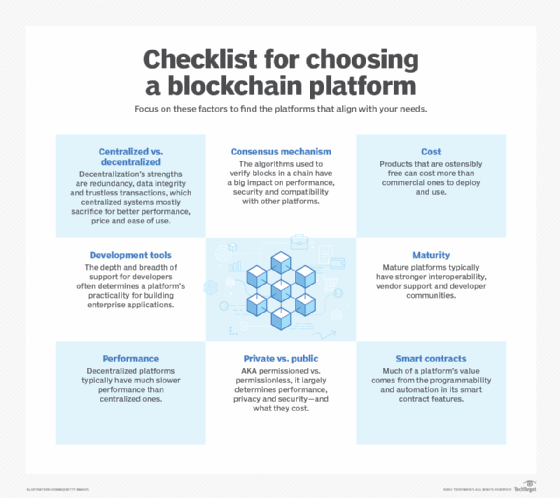
Selecting the right platform is a strategic decision that impacts long-term scalability, integration capabilities, and overall return on investment. Enterprises must meticulously evaluate several critical factors:
- Permissioned vs. Public Nature: Enterprises typically opt for permissioned blockchains, where participants are known and authorized, ensuring data privacy and control, unlike public, open networks.
- Scalability and Performance: The platform must handle a high volume of transactions with low latency to support enterprise-level operations. Evaluate the consensus mechanisms and throughput capabilities.
- Data Privacy and Confidentiality: For sensitive business data, robust mechanisms for privacy (e.g., private channels, zero-knowledge proofs) are essential to comply with regulations like GDPR.
- Interoperability: The ability of the blockchain to interact with existing legacy systems and other blockchain networks is crucial for seamless integration and future expansion.
- Development Tools and Ecosystem: A rich set of SDKs, APIs, documentation, and a vibrant developer community can significantly accelerate development and deployment.
- Cost of Ownership: Consider not just licensing or subscription fees, but also infrastructure costs, development costs, and ongoing maintenance.
- Governance Model: How decisions are made, upgrades are implemented, and disputes are resolved within the platform's ecosystem is vital for long-term stability.
Leading Blockchain Platforms Tailored for Enterprise
The enterprise blockchain landscape is diverse, with several robust platforms vying for market leadership. Each offers distinct features, strengths, and ideal use cases. Understanding these nuances is key to selecting the optimal DLT solution for your specific business needs.
Hyperledger Fabric: The Backbone for Collaborative Enterprise DLT
Hyperledger Fabric, hosted by the Linux Foundation, stands as one of the most widely adopted permissioned blockchain platforms for enterprise use. It's not a cryptocurrency platform but rather a modular framework designed for developing DLT solutions with a high degree of confidentiality and scalability. Its unique architecture allows for "channels" to create private sub-networks for specific transactions between participating members, ensuring data privacy.
- Key Features:
- Modular Architecture: Pluggable components for consensus mechanisms, membership services, and ordering services provide flexibility.
- Channels: Enable private, confidential transactions between subsets of network participants.
- Chaincode (Smart Contracts): Business logic written in popular languages like Go, Node.js, and Java, facilitating broader developer adoption.
- Identity Management: Robust identity management system for known participants, crucial for regulatory compliance.
- No Native Cryptocurrency: Transactions don't require a native token, simplifying cost management and avoiding cryptocurrency volatility.
- Ideal Use Cases: Supply chain management, trade finance, interbank settlements, healthcare data management, and digital identity.
- Actionable Tip: Hyperledger Fabric excels in consortia environments where multiple organizations need to share information securely and confidentially without disclosing all data to all participants. Its modularity allows for significant customization to fit specific business logic.
Ethereum (Enterprise Ethereum Alliance - EEA): Bridging Public and Private Innovation
While the public Ethereum blockchain is known for its open nature and Ether cryptocurrency, the Enterprise Ethereum Alliance (EEA) has spearheaded efforts to adapt Ethereum's robust capabilities for enterprise applications. This often involves leveraging private, permissioned versions of Ethereum, such as Quorum, or utilizing scaling solutions and privacy layers.
- Key Features:
- Smart Contract Prowess: Ethereum's Solidity language for smart contracts is mature and widely understood, enabling complex business logic.
- Vast Developer Ecosystem: The largest and most active blockchain developer community provides extensive resources and talent.
- Tokenization Capabilities: Native support for creating and managing digital assets (tokens) opens doors for new business models and asset tokenization.
- Interoperability Focus: EEA is committed to standards that ensure interoperability between different Ethereum-based enterprise solutions.
- Ideal Use Cases: Digital identity, financial instruments, supply chain traceability, loyalty programs, and decentralized applications (dApps) requiring flexible smart contract execution.
- Actionable Tip: Enterprises looking to build sophisticated dApps that require complex smart contract logic and wish to leverage a vast developer pool often find value in Ethereum-based solutions, especially when considering a transition to a permissioned variant for privacy.
R3 Corda: Designed for Regulated Financial Institutions
Developed by the R3 consortium, Corda is distinctively engineered for regulated financial institutions, focusing on privacy, scalability, and interoperability. Unlike traditional blockchains, Corda does not broadcast transactions to the entire network; instead, transactions are shared only with the parties involved, and relevant notaries, ensuring high levels of privacy.
- Key Features:
- Privacy by Design: Transactions are peer-to-peer and confidential, only visible to directly involved parties and notaries.
- Transaction Finality: Offers immediate legal finality of transactions, crucial for financial markets.
- Smart Contracts (CorDapps): Business logic written in Kotlin or Java, enabling developers to build complex financial applications.
- Notary Services: Specialized nodes that ensure transaction uniqueness and validity without seeing the transaction content.
- Direct Legal Binding: Designed with legal enforceability in mind, allowing smart contracts to be legally binding.
- Ideal Use Cases: Trade finance, capital markets, insurance, supply chain finance, and other regulated industries requiring high privacy and direct legal enforceability.
- Actionable Tip: For enterprises in highly regulated sectors, particularly finance, Corda's privacy-centric design and focus on legal enforceability make it a compelling choice. Its unique approach to consensus and transaction visibility sets it apart.
Quorum: Enterprise-Grade Ethereum with Enhanced Privacy
Originally developed by JPMorgan Chase and now stewarded by ConsenSys, Quorum is an open-source permissioned blockchain platform built on Ethereum. It combines the flexibility and robust smart contract capabilities of Ethereum with crucial enterprise features like enhanced privacy, higher transaction throughput, and a private transaction manager.
- Key Features:
- Transaction Privacy: Uses a private transaction manager (Constellation or Tessera) to ensure only relevant parties see transaction details.
- High Performance: Optimized for enterprise needs, offering faster transaction processing than public Ethereum.
- Voting-Based Consensus: Supports various consensus mechanisms suitable for enterprise, such as Istanbul BFT (IBFT) or Raft.
- Ethereum Compatibility: Leverages the Ethereum Virtual Machine (EVM) for smart contracts, allowing developers to use familiar tools and Solidity.
- Ideal Use Cases: Interbank payments, supply chain finance, digital asset management, and any enterprise application requiring Ethereum's smart contract power with enhanced privacy and performance.
- Actionable Tip: Quorum is an excellent choice for organizations that appreciate Ethereum's smart contract capabilities but require a permissioned network with built-in privacy features and higher performance for their specific business needs. It's particularly strong for financial services.
Amazon Managed Blockchain (AMB): Cloud-Powered DLT for Scalability
Amazon Managed Blockchain (AMB) is a fully managed service that makes it easy to create and manage scalable blockchain networks using popular open-source frameworks like Hyperledger Fabric and Ethereum. As a cloud service, it abstracts away much of the operational complexity of setting up and maintaining blockchain infrastructure.
- Key Features:
- Fully Managed Service: AWS handles infrastructure provisioning, scaling, security, and maintenance.
- Supports Hyperledger Fabric and Ethereum: Offers choice between two leading enterprise frameworks.
- Scalability and Reliability: Leverages AWS's robust infrastructure for high availability and performance.
- Integration with AWS Services: Seamlessly integrates with other AWS services like Amazon CloudWatch for monitoring, AWS Identity and Access Management (IAM) for permissions, and Amazon S3 for storage.
- Ideal Use Cases: Supply chain visibility, inter-organization data sharing, loyalty programs, and any enterprise looking to rapidly deploy and scale blockchain solutions without managing underlying infrastructure.
- Actionable Tip: For enterprises already heavily invested in the AWS ecosystem, AMB provides a quick and efficient way to experiment with and deploy blockchain solutions, significantly reducing the operational overhead of managing nodes and network configurations.
Azure Blockchain Service: Microsoft's Comprehensive DLT Offering
Microsoft Azure Blockchain Service (now evolving into Azure confidential ledger and other DLT services) provides a comprehensive suite of tools and services for building, deploying, and managing blockchain applications on the Azure cloud. It aims to simplify the development process for enterprises by offering managed services for various DLT frameworks.
- Key Features:
- Managed DLT Frameworks: Previously supported ConsenSys Quorum and Hyperledger Fabric, now focusing on broader DLT integration and confidential computing.
- Integration with Azure Ecosystem: Deep integration with Azure Active Directory, Azure Key Vault, Azure Monitor, and other cloud services.
- Developer Tools: Provides SDKs, APIs, and development environments to streamline smart contract deployment and application development.
- Enterprise-Grade Security: Leverages Azure's robust security infrastructure, including identity management and network security.
- Ideal Use Cases: Cross-organizational workflows, asset tracking, digital identity, financial settlements, and supply chain solutions for enterprises operating within the Microsoft ecosystem.
- Actionable Tip: Enterprises with existing Microsoft infrastructure and a preference for a managed cloud environment will find Azure's evolving DLT offerings beneficial for accelerating their blockchain initiatives and ensuring seamless integration with their current IT landscape.
Strategic Implementation and Best Practices for Enterprise Blockchain
Adopting enterprise blockchain is more than just selecting a platform; it involves a strategic shift in how business processes are designed and managed. Successful implementation requires careful planning, stakeholder buy-in, and a clear understanding of the technology's capabilities and limitations.
Navigating the Development Lifecycle
- Start Small with a Pilot Project: Begin with a well-defined, contained use case that offers clear business value. This allows for learning and iteration without disrupting core operations. Focus on a single business problem that blockchain can uniquely solve.
- Secure Stakeholder Buy-in: Blockchain implementations often span multiple departments or even organizations. Gaining consensus and commitment from all key stakeholders, including legal, IT, and business units, is critical for success.
- Address Regulatory Compliance Early: Engage legal and compliance teams from the outset. Ensure the chosen platform and solution design align with relevant industry regulations, data privacy laws, and jurisdictional requirements.
- Prioritize Data Governance and Interoperability: Establish clear rules for data input, validation, and access. Plan for how the blockchain solution will integrate with existing legacy systems and potentially other DLT networks to avoid creating new data silos.
- Focus on User Experience: While the underlying technology is complex, the user interface and experience for end-users should be intuitive and seamless to ensure adoption.
Ensuring Future-Proof Blockchain Solutions
- Plan for Scalability: As your network grows and transaction volumes increase, ensure the platform can scale efficiently. Consider sharding, off-chain solutions, or layer-2 protocols if necessary.
- Embrace Interoperability Standards: Advocate for and adopt industry standards for blockchain interoperability. This will facilitate seamless communication between different DLT networks and prevent vendor lock-in.
- Conduct Regular Security Audits: Blockchain technology, while secure by design, is not immune to vulnerabilities. Regular security audits of smart contracts and network infrastructure are paramount.
- Foster a Collaborative Ecosystem: Enterprise blockchain often thrives in consortia. Actively participate in industry groups and collaborate with partners to drive standardization and shared innovation.
- Stay Updated with Technology Evolution: The blockchain space is rapidly evolving. Continuously monitor new advancements, upgrades, and emerging platforms to keep your solutions cutting-edge and competitive.
Frequently Asked Questions About Enterprise Blockchain Platforms
What is a permissioned blockchain and why is it crucial for enterprises?
A permissioned blockchain is a type of distributed ledger technology where participants must be authorized to join the network and validate transactions. Unlike public blockchains, which are open to anyone, permissioned networks control who can participate, read data, or write transactions. This control is crucial for enterprises because it ensures data privacy, meets regulatory compliance requirements (like KYC/AML), allows for robust identity management, and provides greater accountability among known participants. It balances the benefits of decentralization with the need for corporate governance and confidentiality.
How do smart contracts benefit enterprise blockchain solutions?
Smart contracts are self-executing agreements with the terms of the agreement directly written into lines of code. For enterprises, they offer immense benefits by automating complex business processes, reducing the need for intermediaries, and ensuring tamper-proof execution. For example, in supply chain management, a smart contract can automatically release payment to a supplier once goods are verified as received on the blockchain. This automation leads to significant cost savings, increased efficiency, reduced errors, and enhanced trust among transacting parties, fostering new levels of business process automation and transparency.
What are the key security considerations for enterprise blockchain development?
While blockchain offers inherent security features like immutability and cryptography, enterprise development requires additional considerations. Key aspects include securing private keys, implementing robust access control mechanisms for permissioned networks, conducting thorough smart contract audits to identify vulnerabilities, protecting against denial-of-service (DoS) attacks, ensuring data privacy through techniques like private channels or zero-knowledge proofs, and integrating with existing enterprise security frameworks. Regular penetration testing and a strong governance model are also essential to maintain the integrity and security of the DLT solution.
Can enterprise blockchains integrate with existing legacy systems?
Yes, integration with existing legacy systems is a critical requirement for most enterprise blockchain deployments. Enterprises rarely start from scratch; their DLT solutions must seamlessly connect with ERP systems, CRM platforms, databases, and other core business applications. This is typically achieved through APIs (Application Programming Interfaces), middleware, and specialized connectors. Many leading blockchain platforms, including Hyperledger Fabric and those on AWS or Azure, offer comprehensive SDKs and integration tools to facilitate this interoperability, ensuring that blockchain solutions augment, rather not replace, existing IT infrastructure.
What is the difference between Hyperledger Fabric and Ethereum for enterprise use?
The primary difference lies in their design philosophy and target use cases. Hyperledger Fabric is specifically built as a modular, permissioned blockchain framework for enterprise consortia. It emphasizes privacy through channels, flexible consensus mechanisms, and no native cryptocurrency, making it ideal for multi-party business networks requiring strict access control and confidentiality (e.g., supply chain, trade finance). Ethereum, particularly its enterprise variants like Quorum, leverages the mature smart contract capabilities and vast developer ecosystem of the public Ethereum network. While initially public, enterprise Ethereum focuses on permissioned networks with enhanced privacy and performance, making it suitable for complex decentralized applications (dApps), tokenization, and financial instruments where smart contract flexibility is paramount.

0 Komentar