
Unlocking Customer Insights: How to Use Machine Learning for Sentiment Analysis of Customer Reviews
In today's hyper-connected digital landscape, customer reviews are a goldmine of unfiltered feedback, offering invaluable insights into product performance, service quality, and overall brand perception. But with the sheer volume of data generated daily, manually sifting through thousands or even millions of comments is simply unfeasible. This is where machine learning for sentiment analysis emerges as a transformative solution, empowering businesses to automatically understand the emotional tone and subjective opinions within vast datasets of customer reviews. This comprehensive guide will delve deep into the methodology, practical applications, and best practices for leveraging cutting-edge machine learning techniques to extract actionable intelligence from your customer feedback, ensuring you not only listen to your customers but truly understand them.
The Power of Sentiment Analysis in Customer Feedback
At its core, sentiment analysis, often referred to as opinion mining, is the computational study of opinions, sentiments, and emotions expressed in text. For customer reviews, this means classifying feedback as positive, negative, or neutral. However, advanced sentiment analysis goes beyond simple polarity, often identifying specific emotions like joy, anger, sadness, or even detecting sarcasm and irony. The ability to automate this process with machine learning algorithms provides an unparalleled advantage:
- Scalability: Process millions of reviews in minutes, something impossible with human analysts.
- Consistency: Eliminate human bias and ensure uniform classification across all data.
- Speed: Gain real-time insights, allowing for quick responses to emerging issues or trends.
- Granularity: Identify sentiment not just at the document level but at the sentence, phrase, or even aspect level (e.g., "The battery life is excellent, but the camera is disappointing").
By effectively applying natural language processing (NLP) techniques, businesses can transform unstructured text data into structured, quantifiable metrics, providing a clear picture of customer satisfaction and dissatisfaction.
Why Machine Learning is Indispensable for Review Analysis
While basic keyword spotting can identify terms like "good" or "bad," it falls short in capturing the nuances of human language. Machine learning, particularly deep learning models, offers a sophisticated approach to deciphering context, negation, and complex expressions. Traditional rule-based systems are rigid and require constant manual updates, whereas ML models can learn from data, adapting to new vocabulary and evolving linguistic patterns. This adaptability makes them superior for handling the dynamic nature of customer feedback.
Beyond Basic Keywords: Understanding Context
Consider the phrase: "This phone is not bad." A simple keyword approach might flag "bad" as negative. However, a machine learning model, trained on a diverse corpus of text, understands that "not bad" typically conveys a positive or neutral sentiment. Similarly, sarcasm ("Great customer service, if you enjoy waiting an hour!") is a significant challenge that advanced text analytics models, especially those leveraging transformer architectures, are increasingly capable of recognizing.
Handling Volume and Velocity of Data
The sheer volume of online reviews across platforms like Amazon, Yelp, Google Reviews, and social media channels demands an automated solution. Machine learning models can be deployed to continuously monitor and analyze incoming reviews, providing real-time alerts for significant shifts in sentiment or spikes in negative feedback related to specific product features or service aspects. This proactive approach is crucial for maintaining a strong brand reputation and improving customer experience.
The Machine Learning Pipeline for Sentiment Analysis
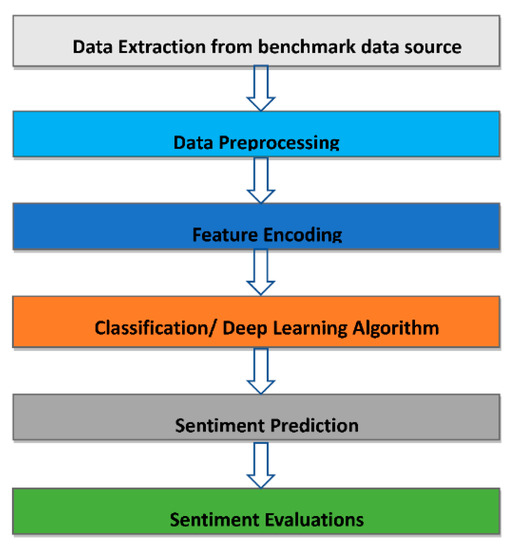
Implementing a machine learning solution for sentiment analysis involves several critical stages. Each step is vital for building an accurate and robust model.
1. Data Collection and Annotation
The first step is gathering your customer reviews. This could involve scraping public review sites (while adhering to terms of service), integrating with CRM systems, or collecting survey responses. Once collected, a crucial step for supervised learning models is data annotation or labeling. This involves human experts manually tagging reviews (or sentences within reviews) with their corresponding sentiment (e.g., positive, negative, neutral). The quality and diversity of this labeled dataset directly impact the model's accuracy. For optimal results, ensure your annotation guidelines are clear and consistent.
2. Data Preprocessing: Cleaning the Noise
Raw text data is messy. Preprocessing transforms it into a format suitable for machine learning algorithms. Key steps include:
- Tokenization: Breaking text into individual words or sub-word units (tokens).
- Lowercasing: Converting all text to lowercase to treat "Good" and "good" as the same word.
- Stop Word Removal: Eliminating common words that carry little semantic meaning (e.g., "the," "a," "is").
- Stemming/Lemmatization: Reducing words to their root form (e.g., "running," "runs," "ran" -> "run"). Lemmatization is generally preferred as it converts words to their dictionary form.
- Handling Punctuation and Special Characters: Removing or standardizing them.
- Handling Emojis and Emoticons: Converting them into their textual descriptions or treating them as sentiment indicators.
- Spelling Correction: Addressing common typos, which are prevalent in user-generated content.
Effective data preprocessing is paramount for reducing noise and improving the signal-to-noise ratio for your model.
3. Feature Extraction: Representing Text as Numbers
Machine learning models don't understand text directly; they work with numerical data. Feature extraction is the process of converting preprocessed text into numerical representations. Common techniques include:
- Bag-of-Words (BoW) / TF-IDF: Simple yet effective methods where text is represented as a matrix of word counts or term frequency-inverse document frequency scores.
- Word Embeddings: More sophisticated techniques like Word2Vec, GloVe, or FastText represent words as dense vectors in a continuous vector space, capturing semantic relationships between words. Words with similar meanings will have similar vector representations.
- Contextual Embeddings (e.g., BERT, GPT-3/4): These advanced models generate word embeddings that vary based on the word's context in a sentence, capturing much richer semantic and syntactic information. They are at the forefront of modern deep learning for NLP.
Choosing the right feature extraction method significantly impacts model performance, especially for capturing subtle sentiments.
4. Model Selection and Training
With numerical features ready, the next step is selecting and training a suitable machine learning model. Options include:
- Traditional ML Algorithms:
- Naive Bayes: A probabilistic classifier effective for text classification due to its simplicity and efficiency.
- Support Vector Machines (SVM): Powerful for high-dimensional data, often performing well in text classification tasks.
- Logistic Regression: A linear model that's easy to interpret and a strong baseline.
- Deep Learning Models:
- Recurrent Neural Networks (RNNs) / Long Short-Term Memory (LSTMs): Designed to handle sequential data like text, capturing long-range dependencies.
- Convolutional Neural Networks (CNNs): Surprisingly effective for text by identifying local patterns (n-grams).
- Transformers (e.g., BERT, RoBERTa, XLNet): State-of-the-art models that leverage attention mechanisms to weigh the importance of different words in a sequence, achieving superior performance on complex NLP tasks like sentiment analysis. Fine-tuning a pre-trained transformer model is often the most effective approach for achieving high model accuracy.
The model is trained on the labeled dataset, learning to map input text features to their corresponding sentiment labels.
5. Model Evaluation and Refinement
After training, the model's performance must be rigorously evaluated using a separate, unseen test dataset. Key metrics include:
- Accuracy: The proportion of correctly classified instances.
- Precision: Of all reviews predicted as positive, how many were actually positive?
- Recall: Of all truly positive reviews, how many did the model correctly identify?
- F1-score: The harmonic mean of precision and recall, providing a balanced measure.
- Confusion Matrix: A table showing correct and incorrect classifications for each sentiment class.
Based on these metrics, the model can be refined through hyperparameter tuning, collecting more diverse training data, or exploring different model architectures. This iterative process is crucial for optimizing the model for your specific domain and review characteristics.
6. Deployment and Monitoring
Once satisfied with the model's performance, it can be deployed, often as an API, to process new incoming customer reviews in real-time. Continuous monitoring is essential to detect model drift (where performance degrades over time due to changes in language or topics) and ensure ongoing accuracy. Regular retraining with new data helps maintain optimal performance.
Practical Applications of Sentiment Analysis on Customer Reviews
Leveraging machine learning for sentiment analysis offers a multitude of tangible benefits across various business functions:
- Product Development: Identify common pain points or popular feature requests directly from customer feedback. A surge in negative sentiment about "battery life" or "user interface" can signal urgent areas for improvement. Conversely, positive feedback on new features can validate product roadmaps. This feeds directly into effective product management.
- Customer Service Enhancement: Automatically flag highly negative reviews, enabling proactive customer support outreach. Identify recurring issues that lead to customer dissatisfaction, allowing for training improvements or FAQ updates. This proactive approach improves customer satisfaction significantly.
- Marketing and Brand Management: Monitor brand perception across different channels. Track sentiment changes in response to marketing campaigns or product launches. Identify key influencers or detractors. This is vital for maintaining a positive brand image and managing public relations effectively.
- Competitive Analysis: Analyze competitor reviews to identify their strengths and weaknesses from a customer perspective, informing your own strategic positioning.
- Predictive Analytics: By correlating sentiment trends with sales data, businesses can potentially predict future demand or identify potential churn risks. For example, a sustained decline in sentiment around a specific product might indicate a future dip in sales.
Challenges and Considerations
While powerful, sentiment analysis isn't without its challenges:
- Sarcasm and Irony: These are notoriously difficult for models to detect, often requiring very sophisticated contextual understanding.
- Domain-Specific Language: A word positive in one domain might be negative in another (e.g., "unpredictable" for a thrill ride vs. a car). Models need to be trained on domain-specific data.
- Multilingual Reviews: Handling reviews in multiple languages requires either separate models for each language or advanced multilingual NLP techniques.
- Data Imbalance: Often, positive reviews outnumber negative ones significantly. This imbalance can lead to models biased towards the majority class. Techniques like oversampling, undersampling, or using specific loss functions can mitigate this.
- Subjectivity vs. Objectivity: Distinguishing between factual statements and subjective opinions can be challenging.
Best Practices for Success
To maximize the effectiveness of your machine learning sentiment analysis initiative:
- Start with Clear Objectives: Define what specific insights you want to gain. Are you looking for overall sentiment, aspect-level sentiment, or emotion detection?
- Invest in High-Quality Labeled Data: This is the single most important factor for supervised learning models. Consider human-in-the-loop systems for continuous annotation and validation.
- Choose the Right Model for Your Data: While transformers often yield the best results, they are computationally intensive. For smaller datasets or simpler tasks, traditional ML models might suffice.
- Iterate and Refine: Sentiment analysis models are rarely "set and forget." Continuously evaluate performance, retrain with new data, and adapt to evolving language.
- Integrate with Business Intelligence (BI) Tools: Visualize sentiment trends and insights alongside other business metrics (e.g., sales, customer churn) to derive actionable business intelligence. Dashboards can provide real-time snapshots of customer sentiment.
- Combine with Topic Modeling: Beyond just sentiment, identify the topics customers are discussing (e.g., "delivery issues," "product features," "customer support responsiveness"). Combining sentiment analysis with topic modeling provides a holistic view.
- Consider Hybrid Approaches: Sometimes, a combination of lexicon-based methods (rule-based) and machine learning can offer a robust solution, leveraging the strengths of both.
By following these guidelines, organizations can effectively harness the power of predictive analytics to transform raw customer reviews into strategic assets, driving better decision-making and fostering stronger customer relationships.
Frequently Asked Questions
What is the difference between sentiment analysis and opinion mining?
While often used interchangeably, sentiment analysis broadly refers to the process of determining the emotional tone behind a piece of text (positive, negative, neutral). Opinion mining is a more specific term that focuses on extracting and analyzing people's opinions, feelings, and attitudes towards entities (products, services, topics, etc.) and their attributes. In essence, sentiment analysis is a key component or a sub-field of opinion mining, providing the polarity of the expressed opinion. Both rely heavily on natural language processing (NLP) techniques.
Can machine learning sentiment analysis detect sarcasm or irony?
Detecting sarcasm and irony is one of the most significant challenges in text classification and sentiment analysis due to their reliance on contextual cues, tone, and shared cultural understanding. While traditional machine learning models struggle, advanced deep learning models, particularly those based on transformer architectures (like BERT), have shown increasing capability in identifying these nuances. They learn to recognize subtle linguistic patterns and contextual clues, but perfect detection remains an active area of research. It often requires large, carefully annotated datasets that specifically highlight sarcastic or ironic expressions.
How much data do I need to train a robust sentiment analysis model?
The amount of data required depends on several factors: the complexity of your language, the desired model accuracy, and the chosen machine learning algorithm. For traditional machine learning algorithms (like Naive Bayes or SVM), a few thousand labeled reviews (e.g., 5,000-10,000) can often provide a decent baseline. However, for highly accurate deep learning models, especially those fine-tuning large pre-trained language models, you might need tens of thousands to hundreds of thousands of labeled examples, particularly if your domain has unique jargon or sentiment expressions. The more diverse and representative your labeled customer feedback data is, the better your model will perform on unseen reviews.
What are the common challenges in data preprocessing for sentiment analysis?
Common challenges in data preprocessing include handling noisy user-generated content (typos, slang, abbreviations), standardizing informal language, effectively processing emojis and emoticons, dealing with negation (e.g., "not good"), and managing domain-specific vocabulary. Additionally, determining the appropriate level of tokenization (words vs. sub-words) and whether to use stemming or lemmatization can significantly impact the quality of features extracted for the machine learning model. Over-processing can lead to loss of valuable information, while under-processing leaves too much noise.

0 Komentar