
Unlocking the Future: A Deep Dive into 5G mmWave Spectrum Bands and Frequencies
In the rapidly evolving landscape of wireless communication, 5G mmWave spectrum bands and frequencies represent the pinnacle of high-speed, low-latency connectivity, promising to revolutionize how we interact with the digital world. As a professional SEO expert and content writer, my aim is to provide an authoritative and comprehensive guide to this transformative technology. Understanding millimeter wave technology is crucial for anyone looking to grasp the true potential of the fifth generation of cellular networks, from consumers seeking blazing fast downloads to enterprises building next-generation applications. This article will demystify the complex world of high-band 5G, exploring its unique characteristics, the specific frequencies involved, and the innovative solutions enabling its widespread deployment. Prepare to dive deep into the very wavelengths that are powering the future of connectivity, unlocking unprecedented capabilities and pushing the boundaries of what's possible.
Understanding the Broader 5G Spectrum Landscape
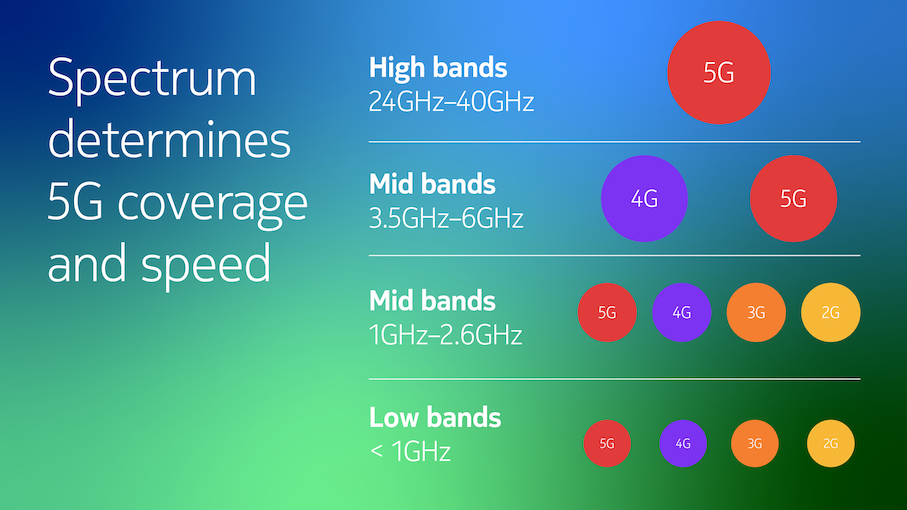
Before we delve into the specifics of 5G mmWave, it's essential to understand its place within the broader 5G spectrum. The 5G ecosystem operates across three main types of spectrum, each with distinct propagation characteristics and use cases:
- Low-Band 5G: Typically below 1 GHz (e.g., 600-900 MHz). Offers wide coverage and excellent penetration through walls, making it ideal for rural areas and widespread foundational coverage. However, its capacity and speeds are comparable to advanced 4G LTE.
- Mid-Band 5G: Generally between 1 GHz and 6 GHz (e.g., 2.5 GHz, 3.5 GHz, 3.7-4.2 GHz). This is often referred to as the "sweet spot" for 5G, balancing good coverage with significantly higher speeds and lower latency than low-band. It's crucial for urban and suburban deployments, providing a robust balance for everyday use.
- High-Band 5G (mmWave): Operating at frequencies above 24 GHz, this is where 5G mmWave spectrum bands and frequencies truly shine. While its range is limited and penetration poor, it offers unparalleled capacity and multi-gigabit speeds, making it ideal for dense urban environments, stadiums, and specific enterprise applications where extreme performance is paramount.
Each band plays a vital role in creating a layered, robust 5G network, but it is the millimeter wave component that delivers the truly transformative experiences often associated with 5G's ultimate promise.
What is 5G mmWave? The Science Behind the Speed
The term "mmWave" refers to millimeter waves, which are electromagnetic waves with wavelengths ranging from 1 to 10 millimeters, corresponding to frequencies between 30 and 300 gigahertz (GHz). This is significantly higher than the frequencies used by Wi-Fi or previous cellular generations. The fundamental principle behind using these ultra-high frequencies for 5G is the availability of vast, contiguous blocks of spectrum. Traditional cellular bands are often congested and fragmented, limiting the amount of data that can be transmitted simultaneously. In contrast, the millimeter wave spectrum offers wide-open lanes, allowing for much greater bandwidth and, consequently, much higher data speeds.
The physics of these high frequencies dictate their unique characteristics. While they enable massive data throughput, they also suffer from significant signal attenuation over short distances and poor penetration through obstacles like walls, foliage, and even heavy rain. This "line-of-sight" dependency is a critical factor in mmWave deployment. However, the benefits – unprecedented gigabit speeds and ultra-low latency – are compelling enough to drive significant investment in overcoming these challenges through innovative technological solutions.
Key 5G mmWave Spectrum Bands and Frequencies Globally
Spectrum allocation is a complex process managed by regulatory bodies in different countries. While the general range for mmWave is 30-300 GHz, specific bands have been identified and auctioned for 5G use globally. Here are some of the most prominent 5G mmWave spectrum bands and frequencies:
- 24 GHz (24.25-27.5 GHz): This band is widely considered a global pioneer for mmWave 5G. It's been identified and allocated in various regions, including parts of Europe and Asia, making it a common ground for early deployments.
- 28 GHz (27.5-28.35 GHz): Often referred to as the "pioneer band" in the United States, 28 GHz was among the first mmWave frequencies auctioned by the FCC. It has seen significant early deployment by U.S. carriers and is also used in countries like South Korea and Japan.
- 37 GHz, 39 GHz, and 47 GHz: These bands (specifically 37-40 GHz and 47.2-48.2 GHz) are crucial for U.S. 5G mmWave expansion. The FCC has made large swaths of this spectrum available, allowing carriers to build out substantial capacity in densely populated areas. These higher frequencies offer even greater bandwidth potential.
- 60 GHz (V-Band): While not exclusively for cellular 5G, the 60 GHz band (57-71 GHz) is used for various short-range, high-capacity wireless applications, including Wi-Fi (WiGig) and some point-to-point links. It's being explored for specific 5G use cases, particularly for very localized, high-density applications due to its extreme attenuation.
- 70 GHz and 80 GHz (E-Band): These bands (71-76 GHz and 81-86 GHz) are primarily used for point-to-point microwave backhaul links, connecting cellular base stations to the core network. They offer extremely high capacities over short distances and are vital for the underlying telecom infrastructure that supports 5G networks.
The specific availability and licensing of these bands vary significantly by country, influencing the pace and nature of mmWave deployment in different regions. Regulatory harmonization efforts are ongoing to foster global roaming and equipment compatibility.
The Promise and Power of mmWave: Beyond Speed
The true value of 5G mmWave extends far beyond simply faster downloads. Its unique capabilities unlock a new generation of applications and services:
- Ultra-High Speeds: We're talking multi-gigabit per second (Gbps) speeds, often exceeding 1 Gbps and potentially reaching 10 Gbps in ideal conditions. This allows for instantaneous downloads of large files, seamless 4K/8K video streaming, and lag-free cloud gaming.
- Ultra-Low Latency: With latency figures potentially dipping below 1 millisecond (ms), mmWave enables real-time responsiveness critical for applications like remote surgery, autonomous vehicles, and industrial automation where immediate feedback is paramount. This significantly enhances user experience for interactive applications.
- Massive Capacity: The vast spectrum available means that mmWave can support an incredibly high density of users and devices simultaneously without degradation in performance. This is ideal for crowded venues like stadiums, concert halls, and busy urban environments, where thousands of users are trying to connect at once. This contributes to effective network densification.
- New Use Cases:
- Augmented Reality (AR) & Virtual Reality (VR): The high bandwidth and low latency are essential for delivering immersive, high-definition AR/VR experiences without motion sickness or lag.
- Fixed Wireless Access (FWA): In areas where fiber optic rollout is challenging or expensive, mmWave can provide a competitive alternative for delivering gigabit broadband speeds directly to homes and businesses, bridging the digital divide.
- Enterprise and Industrial IoT: Factories can deploy private mmWave networks for real-time control of robotics, machine vision, and critical operational data, enabling true Industry 4.0 applications.
- Smart City Applications: High-resolution surveillance, real-time traffic management, and public safety applications can leverage the massive data capabilities of mmWave.
Challenges and Solutions for mmWave Deployment
Despite its immense potential, deploying 5G mmWave spectrum bands and frequencies presents significant challenges due to the inherent physics of high-frequency waves. However, the industry has developed sophisticated solutions to mitigate these issues:
1. Propagation Issues:
- Short Range: mmWave signals lose power rapidly over distance.
- Solution: Network densification is key. This involves deploying a much larger number of smaller base stations (known as small cells) closer to users, often on streetlights, building facades, and bus stops, creating a dense mesh network.
- Poor Penetration: Signals are easily blocked by obstacles like buildings, trees, and even human bodies.
- Solution: A combination of small cells and the strategic use of repeaters (or relays) can extend coverage around obstacles. Indoor mmWave solutions using dedicated small cells are also being developed for enterprise environments.
- Atmospheric Attenuation: Rain, humidity, and even oxygen can absorb mmWave signals.
- Solution: While unavoidable, network planning accounts for this, using redundant paths and higher power outputs where permissible.
2. Technological Innovations to Overcome Limitations:
- Beamforming: This is a cornerstone technology for mmWave. Instead of broadcasting signals in all directions, base stations use an array of antennas to focus the radio energy into a narrow beam directed precisely at the user's device. This significantly improves signal strength and efficiency.
- Beam Steering: Building on beamforming, beam steering allows the network to dynamically adjust the direction of the beam as the user moves, maintaining a strong, consistent connection.
- Massive MIMO (Multiple-Input, Multiple-Output): mmWave base stations often feature hundreds of antenna elements, enabling them to transmit and receive multiple data streams simultaneously to and from multiple users. This dramatically increases capacity and spectral efficiency.
- Dynamic TDD (Time Division Duplexing): Allows for flexible allocation of uplink and downlink capacity based on real-time network demand, optimizing the use of the available spectrum.
Practical Implementation & Strategic Deployment
- Strategic Small Cell Placement: Operators meticulously plan the placement of small cells in high-traffic areas, ensuring line-of-sight where possible and utilizing existing street furniture for discreet integration.
- Hybrid Network Approach: A successful 5G strategy involves a seamless handover between mmWave, mid-band, and low-band frequencies. Devices automatically switch to the optimal band based on location and signal strength, ensuring a consistent user experience. This allows carriers to leverage the strengths of each band.
- Device Integration: For consumers, ensuring devices are equipped with the necessary mmWave antenna modules is crucial. Many flagship smartphones now support mmWave, but it's important to verify compatibility.
- Fixed Wireless Access (FWA) Focus: For home and business broadband, FWA deployments are often simpler as they involve fixed outdoor receivers, mitigating some of the mobility challenges of mmWave.
The Future of 5G mmWave
The deployment of 5G mmWave spectrum bands and frequencies is still in its early stages globally, but its trajectory is clear. As the technology matures and costs decrease, we can expect to see wider availability, particularly in dense urban cores and specific enterprise zones. Its role will become increasingly vital in supporting data-intensive applications like real-time AI processing at the edge, advanced gaming, and the burgeoning metaverse. The ongoing research into higher frequency bands and more efficient antenna technologies promises to further enhance its capabilities.
Furthermore, mmWave will be integral to the evolution towards 5G-Advanced and eventually 6G, pushing the boundaries of connectivity even further. Its ability to provide massive, localized capacity will be indispensable for smart cities, highly automated factories, and next-generation public transportation systems, where an immense volume of data needs to be processed and communicated instantly. The strategic allocation and efficient use of this high-band spectrum will continue to be a top priority for governments and telecommunications companies worldwide, ensuring that the full potential of 5G is realized.
Actionable Tips for Leveraging mmWave
- For Consumers:
- Check Device Compatibility: Ensure your smartphone or 5G device explicitly supports 5G mmWave to take advantage of its speeds. Not all 5G devices are mmWave-enabled.
- Understand Coverage Areas: mmWave coverage is highly localized. Check your carrier's coverage maps for specific mmWave hotspots, which are often found in downtown areas, public venues, and near major transportation hubs.
- Positioning Matters: Even slight movements can impact your mmWave signal. For optimal performance, try to maintain a clear line-of-sight to the nearest small cell.
- For Businesses & Enterprises:
- Assess Your Needs: Determine if your operations truly require the extreme speeds and low latency of mmWave. For many, mid-band 5G offers sufficient performance.
- Explore Fixed Wireless Access (FWA): If your business is in an area with mmWave FWA availability, it could be a viable and cost-effective alternative to traditional wired broadband, especially for branch offices or temporary sites.
- Consider Private Networks: For highly specific industrial or campus environments, deploying a private 5G mmWave network can provide unparalleled control, security, and performance for critical applications. Consult with network integrators specializing in enterprise solutions.
- Invest in Compatible Infrastructure: If you're building out an internal 5G ecosystem, ensure your IoT devices, sensors, and other hardware are designed to leverage mmWave capabilities.
Frequently Asked Questions
What are the primary advantages of 5G mmWave over other 5G bands?
The primary advantages of 5G mmWave are its ability to deliver ultra-high speeds (multi-gigabit per second) and ultra-low latency (below 1 millisecond). This is due to the vast, contiguous blocks of spectrum available at these higher frequencies, allowing for significantly greater bandwidth and capacity. It's ideal for dense urban environments and specific applications requiring extreme performance, such as AR/VR, real-time industrial automation, and high-capacity Fixed Wireless Access (FWA).
Why does 5G mmWave have such limited range and penetration?
5G mmWave signals operate at very high frequencies (e.g., 24 GHz to 80 GHz), which means their wavelengths are very short. This characteristic causes them to be highly susceptible to signal attenuation over short distances and poor penetration through obstacles. They are easily absorbed or blocked by walls, buildings, foliage, and even human bodies, requiring a clear line-of-sight for optimal performance. This is a fundamental physical property of millimeter waves, not a design flaw.
How are operators addressing the deployment challenges of mmWave?
Operators are addressing mmWave deployment challenges through several key strategies. Firstly, they are implementing extensive network densification by deploying a large number of compact small cells in close proximity to users. Secondly, they are leveraging advanced technologies like beamforming and massive MIMO, which precisely direct and strengthen signals to individual devices. Thirdly, hybrid network strategies ensure seamless handovers between mmWave, mid-band, and low-band 5G, providing a consistent user experience regardless of location. Finally, repeaters and strategic planning help extend coverage around physical obstructions.
Is 5G mmWave available everywhere?
No, 5G mmWave is not available everywhere. Its deployment is highly targeted to specific, high-density areas where its unique capabilities (ultra-high speed and capacity) are most beneficial. This typically includes dense urban centers, major transportation hubs, sports stadiums, concert venues, and specific enterprise campuses. Due to its limited range and propagation characteristics, it is not practical or cost-effective to deploy mmWave for widespread, blanket coverage across suburban or rural areas. Coverage will continue to expand in targeted zones as demand and technology evolve.
What devices support 5G mmWave?
Many flagship smartphones released in recent years from major manufacturers (e.g., Apple, Samsung, Google) include support for 5G mmWave, especially models intended for markets with active mmWave deployments like the United States. Beyond smartphones, specific 5G-enabled devices like certain mobile hotspots, Fixed Wireless Access (FWA) routers, and some industrial IoT modules also come equipped with mmWave capabilities. It's crucial to check the technical specifications of any device to confirm its support for millimeter wave frequencies, as not all 5G-enabled devices are mmWave-compatible.

0 Komentar