
Unlocking Passive Income: Your Definitive Guide to Cryptocurrency Staking Rewards Comparison
Are you looking to generate passive income from your digital assets? Cryptocurrency staking has emerged as a powerhouse strategy for crypto holders to earn rewards by participating in the security and operations of various blockchain networks. However, navigating the myriad of options and understanding the true potential of your crypto earnings can be complex. This comprehensive guide will equip you with the essential knowledge to effectively compare cryptocurrency staking rewards, helping you make informed decisions and optimize your investment strategy. We delve deep into the metrics, risks, and actionable steps needed to build your own insightful cryptocurrency staking rewards comparison chart, ensuring you unlock the best possible yield from your holdings.
Understanding Cryptocurrency Staking: The Foundation of Passive Yield
Before diving into comparisons, it's crucial to grasp the fundamental concept of staking. At its core, staking involves locking up your cryptocurrencies to support the operations of a Proof-of-Stake (PoS) blockchain network. Unlike Proof-of-Work (PoW) systems like Bitcoin, where miners validate transactions, PoS networks rely on stakers. These stakers, or validator nodes, are chosen to create new blocks and validate transactions based on the amount of cryptocurrency they have "staked" as collateral. In return for their participation and contribution to network security, stakers receive newly minted coins or transaction fees as rewards.
The beauty of staking lies in its accessibility. While running a full validator node often requires significant technical expertise and a substantial capital outlay, most users engage in delegated staking. This involves delegating your crypto to an existing validator, who then shares a portion of their rewards with you, typically after deducting a small commission. This mechanism makes earning crypto earnings accessible to virtually anyone holding a stakeable asset, transforming dormant digital assets into a source of consistent passive income.
The Rise of Proof-of-Stake and Its Appeal
- Energy Efficiency: PoS consumes significantly less energy than PoW, making it a more environmentally friendly consensus mechanism.
- Scalability: PoS chains are generally designed to handle more transactions per second, improving network efficiency.
- Decentralization: While concerns exist, PoS aims to maintain decentralization by distributing power among many stakers.
- Passive Income Generation: For holders, staking offers a straightforward way to earn rewards on their existing crypto holdings without active trading.
Key Metrics for Staking Rewards Comparison: Beyond Just APY
When creating a robust cryptocurrency staking rewards comparison chart, simply looking at the advertised Annual Percentage Yield (APY) is insufficient. A truly effective comparison requires a deeper dive into several critical metrics that influence your actual returns and the overall risk profile of your staking investment.
Annual Percentage Yield (APY) vs. Annual Percentage Rate (APR)
Understanding the difference between APY and APR is paramount. APR (Annual Percentage Rate) represents the simple interest rate earned over a year, without factoring in the effect of compounding. APY (Annual Percentage Yield), on the other hand, accounts for compounding, meaning that the rewards you earn are reinvested and start earning their own rewards. For long-term staking, APY is almost always the more relevant metric as it reflects the true potential for growth through compounding rewards. Always seek out the APY when comparing staking opportunities, as it provides a more accurate picture of your potential profitability.
Lock-up Periods and Unbonding Times
Many staking protocols require your funds to be locked for a specific duration, known as the lock-up period. During this time, your staked assets are inaccessible and cannot be traded or moved. Equally important is the unbonding period, which is the time it takes for your staked assets to become liquid again after you decide to unstake them. These periods can range from a few days to several weeks or even months. Longer lock-up and unbonding periods reduce your liquidity and flexibility, which can be a significant factor in volatile crypto markets. A good comparison chart must clearly list these durations.
Slashing Risks and Network Penalties
Staking is not entirely risk-free. Slashing risks refer to penalties imposed on validators for malicious behavior, prolonged downtime, or double-signing transactions. If you are delegating your funds to a validator, their misbehavior could result in a portion of your staked assets being "slashed" or forfeited. While the risk is generally low with reputable validators, it's a crucial factor to consider. Understanding the specific slashing conditions of a network and the reputation of your chosen validator is vital for risk management.
Network Inflation/Deflation and Real Yield
The advertised APY often doesn't account for the underlying token's inflation rate. If a network has a high inflation rate, the value of your earned rewards might be diluted. For instance, an APY of 10% on a token with 5% annual inflation effectively yields only 5% in real terms (assuming the token's market price remains stable). Savvy investors look for the real yield, which considers the token's supply dynamics. Some networks even have deflationary mechanisms, which can enhance the real value of your staking rewards significantly.
Staking Platform Fees and Commissions
When you delegate your stake to a validator or use a centralized exchange's staking service, they typically charge a commission or fee on the rewards generated. These fees can vary significantly, from 0% to 20% or even higher. While a higher APY might look appealing, a substantial fee can eat into your net returns. Always factor in these platform fees when calculating your potential net crypto earnings.
Token Price Volatility
Perhaps the most significant factor affecting your actual returns is the underlying asset's price volatility. Earning a 15% APY on a token whose value drops by 30% during your staking period still results in a net loss. Staking ties up your assets, making them less reactive to market fluctuations. Therefore, a comprehensive investment strategy for staking must include a strong conviction in the long-term value and stability of the cryptocurrency you choose to stake. Researching the project's fundamentals, adoption, and development roadmap is crucial.
Crafting Your Own Cryptocurrency Staking Rewards Comparison Chart
To truly optimize your staking journey, you need a personalized tool for comparison. Here’s how to build an effective one:
Step-by-Step Approach to Data Collection
- Identify Potential Staking Assets: Begin by researching cryptocurrencies that support Proof-of-Stake and offer staking rewards. Consider projects with strong fundamentals, active development, and a clear use case.
- Consult Official Sources: Always prioritize the official project website for information on staking mechanics, APY (or estimated APY), lock-up periods, and slashing risks. This is the most accurate source.
- Explore Reputable Staking Platforms: Visit popular staking platforms, decentralized finance (DeFi) protocols, and centralized exchanges that offer staking services. Compare their advertised rates, fees, and the specific coins they support. Examples include Lido Finance for liquid staking, Binance, Kraken, or dedicated staking pools.
- Utilize Staking Calculators/Aggregators: Websites like StakingRewards.com or CoinMarketCap's staking section can provide aggregated data and calculators, but always cross-reference with official sources.
Essential Data Points to Include in Your Chart
Your comparison chart should be a clear, concise table. Here are the critical columns you should include:
- Cryptocurrency Name: (e.g., Ethereum (ETH), Solana (SOL), Cardano (ADA))
- Estimated APY (Annual Percentage Yield): The most up-to-date estimate, noting if it's variable.
- Lock-up Period: How long are your funds inaccessible? (e.g., 0 days, 28 days)
- Unbonding Period: How long does it take to unstake? (e.g., 0 days, 7 days, 21 days)
- Slashing Risk: (Yes/No, and severity if applicable)
- Platform/Validator Fee: The percentage commission on rewards.
- Minimum Staking Amount: Any minimum threshold required to stake.
- Wallet Compatibility: What wallets are supported for native staking?
- Reward Payout Frequency: How often are rewards distributed? (e.g., daily, weekly, epoch-based)
- Current Price & Market Cap: For context on asset stability and size.
Analytical Considerations for Comparison
Once your chart is populated, the true analysis begins:
- Risk-Reward Balance: Is a higher APY worth the increased lock-up period or potential slashing risk?
- Diversification: Don't put all your eggs in one basket. Diversify your staking portfolio across different assets and platforms.
- Long-Term vs. Short-Term Goals: If you need liquidity, shorter unbonding periods are crucial. For long-term accumulation, longer lock-ups might be acceptable for higher yields.
- Underlying Project Health: A high APY on a failing project is a bad investment. Always research the project's utility, community, and development.
Advanced Staking Strategies and Considerations
Beyond basic delegated staking, the DeFi ecosystem offers more sophisticated ways to earn yields.
Delegated Staking vs. Running a Validator Node
For most users, delegated staking is the go-to. It's simple, requires minimal technical knowledge, and you only need to hold the asset. Running a full validator node, conversely, offers higher potential rewards (as you don't pay a commission) and contributes more directly to network decentralization. However, it demands significant technical expertise, a powerful server, constant uptime, and a much larger initial stake. For the average crypto holder seeking passive crypto income, delegation is the more practical path.
Liquid Staking Solutions
One of the innovations in the DeFi space is liquid staking. Protocols like Lido Finance allow users to stake their assets (e.g., ETH) and receive a liquid staking derivative token (e.g., stETH) in return. This derivative token represents your staked asset plus accumulated rewards and can be used in other DeFi protocols for additional yield farming opportunities, effectively allowing you to earn staking rewards while maintaining liquidity. This mitigates the traditional lock-up period drawback, but introduces smart contract risk and potential de-pegging risk of the derivative token.
Yield Farming vs. Staking
While often conflated, yield farming and staking are distinct. Staking primarily involves locking assets to secure a PoS network. Yield farming, on the other hand, involves providing liquidity to decentralized exchanges (DEXs) or lending protocols in exchange for fees and governance tokens. While yield farming can offer higher, albeit more volatile, returns, it often carries greater impermanent loss risk and requires more active management. Staking is generally considered a more set-and-forget investment strategy for consistent passive income.
Tax Implications of Staking Rewards
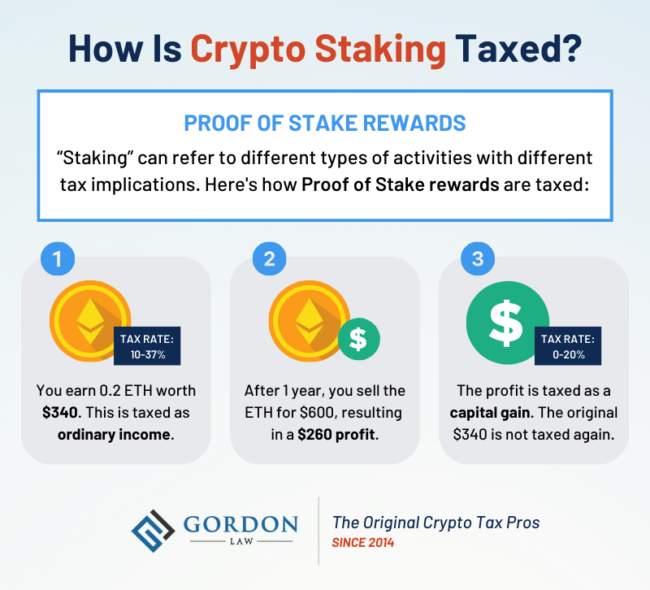
It's crucial to remember that staking rewards are generally considered taxable income in many jurisdictions the moment they are received. The specific tax treatment can vary significantly based on your country and local regulations. Always consult with a qualified tax professional to understand your obligations regarding your crypto earnings from staking.
Actionable Tips for Maximizing Your Staking Profitability
To truly excel in your staking endeavors and maximize your passive income, consider these expert recommendations:
- Research Thoroughly Before Committing: Never stake based on hype alone. Deep-dive into the project's whitepaper, team, community, and long-term viability. A high APY on a dead project is worthless.
- Diversify Your Staking Portfolio: Just as you would with traditional investments, spread your capital across multiple reputable cryptocurrencies and staking platforms. This mitigates risk if one asset or platform underperforms.
- Understand the Underlying Project and Its Fundamentals: Your staking rewards are paid in the project's native token. If the token's value plummets, your rewards will be worth less. Invest in projects you believe have a strong future and real-world utility.
- Monitor Market Conditions and APY Changes: Staking APYs are dynamic and can fluctuate based on network participation, token price, and protocol changes. Regularly review your chart and adjust your strategy if more lucrative or stable opportunities arise.
- Choose Reputable Platforms and Wallets: Whether you're using a centralized exchange, a DeFi protocol, or a hardware wallet for native staking, ensure it has a strong security track record. Use hardware wallets whenever possible for maximum security of your staked assets.
- Consider Auto-Compounding Options: Some platforms or validators offer auto-compounding, automatically restaking your rewards to accelerate your compounding rewards and boost your effective APY without manual intervention.
Frequently Asked Questions
What is a good APY for staking?
A "good" APY for staking is subjective and depends heavily on the underlying asset's risk profile, market capitalization, and the overall crypto market conditions. While some newer or smaller projects might offer very high APYs (e.g., 20%+), these often come with significantly higher price volatility and smart contract risks. More established cryptocurrencies like Ethereum or Solana typically offer more modest but potentially more stable APYs (e.g., 3-8%). A good APY is one that aligns with your risk tolerance and provides a real yield after considering inflation and platform fees.
Is staking always profitable?
No, staking is not always profitable in terms of fiat value. While you consistently earn more crypto tokens through staking rewards, the fiat value of those tokens (and your initial principal) can decrease if the cryptocurrency's market price falls significantly. Your passive income from staking is tied directly to the performance of the underlying digital asset. It's crucial to understand that staking reduces liquidity, making it harder to react to sudden market downturns.
How often are staking rewards paid out?
The frequency of staking reward payouts varies significantly between different blockchain networks and staking platforms. Some networks distribute rewards daily, while others do it weekly, monthly, or at the end of specific "epochs" (e.g., every few days). Centralized exchanges often provide more frequent payouts for convenience. Always check the specific payout schedule for the cryptocurrency and platform you choose to stake with, as this can impact your ability to auto-compound.
Can I lose my crypto while staking?
Yes, there are several ways you can potentially lose crypto while staking. The primary risks include: slashing penalties (if your chosen validator misbehaves or goes offline), smart contract vulnerabilities (if you're staking through a DeFi protocol), and platform hacks or insolvencies (if you're staking on a centralized exchange). Additionally, significant price depreciation of the staked asset can lead to a loss of your principal's fiat value, even if you continue to earn staking rewards in terms of token quantity. Proper research and choosing reputable services are essential for risk management.

0 Komentar