
Virtual Reality for Treating Addiction: An Innovative Path to Recovery
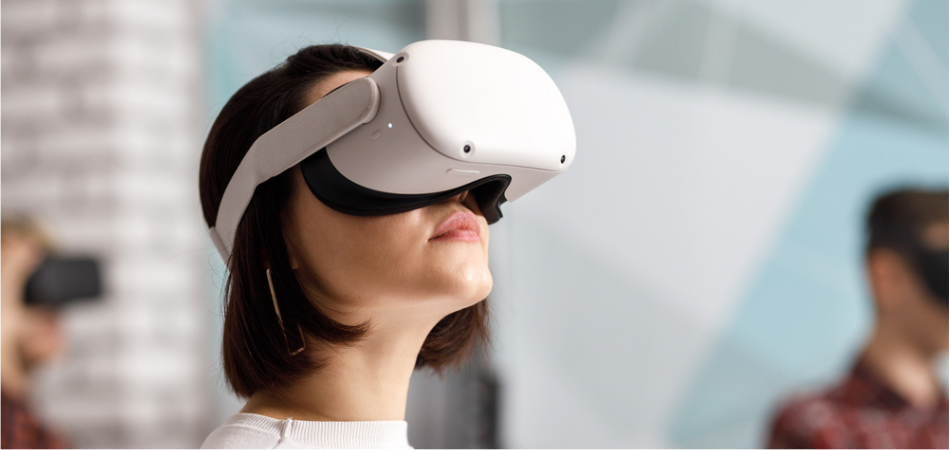
The global fight against addiction is constantly evolving, with researchers and clinicians seeking more effective, engaging, and personalized therapeutic interventions. In this landscape, virtual reality for treating addiction has emerged as a groundbreaking frontier, offering immersive and controlled environments that can revolutionize how individuals approach recovery. This cutting-edge approach leverages advanced VR technology to simulate real-world scenarios, helping patients confront triggers, develop coping mechanisms, and practice new behaviors in a safe, therapeutic setting. Discover how this powerful fusion of technology and psychology is transforming substance abuse treatment and offering renewed hope for lasting sobriety.
Understanding the Core Challenge: Why Traditional Addiction Therapy Needs Innovation
Addiction is a complex chronic disease, not merely a lack of willpower. It fundamentally alters brain chemistry and behavior, making recovery a challenging, lifelong journey. Traditional methods, while valuable, often face limitations in replicating high-risk situations or providing consistent, controlled exposure to triggers. Patients might struggle to transfer skills learned in a therapist's office to the unpredictable realities of daily life. This gap highlights a critical need for tools that bridge the clinical setting with real-world application, a need that virtual reality in addiction recovery is uniquely positioned to fill. The goal is to enhance patient engagement and improve the efficacy of existing behavioral therapy modalities.
The Neuroscientific Basis: How VR Engages the Brain for Healing
At its heart, VR therapy for addiction works by engaging the brain's natural learning and adaptation processes. When an individual dons a VR headset, their brain perceives the simulated environment as real, triggering genuine emotional and physiological responses. This "presence" is crucial for effective therapeutic outcomes. VR experiences can activate neural pathways associated with craving, decision-making, and emotional regulation, allowing therapists to observe and intervene in real-time. By repeatedly exposing patients to virtual cues associated with their addiction – be it a simulated bar environment for alcohol use disorder or a peer pressure scenario for drug use – therapists can facilitate a process similar to exposure therapy, but in a controlled and repeatable manner. This method allows for desensitization and the development of new, healthier responses to triggers.
- Neural Pathway Retraining: VR helps rewire maladaptive neural circuits by providing opportunities to practice new responses to old stimuli.
- Emotional Regulation: Patients learn to manage intense emotions associated with cravings or stressful social situations within a safe virtual space.
- Memory Reconsolidation: By re-activating addiction-related memories in a new context, VR can help weaken the emotional charge of those memories.
Key Applications of Virtual Reality in Addiction Treatment
The versatility of VR allows for its application across various stages of the addiction recovery process, from initial assessment to long-term relapse prevention. Its capacity to create highly customizable and interactive environments makes it an invaluable asset for personalized care plans.
1. Trigger Management and Craving Reduction through Exposure Therapy
One of the most impactful uses of VR is in simulating high-risk environments and addiction cues. For individuals struggling with alcohol addiction, a VR scenario might involve navigating a virtual bar or party where others are drinking. For opioid addiction, it could be confronting virtual paraphernalia. The objective is not to induce cravings unnecessarily, but to allow patients to experience and manage these urges in a controlled setting, under the guidance of a therapist. This repeated, systematic exposure, often combined with relaxation techniques or cognitive behavioral therapy (CBT) strategies, helps patients build resilience and develop effective coping mechanisms. It’s a powerful form of digital therapeutics, providing a bridge between clinical intervention and real-world challenges.
2. Skill Building and Social Competence Training
Many individuals in recovery struggle with social anxiety, communication deficits, or assertiveness issues that can contribute to relapse. VR offers a safe arena to practice vital life skills. Patients can engage in virtual role-playing scenarios, such as declining offers for substance use, resolving conflicts, or managing stress in social settings. This allows for immediate feedback from the therapist and repeated practice until the skills become internalized. Scenarios can be tailored to individual needs, addressing specific social phobias or interpersonal challenges. For instance, a patient might practice job interview skills or assertive communication with virtual characters, building confidence before applying these skills in real life.
3. Enhancing Mindfulness and Relaxation Techniques
Stress and anxiety are significant triggers for relapse. VR can transport patients to serene, calming virtual environments – a tranquil beach, a peaceful forest, or a cosmic journey – facilitating deep relaxation and mindfulness practices. These immersive experiences can be incredibly effective for stress reduction, pain management, and improving overall emotional well-being. By combining these calming experiences with guided meditation or breathwork exercises, VR helps patients develop self-soothing strategies that they can later apply in stressful real-world situations, complementing traditional therapeutic interventions.
4. Personalized Education and Relapse Prevention Planning
VR can also be used for educational purposes, providing interactive lessons on the neurobiology of addiction, the effects of substances on the body, or the stages of recovery. Furthermore, it can help patients visualize and plan for potential relapse scenarios, creating detailed, personalized prevention strategies. For example, a patient might virtually "walk through" their typical commute, identifying high-risk areas or situations and mentally rehearsing how they will navigate them sober. This proactive planning is a cornerstone of effective relapse prevention.
The Tangible Benefits of VR-Enhanced Addiction Recovery
The integration of VR into addiction treatment protocols offers a multitude of advantages that enhance the recovery journey and improve long-term outcomes.
- Controlled and Safe Environment: Unlike real-world exposure, VR allows therapists to precisely control variables, ensuring patient safety and managing the intensity of triggers. This reduces the risk of overwhelming the patient or inadvertently causing a relapse.
- Personalization and Customization: VR scenarios can be tailored to individual patient histories, specific triggers, and cultural contexts, making the therapy highly relevant and effective. This level of personalization is often difficult to achieve with group therapy or generic approaches.
- Enhanced Engagement and Motivation: The novelty and immersive nature of VR can significantly boost patient engagement and motivation. It transforms potentially daunting therapy sessions into interactive, compelling experiences, reducing dropout rates.
- Reduced Stigma and Increased Accessibility: For some, the perceived stigma of seeking addiction treatment can be a barrier. VR therapy can feel less intimidating and more approachable, potentially drawing in individuals who might otherwise avoid traditional services. As technology advances, it also holds promise for increasing accessibility to specialized care in remote areas.
- Cost-Effectiveness in the Long Run: While initial setup costs exist, the ability to deliver consistent, high-quality, and repeatable therapeutic experiences can lead to long-term cost savings by improving treatment efficacy and reducing the need for repeated interventions.
- Objective Data Collection: Many VR systems can track patient responses, physiological data (e.g., heart rate, skin conductance), and behavioral patterns within the virtual environment, providing therapists with objective data to inform treatment adjustments and track progress.
Practical Implementation: Integrating VR into Your Addiction Treatment Program
For clinics and practitioners considering the adoption of virtual reality for treating addiction, a strategic approach is essential. It's not about replacing traditional methods, but augmenting them to create a more robust and comprehensive treatment plan.
Key Considerations for Integration:
- Staff Training: Clinicians need proper training on operating VR equipment, understanding the software, and most importantly, integrating VR experiences seamlessly into existing therapy protocols. This includes knowing how to debrief patients effectively after an immersive session.
- Technology Infrastructure: Adequate hardware (VR headsets, powerful computers) and software (specialized addiction therapy modules) are necessary. Ensure reliable internet connectivity for updates and support.
- Patient Assessment and Suitability: Not every patient may be suitable for VR therapy, especially those with severe cognitive impairments or certain medical conditions (e.g., severe motion sickness, epilepsy). A thorough assessment is crucial.
- Ethical Guidelines: Establish clear ethical guidelines for the use of VR, including informed consent, data privacy, and managing potential psychological distress during or after simulations.
- Phased Implementation: Start with a pilot program, gather feedback, and gradually expand. This allows for refinement and ensures the technology is genuinely enhancing patient care.
For individuals seeking treatment, inquire if your prospective facility offers innovative addiction treatments like VR. Don't hesitate to ask about their experience, the types of scenarios they offer, and how it integrates with other therapies like group counseling or individual CBT. For more information on finding a qualified treatment center, consider exploring resources on addiction treatment centers near me.
The Future of Virtual Reality in Addiction Recovery
The field of virtual reality for treating addiction is still relatively nascent but is rapidly advancing. Future developments are likely to include more sophisticated AI-driven virtual characters that can adapt their responses based on patient behavior, even more realistic and diverse environments, and integration with biofeedback systems for enhanced self-regulation training. We may also see VR being used more extensively for remote therapy delivery, increasing access to care for underserved populations. As research continues to validate its efficacy, VR is poised to become a standard tool in the arsenal against substance use disorders, significantly impacting mental health innovation and offering a more engaging and effective path to lasting recovery.
Frequently Asked Questions
What types of addiction can Virtual Reality therapy treat?
Virtual Reality therapy for addiction shows promise across a wide range of substance use disorders, including alcohol addiction, opioid addiction, nicotine dependence, and even behavioral addictions like gambling or internet addiction. The core principle involves exposing individuals to their specific triggers and high-risk situations in a controlled virtual environment, allowing them to practice coping mechanisms and develop resilience. Its versatility lies in its ability to simulate diverse scenarios relevant to various substances and behaviors, making it a highly adaptable tool in addiction therapy.
Is VR addiction treatment safe and effective?
Yes, when administered by trained professionals as part of a comprehensive treatment plan, VR addiction treatment is considered safe and has shown promising effectiveness. Research indicates that it can significantly reduce cravings, improve coping skills, and lower the risk of relapse. The controlled nature of VR ensures that patients are not exposed to actual harmful situations, and therapists can immediately intervene if a patient experiences distress. As with any medical intervention, a thorough assessment by a qualified clinician is essential to determine suitability and ensure optimal outcomes.
How does VR therapy compare to traditional addiction treatments?
VR therapy is not designed to replace traditional addiction treatments like individual counseling, group therapy, or medication-assisted treatment. Instead, it serves as a powerful adjunctive tool that enhances the effectiveness of these established methods. VR excels at providing realistic, immersive practice environments that are difficult to replicate in a typical therapy room. It complements traditional cognitive behavioral therapy (CBT) and exposure therapy by making them more experiential and engaging, leading to better skill acquisition and generalization to real-world situations. Think of it as an advanced training simulator for recovery.
How long does a typical VR addiction therapy session last?
The duration of a typical VR addiction therapy session can vary, but most sessions range from 30 to 60 minutes. This includes time for preparation, the immersive VR experience itself, and a crucial debriefing period with the therapist. The debriefing allows the patient to process their experience, discuss their emotional and physiological responses, and reinforce the coping strategies learned during the simulation. The frequency and total number of sessions will depend on the individual's treatment plan and progress, often integrating with their broader substance abuse treatment schedule.

0 Komentar